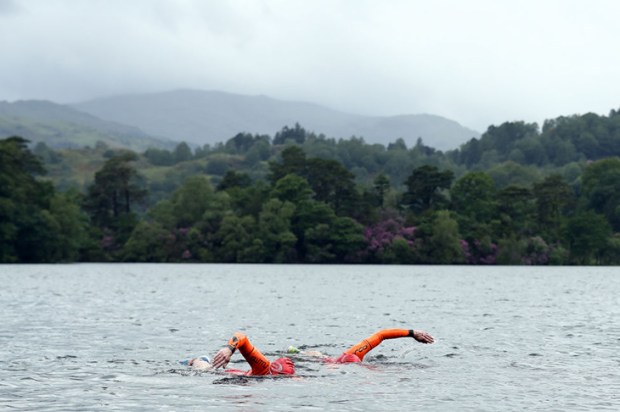
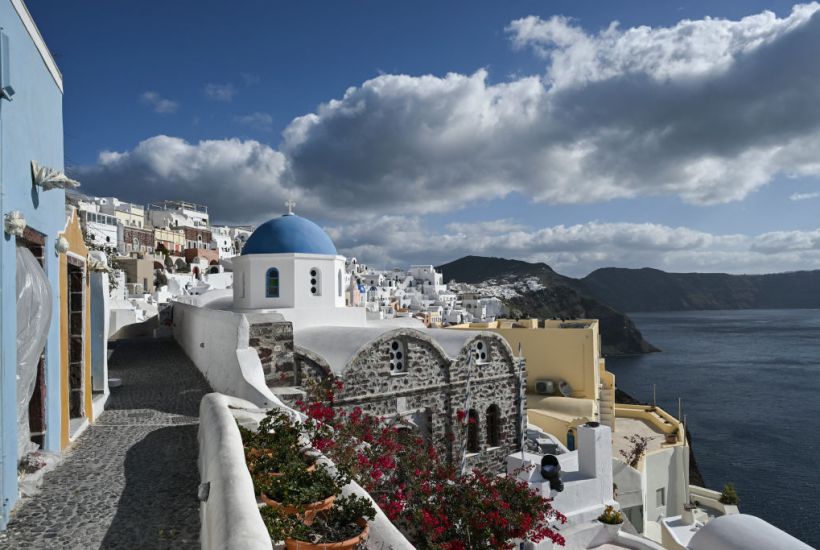
To someone wanting to escape persecution or poverty in a failed African state, the Mediterranean is an obstacle to be overcome. But to a pleasure-seeking Australian the same body of water is a destination in itself. Leros, the small Greek island from which I have just returned, has as many cultural attractions as many European cities thanks to its Minoan, Ottoman and Italian heritage. But what I will remember most fondly about my time there are not the hours I spent in its castles, museums and churches but the swims I enjoyed each morning off its beaches. The beaches themselves, being composed mainly of stones which hurt to walk on in bare feet, are nothing to write home about. But the water beyond them is as clean and clear as the Barrier Reef, and indeed so pristine that after two or three dips I was prompted to ask my host why it didn’t seem to contain any fish. Like everywhere else in the Mediterranean, he explained, the Aegean is overfished to the point where few marine species survive beyond infancy. Consequently, most of the fish served in Leros’s restaurants would not meet the keeper threshold of Australian fisheries. It is, of course, this paucity of large fish in the Aegean, and not the absence of surf and rips, which makes swimming there such an unalloyed pleasure for Australian visitors. Even under a cloudless Dodecanese sky you know you are more likely to be struck by lightning than attacked by a shark.
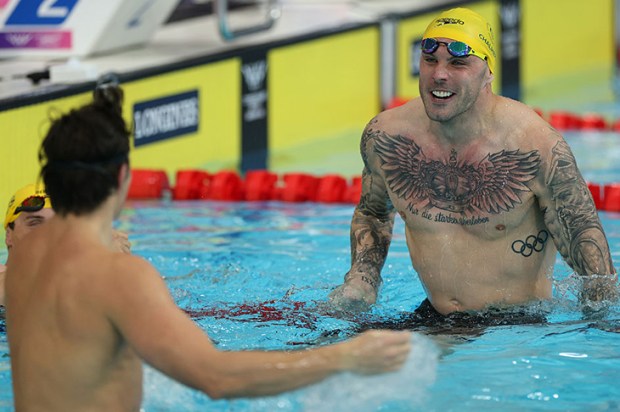
I learnt, arriving home, that I would have to wait another month before resuming my domestic swimming schedule. Before North Sydney Olympic Pool closed for renovation in 2021 there was a plaque in the entrance hall which said that more world swimming records had been broken and set there than in than any other pool on the planet. When it finally reopens to the public in two weeks’ time there ought to be another plaque which says it is now also the setting for the longest-lasting and most over-budget building project in human history. In the time it has taken North Sydney Council to get rid of a bit of concrete cancer and rust, the Chinese government has constructed two cities, six coal-fired power stations and a Spratly Island – for almost the same cost. Perhaps it will be worth the wait and the rates hikes. As well as state-of-the-art gym, changing facilities and sauna, I am hoping that the main pool will have an additional lane of unvarying depth. I never get tired swimming from the shallow end to the deep end of traditional pools, but as I get older I am starting to find the swim back, being uphill, increasingly difficult.
It must have been my Greek Island sojourn which prompted me to attend an early screening of The Odyssey at my local North Shore flea-pit. I certainly didn’t go because I am a fan of Christopher Nolan, whose claim to being World’s Most Overrated Director is rivalled only by that of Wes Anderson and Baz Luhrmann (tip: beware of auteurs who abbreviate their given names to a single syllable). Nothing about The Odyssey changed this opinion. Much has been written and said about Nolan’s obsession with period detail. But if you’re going to spend zillions of dollars reproducing so accurately the clothing, architecture and landscapes of Homer’s epic, why wouldn’t you also give your cast dialogue which captures something of the language and cadence of the original text, and not punctuate it with anachronisms like ‘Okay’ and ‘F–k off’? And as well as insisting that Matt Damon grow a real ZZ Top beard to signify the seven years he wasted eating lotuses, why would you not also pay an accent coach (yes, they exist) to make him sound a bit more ancient Greek and bit less Gen X Massachusetts? One of the main reasons the Game of Thrones and Harry Potter franchises were so universally loved is that none of their characters had American accents.
I didn’t have one disappointing meal on Leros, which is more than I can say about my last Hellenic holiday, in 2015, when it was impossible to find tzatziki or taramasalata anywhere in the country. Some Speccie readers may remember that this was when Greece was experiencing a double-dip recession. (Sorry.)
Got something to add? Join the discussion and comment below.
You might disagree with half of it, but you’ll enjoy reading all of it. Try your first month for free, then just $2 a week for the remainder of your first year.