It’s strange how much we take for granted the world we inherit, which is available to us on YouTube for nothing or elsewhere for a small fee. Recently, we watched the legendary version of Harold Pinter’s The Homecoming, directed by Peter Hall and featuring that great actor Paul Rogers as one of the most horrific fathers ever conceived by a dramatist’s imagination. There is his Iago-like son – played by Ian Holm – Cyril Cusack, consummate Irish actor, as his gay chauffeur brother, Michael Jayston as the brother who’s made it in America, and Vivian Merchant as his enigmatic wife – but it’s Rogers who takes the cake in the delineation of scarifying hatred. Is that why the great Zoe Caldwell (who was his Ophelia) says flatly that Rogers just wasn’t a Hamlet? He’s a powerfully effective Macbeth in old recordings and in the 1950s EMI recording of Hamlet – with John Gielgud in the title role and Australia’s Coral Browne as the Queen – Rogers is as great a King as we can conceive of. He was later a distinguished Falstaff, but he was somehow unacceptable – even to his Ophelia, Zoe Caldwell – as Shakespeare’s ‘sweet prince’.
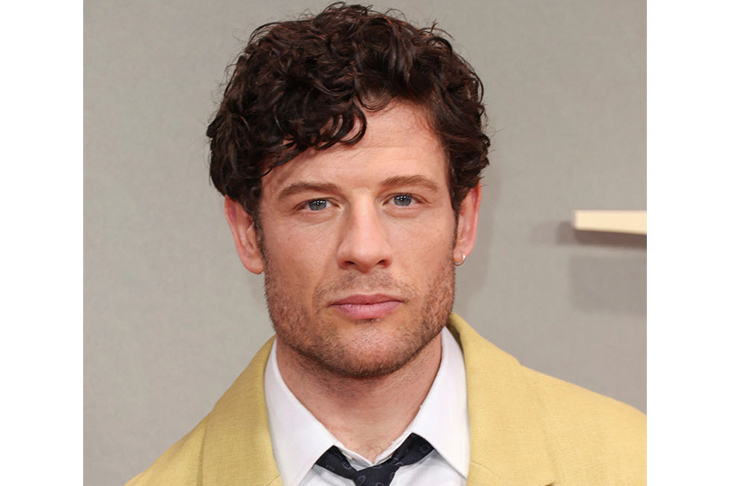
There was the announcement the other week that James Norton – who was first seen as a sleuthing vicar in Grantchester and then as a psychopathic killer in Happy Valley – was to play Hamlet with the German director and auteur Thomas Ostermeier. Is this because James Norton’s handsomeness seems the natural accompaniment to the beauty of Shakespeare’s language, which creates a halo of sympathy around anyone who undertakes this star role?
YouTube and its cousins will offer you melancholy Danes stretching back to Olivier – who won an Oscar as well as the reputation of being the world’s greatest actor for his Hamlet. And there are the 1960s Hamlets hovering around the 1964 four-hundredth – Richard Burton on Broadway, Christopher Plummer at Elsinore, Peter O’Toole opening England’s National Theatre. Then, a few years later, Nicol Williamson at the Roundhouse, directed by Tony Richardson, with Marianne Faithfull as Ophelia.
She is, of course, forever associated with her relationship with Mick Jagger, and there is a new Rolling Stones record just out – Foreign Tongues – together with a music video in which deepfake versions of Mick, Keith and Ronnie look as they did 50 years ago.
But when we look back on our heritage, it’s well to remember the richness and complexity of what we have learned. Who was it who said Thucydides had a modern mind while Sir Walter Raleigh had a medieval one? Xi Jinping enjoyed discussing with Malcolm Turnbull the argument advanced by the greatest of Greek historians about small states and greater states, Athenians and Spartans.
When we’re remembering with reverence the Western civilisation we rightly treasure, it’s also worth remembering that Greece executed Socrates and Rome executed Christ. There is a BBC radio version of the defence and death of Socrates with Leo McKern perfectly cast as the old philosopher. No one quite knows where Plato starts, and Socrates ends, though it’s hard not to sympathise with I.A. Richards who said, ‘Wherever I go in my mind I see Plato on his way back.’ Whatever you think of Platonism as a system – espoused, say, by a contemporary philosopher such as Rai Gaita – there’s not much doubt that Plato was the greatest philosophical writer who ever lived and that he had a deep abiding influence on the Logos of Christianity.
Still, when we look at the resplendent art of Roman antiquity, it’s worth remembering how long it took the Romans to accept Christianity and to remember the words of Julian the Apostate, ‘Vicisti Galilei’ and the vividness of Swinburne’s expansion of it, ‘Thou hast conquered, O pale Galilean; the world has grown grey from thy breath.’ Ibsen has an early play on the subject, and the old BBC Ibsen box of DVDs and spoken word recordings will yield up its treasures on YouTube.
If you want a film about the life of Christ, it’s hard to go past The Gospel According to St Matthew which is Pasolini’s masterpiece in neo-realist mode, but the raising of Lazarus in The Greatest Story Ever Told – the one with the great Ingmar Bergman actor Max von Sydow – is directed by David Lean at the height of his powers. King of Kings has a very good-looking Jesus in Jeffrey Hunter and that extraordinary Melburnian Frank Thring as King Herod. But there is a world of art and entertainment at our fingertips on our phones or laptops.
With recent stage revivals of A Streetcar Named Desire, a lot of people have turned back to the Brando/Vivien Leigh film, or, in the case of Rebecca, to Joan Fontaine and Laurence Olivier, and one of the greatest performances of all time – Dame Judith Anderson as Mrs Danvers. You can also see her as Lady Macbeth and Medea and then, a bit later, as the Nurse in a production of Medea, with her protégé Zoe Caldwell.
But we live in a world where it’s effortless to watch Witness for the Prosecution with Charles Laughton and Marlene Dietrich and see why Dame Agatha Christie thought Billy Wilder had eclipsed her. And you can watch another of his masterpieces Some Like It Hot with Marilyn Monroe.
You can watch the great BBC serials like The Forsyte Saga and a bit later The Pallisers. You can see why Elizabeth R made Glenda Jackson a star, and why Anthony Hopkins is such a superb Pierre in the BBC War and Peace, and the glory of the old Brideshead, with Jeremy Irons leading a cast that includes not only Olivier and Claire Bloom but also Gielgud, who upstages everyone.
We’re worried about kids being ravaged by social media, but we should remember that they can watch Kenneth Clark doing Civilization, Robert Hughes’ American Visions and those magnificent Dick Cavett interviews. Yes, social media can be dangerous, but it also gives us the riches of the earth.
Watch Gore Vidal and William F. Buckley. Watch the great British comedians. Look at La Ronde, The Leopard and Jules and Jim. And if you’re seeing the Melbourne Theatre Company’s Uncle Vanya, have a look at the Chichester production with Olivier as Astrov, Redgrave as Vanya and Joan Plowright as Sonya. And getting back to Aristotelian philosophy and poetry – try the great Vittorio Gassman reciting Dante in the original Italian.
Got something to add? Join the discussion and comment below.
You might disagree with half of it, but you’ll enjoy reading all of it. Try your first month for free, then just $2 a week for the remainder of your first year.