The other day saw the opening of the Peter Corrigan Collection at RMIT which comprises his personal collection of architectural books and journals –– much of which can be explored online. The highest and weirdest compliment that could be paid to a mere critic was paid by Corrigan when he took the brief discussion of Don Quixote in my ‘Second Thoughts’ column and said to his architecture students, ‘Here, design this for me.’ He was an extraordinary figure, quite capable of jumping on his students’ work when he thought it was not up to scratch. The RMIT collection is a reminder that Peter Corrigan died nearly ten years ago, on 1 December, 2016.
It is a testament to Corrigan’s sense of the breadth of culture that he thought Melbourne’s Arts Centre should be adorned with a massive emblem of Edna Everage’s glasses as a testament to the magnificence of Barry Humphries’ contribution to the glory of the city that bred him and first hailed him.
Peter Corrigan (together with his wife and professional partner Maggie Edmond) transfigured what was looking like a debased suburban idiom and created a new vernacular that was at once expressive of Melbourne and alive to the play of ideas.
He designed theatre as well and was a legendary, sometimes beside-himself talker. He was educated by the Christian Brothers and he was alive to the hilarity of his own limitations. With Patrick McCaughey directing, he designed a student production of Othello without reading more than the opening, which made this tragedy seem like a merry romantic romp. The retrospective laughter was a thing of beauty.
America made him, not least because it highlighted his Australianness. He was nurtured by Yale and by New York and talked of how he was always being given short shrift by the great masters of design who practised up and down the eastern seaboard.
There were the stories. How he had turned round on a dark and dangerous Manhattan stretch to discover a man with an uplifted knife, and how – somehow – he yelled with such intensity, ‘What the f–– do you think you’re doing?’ that the mad would-be murderer ran off in fright.
Peter was less of an asset when the combination of a few drinks and the gleam of the rabbi’s knife at a very Ivy League circumcision led him to faint. By the grace of the God of Abraham and Jacob, no one was put off their stroke.
Barry Humphries used to say he was not an Australian, he was a Victorian, and Peter Corrigan was a patriotic Melburnian. But his abhorrence of the Sydney Rum Corps (as he saw it) was compatible with the great work: the Church of the Resurrection in Keysborough in the Seventies was a conscious attempt to transcend snobbery. Peter Corrigan re-jigged a style of big verandahs and multi-coloured bricks, and a homage to the impulses of the everyday.
That sublime sense of design which would liberate the folk of Melbourne was extraordinary, and it’s there in the centre of Canberra’s Belconnen Mall in the mid-1990s, which deliberately quotes the long-ago picture theatre of common Australian experience but does so with a conscious grandeur. It’s also there in Building 8 at RMIT, which is large-scale and a homage to the spatial potential of the city he loved.
He was influenced by Hugh Stretton, the social geographer who sang the praises of the ordinary transformed. The theatre director Barrie Kosky was a god to Corrigan, and nor did he forget his days with Elijah Moshinsky, theatre and opera director extraordinaire.
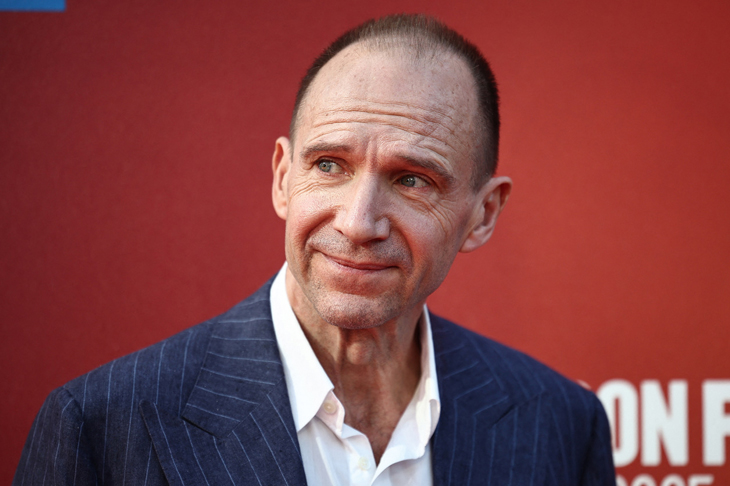
We recently saw The Choral which has a screenplay by that extraordinary playwright and tireless diarist Alan Bennett. It’s set in Yorkshire at the time of the first world war, and Ralph Fiennes plays a man of music who gets the local enthusiasts (who include that splendid actor Roger Allam) to ditch their initial idea of staging Bach’s St Matthew Passion and replace it with Elgar’s Dream of Gerontius. The people of this bit of Yorkshire, under the direction of the German-educated Fiennes, contrive to do a Gerontius that is adapted to the exigencies of their own lives: the tenor has lost an arm and wants to be pleasured by a young woman who might help.
In the midst of all this, Fiennes actually elicits the permission of the composer himself, Elgar, who appears in the person of that great actor Simon Russell Beale and reacts first with delight at Amara Okereke’s beautifully voiced soprano but then with horror at the changes that have been made by Fiennes.
But The Choral, directed by Bennett’s close associate Nick Hytner (former head of the National Theatre), is a weird filming of a kind of platonic idea of a high and mighty production of Gerontius – with all the resources of a grand production – so that it’s a folk fantasy inside what is ultimately the highest possible musical realisation of the great work.
It’s dazzlingly clever as well as moving, and if anyone thinks Paul Scofield’s performance as Judge Danforth in Hytner’s film of The Crucible shows his weakness for a great stage actor, they should watch Simon Russell Beale.
We followed up The Choral with Ken Russell’s Elgar (1962). No dialogue, just the great composer’s music and his life narrated by Huw Wheldon. It’s a masterpiece that is likely to have you in tears. Elgar came to abhor ‘Land of Hope and Glory’, even though he knew it was the kind of tune a great composer gets once in a lifetime.
He wrote the Cello Concerto in E minor, which is matchless. He refused Laurence Binyon’s offer to do a song of armistice. He wrote the Violin Concerto in B minor which, at the age of 74, he recorded with the 16-year-old Yehudi Menuhin. He experienced the depths of melancholy. Late in his life, he became friends with Shaw. His long-ago breakthrough came with the Germans and the high regard of Richard Strauss.
Alan Bennett thought the greatest recordings of Elgar were the earlier ones of Barbirolli. But whether it’s these or the Barenboim/Jacqueline du Pré recordings, this extraordinary black-and-white doco will send you back to Elgar’s music.
Although it’s not a comparable work of art, so will The Choral.
Got something to add? Join the discussion and comment below.
You might disagree with half of it, but you’ll enjoy reading all of it. Try your first month for free, then just $2 a week for the remainder of your first year.