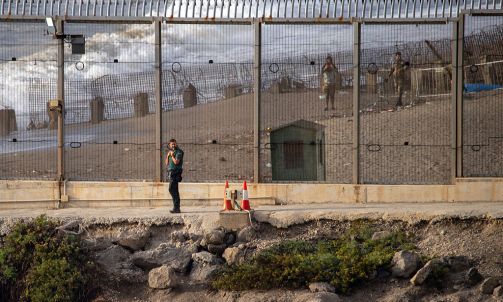
I was only 14 years old when Tony Abbott ran a 2013 federal election campaign largely centred on what was, at the time, a highly contentious statement of intent: ‘Stop the boats!’
I vividly remember thinking to myself – for perhaps the first time in my very young life – why are so many adults upset about this?
I loved the country that I’d be born into and had grown up in. The same country that three of my grandparents had migrated to (one from England and two from Singapore) because they felt it would be the best place to raise their children. I was very glad they had done so, and I could understand why others would want to do the same. But why couldn’t they do it the right way? And why was it so controversial to argue that they needed to?
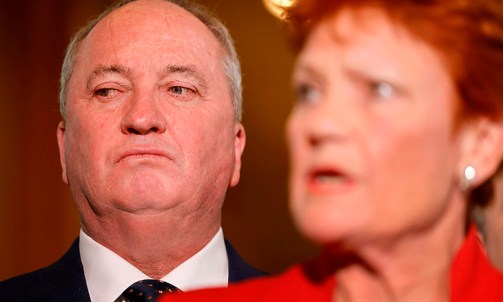
Fast forward a decade, and I was now a young man who had been told that I was either stupid, manipulated, or flat-out evil for any and all of the following: celebrating Australia Day, voting for the Coalition, admiring Pauline Hanson, predicting that Donald Trump would actually win the 2016 election, suggesting that he might make a good President, questioning the logic and motives of the BLM movement, and taking issue with the extent to which multiculturalism was pushed and anti-white racism normalised in the ‘new Australia’.
How is it that we’ve arrived at a place in which I feel defiant and unfashionable for having ideas and opinions that my grandparents considered utterly normal and essentially unquestionable?
According to the Australian Election Study, roughly a quarter of Gen Z are Coalition voters, so if I can be a little brave and estimate that close to a third of my generation lean right, it’s clear that whilst we’re the minority, we well and truly do exist – and in my experience – most of us are pretty cranky.
Net immigration is about triple what it was when I was in school, we’re beginning to feel like foreigners in our own suburbs, most of us won’t even dare to say that we’d like to buy a home like our parents did because it feels – is – so far out of reach, and we’re yelled at and called racist for talking about any of it.
See why we’re angry?
We grew up in the aftermath of the first culture war and are now being forced to fight a second. We inherited a broken nation. A nearly unrecognisable shell of what it once was. We’re sad, too, actually. We’re sad that we have to watch our country and culture decay before our eyes, while others laugh and cheer about it. We’re sad that it’s a near-insurmountable challenge for us to have families of our own, and we’re sad that our ancestors would look at this all with deep shame.
And yet most of us stay quiet.
We’ve learned (or have been socially conditioned to believe) that the argument simply isn’t worth the effort. So we stare at the wall of university rooms while being lectured by socialist groups at the beginning of classes, we keep our heads down at work, and we quietly seethe when a friend-of-a-friend starts ranting about white privilege at a barbecue.
Then, occasionally, we vote, and frankly that hasn’t made much difference.
But our peers are horrified when they find out that we don’t own a keffiyeh, the pundits are baffled by One Nation leading in the polls, and our older relatives are appalled when we suggest that we’ve been dealt a poor hand. ‘But our interest rates were far higher!’ they chirp, gleefully ignoring the fact that you’d now struggle to find a one-bedroom apartment in Maroubra for under $800,000. Why should a young person born and raised in Sydney be expected to compete with endless hordes of immigrants and foreign investors for a miniature version of the home that they were raised in? Why should a high-schooler be told that they may struggle to get into a top university, not because of below-par marks, but because the university does not care to prioritise Australian students over international ones?
When I see a young couple priced out of the suburb they’ve spent their whole lives in, I don’t see a political abstraction, I see my friends being denied what they really should be able to expect. When I hear of a graduate passed over in favour of an international student who may very well take their talents and taxes elsewhere the moment their visa allows, I don’t see a statistic, I see a waste of potential. These are not the grievances of somebody who wishes ill upon newcomers, they are the grievances of somebody who simply wishes to not be forgotten. Our own country was sold from under our feet.
There is a very particular cruelty in being told that your attachment to place, to culture, to continuity, is itself a form of prejudice. That loving dearly what you know so well, and wanting to preserve it, marks you as suspect. The progressive establishment has spent the better part of two decades conflating pride with supremacy, and concern with contempt. Is it any wonder, then, that the young right has grown not more moderate with time, but more resolute? You do not soften a person’s convictions by telling them those convictions are shameful. You harden them. And this may turn out to be a terrible, terrible mistake.
Accept that a party like One Nation represents the genuine views of many, because if they fail, what comes after them is not pretty … and I don’t want that either.
What I want – what we want – is not complicated, and it is not cruel. We just want a country in which we can dream at night of owning a home without waking up with a sinking feeling in our stomachs and a sour look on our faces in the morning. We just want universities that treat domestic students as their primary obligation. We just want immigration policies that reflect the capacity of our cities and the preferences of our citizens, not the lobbying power of industries addicted to cheap labour (this was once a standard talking point for the same card-carrying progressives who now pray at the altar of mass immigration). And, dare I say, we’d quite like to be able to say all of this publicly without being monstered for it.
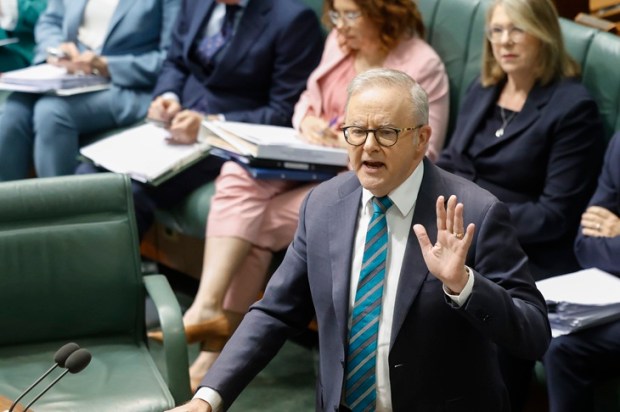
The Albanese’s government’s federal budget delivered us all yet another bruising, and another reason to feel hopeless. The quiet, boring, conservative young Australians are still out there; working, renting, waiting, yearning. We’re not going anywhere, and eventually, I suspect, the rest of the country – the rest of the Western world – will remember that it needs people like us, as colourless as we may be.