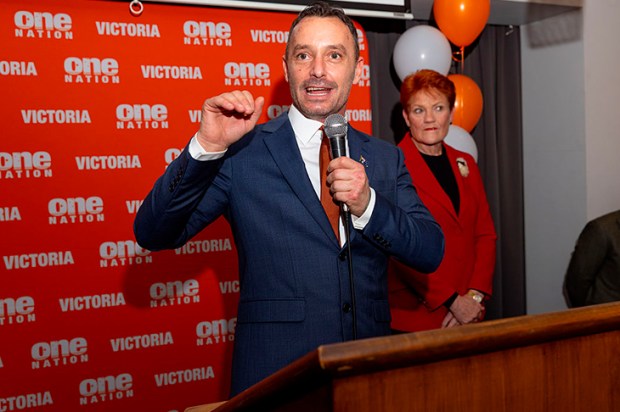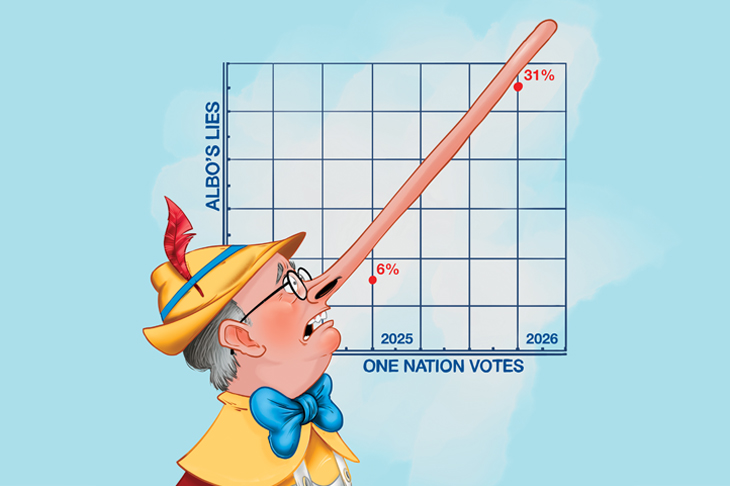
I am intrigued by the rapid rise in the popularity of One Nation as a political force and wonder whether there are important economic angles to the analysis.
Bear in mind here that One Nation only polled around 6 per cent of the total votes at the last election in May 2025, although there was swing to the party of around 1.5 per cent. This was a creditable performance without being spectacular.
According to the most recent polls – and there have been plenty of them – One Nation is polling at around 30 per cent of the total electorate, above Labor and well above the Coalition. While the meteoric rise in One Nation’s popularity has mainly come at the expense of the Coalition, particularly the Nats, there have been inroads into the Labor share of voters more recently.
To explain these trends, it’s insufficient to point to the reasons why One Nation is popular; it is necessary to explain the rapid rise in One Nation’s approval rating. How can it be that a political party goes from receiving 6 per cent of the vote to close to a third in the space of a year?
We have known for some time that the ‘typical’ One Nation voter is regional, without post-secondary education and older. There was a presumption of a slight overrepresentation of males, but it’s not clear that this is still the case. Based on the South Australian election results, One Nation is becoming increasingly popular in outer-suburban seats with disproportionate numbers of working-class folk. Elizabeth in Adelaide is an example.
To account for such a dramatic shift in voting intentions, some sort of tipping point or points need to be identified. After all, One Nation’s leader, Pauline Hanson, has been around for a very long time and her positions on major policy issues have not noticeably changed. This very consistency, and the clarity of her views, may be part of the explanation for changing voting intentions.
The contrast with what has come to be known as the uniparty is an important factor here. The idea here is that the dominant political parties – Labor and the Coalition – are just lame imitations of each other. They compete based on their presumed technical ability to govern but fail to deliver programs effectively or efficiently.
Until the elevation of Angus Taylor as leader of the opposition, the Coalition has focused on offering up variants of Labor policy and suggesting improvements to tabled legislation. It’s not surprising that voters don’t differentiate between the parties that dominated the landscape for so long, but less so now.
The trouble for the uniparty is that notwithstanding a lot of bragging and back-slapping – assisting people with cost-of-living pressures, for example – the lived experience of many people is continuous disappointment, coupled with bureaucratic burdens.
My guess is that a lot of One Nation voters would rather cope – indeed flourish – off their own bat. They don’t want to be dependent on government, and they deeply resent the load placed on them to receive government benefits.
Think here the aged care packages as a case in point. There is too often a presumption that individuals are trying to rip off the system and that front-line staff – don’t you just love that term? – are there to make life hard for struggling individuals and families, rather than assist them.
The conundrum here is that the aversion to the uniparty has been around for some time and doesn’t explain the dramatic surge in support for One Nation. Arguably, it was events like the massacre at Bondi that created a tipping point and demonstrated beyond any doubt that Labor – but Labor as part of the uniparty – refuses to govern for all Australians.
The pathetic response of Anthony Albanese underscored his inability even to acknowledge the targeting of a particular group – Australian Jews – and the rapid growth of hateful and potentially violent antisemitism. With an eye to the political consequences, he took the coward’s way out. Was it any wonder why he was booed when he attended related events and stayed away from most of the funerals?
What Bondi demonstrated, clearly and unequivocally, was Labor’s favouritism towards migrants above those Australian citizens whose families have lived in the country for generations. Not that these Australian citizens are looking for preferential treatment – just not to be treated as second-class citizens.
It also highlighted the ongoing refusal of Labor to cut the migrant intake in line with the clear preferences of most voters. Migration is clearly a totemic issue for many One Nation voters. But the key here is the unequivocal revelation at that time that Labor – and possibly also the Coalition – really has no intention of reducing the migrant intake or removing temporary migrants who have no right to be in the country.
A few minor concessions are made, there are projections of lower migrant numbers in the future (numbers that are typically revised up when we get closer to the date in question), some tweaks to the visa requirements are made – but One Nation voters get it. For political reasons and because of the pressure from some business groups, there is really no intention for the migrant intake to be substantially cut.
Let me come then to the budget and how this also plays into the hands of One Nation, but at the expense of the Coalition, more than Labor. The slew of new taxes impacts small businesses, older folk and anyone with a bit of ambition. The decision to cut the higher private health insurance rebate for older folk – this was always good policy because older people can access surgeries that are often required in the private system – was designed to hurt a group that don’t typically vote Labor.
But here’s my point: Albanese’s blatant breaking of a promise made repeatedly in the election campaign was politically motivated. Sure, some more tax revenue is useful and the groups that are pissed off are not really Labor supporters.
But the net impact on the conservative side of politics is to fragment voters between the different parties. Why look to the Coalition for a solution when you can bypass it straight to One Nation?
This makes life very tough for the Coalition, particularly the Nats. In many instances a vote for One Nation is a vote for Labor given our compulsory preferential voting system.
But the Coalition criticising One Nation is also a fraught approach. Telling everyone One Nation is not a party of government? Voter response: Labor and the Coalition are parties of government – oh please. Saying One Nation doesn’t have any policies? Voter response: is that so?, and what about the dud policies of the uniparty? One Nation doesn’t have its policies costed by the Parliamentary Budgetary Office. Voter response: you lost me there, must be Canberra bubble talk.
Got something to add? Join the discussion and comment below.
You might disagree with half of it, but you’ll enjoy reading all of it. Try your first month for free, then just $2 a week for the remainder of your first year.