The rule of law is one of the foundational pillars of liberal democracy. At its core, it rests on the simple, powerful idea that no one is above the law. Not kings, not parliaments, not the wealthy or the well-connected. It was designed to protect the weak from the arbitrary exercise of power and to ensure that governments, however popular, remain bound by principles of fairness and reason.
Yet in contemporary Australia, we may ask whether this venerable concept is still serving the public interest, or whether it has been subtly repurposed to shield those who undermine the very society it was meant to sustain.
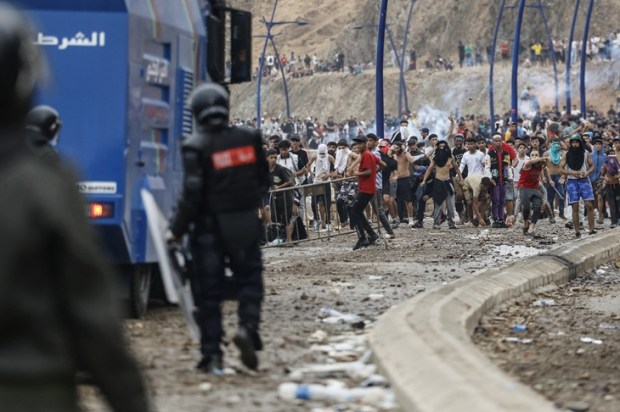
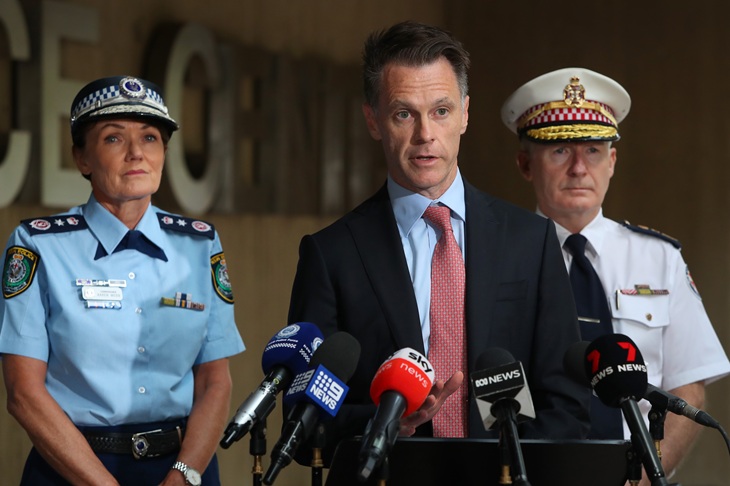
Consider the most recent example. In the wake of the Bondi Beach terror attack, the Minns Labor government in New South Wales rushed through legislation designed to give police greater powers to restrict protests in the immediate aftermath of suspected terrorist incidents. The laws were a pragmatic response to public frustration. For years, Sydneysiders have endured routine, disruptive pro-Palestinian marches chanting ‘Free Palestine!’. These demonstrations have clogged streets, strained police resources, and tested the patience of a city still reeling from the October 7 atrocities and their aftermath. Polling and street-level sentiment suggested broad support for the government’s measures among ordinary voters who simply wanted to go about their lives without constant political theatre.
Yet on April 16, 2026, the NSW Supreme Court struck down key provisions of these laws, declaring them an impermissible burden on the implied constitutional freedom of political communication. The challenge was brought by groups associated with the regular protests. The court’s decision was legally coherent within the narrow confines of existing precedent, but it left many ordinary Australians shaking their heads. A democratically elected government, responding to genuine public concern and the shadow of terrorism, had its legislation overturned. Taxpayers will now foot the bill, not only for the original legal defence, but potentially for damages claims from those arrested under the now-invalid laws.
This is not an isolated case. It sits alongside other high-profile instances where the judicial system appears to frustrate the will of elected representatives and the broader community. The protracted legal saga surrounding Ben Roberts-Smith, Australia’s most decorated living soldier, has left many veterans and ordinary citizens concerned. After losing a defamation case in which a Federal Court judge found certain war-crime allegations substantially true on the balance of probabilities, Roberts-Smith now faces criminal charges. He has made a public statement indicating that he will fight to clear his name. Whatever the ultimate outcome, the process has dragged a national hero through years of public scrutiny while serious questions remain about the adequacy of evidence and the broader context of combat operations. To many, it feels less like impartial justice and more like a cultural reckoning.
Then there is the immigration detainee saga. In 2023, the High Court ruled indefinite immigration detention unlawful in cases where removal from Australia was not reasonably foreseeable. The immediate result was the release of approximately 149 individuals, more than half of whom had convictions for violent offences, including some for murder or attempted murder. The government’s subsequent attempts to impose ankle bracelets and curfews were themselves struck down by the High Court as unconstitutional. The public mood toward judges overriding executive and parliamentary efforts to protect community safety is one of genuine concern. Meanwhile, individuals with criminal convictions who entered the country illegally were set loose on Australian streets at taxpayer expense.
These cases share a common thread. The original conception of the rule of law was never meant to create a system where ordinary citizens bore the cost of serious civil disruption or elevated danger.
Judges in Australia are not elected. They are appointed through processes that, while rigorous, remains insulated from direct public accountability. This is not inherently undemocratic as it is a feature of our Westminster-derived system. Yet when courts repeatedly invalidate legislation passed by parliaments that face the electorate every three to four years, the balance tilts. The implied freedom of political communication, itself a judicial creation rather than a textually explicit constitutional right, has become a powerful tool for striking down laws that inconvenience activist causes. Protests near places of worship, restrictions after terror attacks, and monitoring of high-risk former detainees have all fallen foul of this doctrine.
The deeper problem is not the rule of law itself, but the moral and cultural foundation upon which it now rests. The concept emerged from a society that shared a broad consensus on what constituted the common good. These included ordered liberty, national cohesion, respect for institutions, and a willingness to defend the nation against external threats. That consensus has frayed. In my opinion, activist lawyers, human-rights organisations, and sections of the judiciary increasingly view the law not as a neutral framework for resolving disputes but as an instrument for advancing particular ideological ends, often those that privilege individual or group rights over collective security and social stability.
Burkean organic liberalism, in a Westminster system, has proven superior to the enforced liberalism of historical France and the US. Indeed, our constitutional monarchy, superimposed over a federal system, with Westminster-style parliament and public service, is the most modern of political systems. Yet the system is now being utilised and strained by those who do not share the foundational values that allow our political and legal systems to function for the common weal.
Nowhere is this more evident than in the pro-Palestinian protest movement. Hamas is a proscribed terrorist organisation under Australian law. It governs Gaza and has repeatedly demonstrated its commitment to Israel’s destruction. The slogan ‘Free Palestine’, when deployed without any corresponding call to dismantle Hamas’s terrorist infrastructure, is not neutral political speech. To many thinking Australians, it can be read as an implicit endorsement of a cause that is incompatible with Western liberal values. Yet courts have repeatedly protected these protests under the banner of free expression, even when they disrupt daily life and inflame community tensions.
This is the inversion. The rule of law, once a shield against elite impunity, now appears to place certain groups beyond the practical reach of democratic majorities.
The elites of old were the powerful insiders who bent rules to their advantage. Today’s beneficiaries sometimes include outsiders who exploit Australia’s openness, wealth, and procedural generosity while importing cultural and political pathologies from failed states.
Tinkering at the margins such as tweaking legislation or appointing slightly more conservative judges will not suffice. The system is not merely malfunctioning. Its moral premises have been captured.
Australia’s legal architecture was built for a different people in a different time. Our prized restraint, shared identity, and the long-term health of the nation over the short-term triumphs of activism have given way to a corrosive free-for-all. Without a fundamental rebuilding, perhaps through clearer constitutional limits on judicial power, mechanisms for parliamentary override of certain rulings, or even a sober national conversation about the limits of implied rights, the rule of law risks becoming an existential threat.
Australia’s culture, prosperity, and social cohesion are not infinite resources. They were forged through sacrifice and discipline. If we continue to allow the law to be weaponised against the instincts of the Australian people by prioritising the rights of those who would erode them over the security and preferences of citizens, then we will watch the slow erosion of the very qualities that make this country worth defending. The rule of law remains essential. But it must once again serve the Australian people, not those who treat our generosity as a weakness to be exploited.
The time for half-measures has passed. The system must be rebuilt from first principles, or it will help dismantle the nation it was meant to protect.
Dr Michael de Percy @FlaneurPolitiq is the Spectator Australia’s Canberra Press Gallery Correspondent. If you would like to support his writing, or read more of Michael, please visit his website.