The Iran war made it obvious Australia has not completed any serious war-gaming on fuel shortages.
Theoretical papers, maybe.
A bit of pencil-pushing and document binding – perhaps.
But never did the Australian government, since the second world war, seriously consider a global fuel shortage stretching across multiple conflict zones that they could not buy their way out of. Markets were assumed to always compensate. At this point, they are staring down a fail point in the not-too-distant future. The survival of fuel security depends entirely on negotiations over the Strait of Hormuz, and the independent actions of other nations to expand their domestic production.
Australia, with its severe anti-fossil fuel agenda, is a passenger.
We are at the mercy of other leaders.
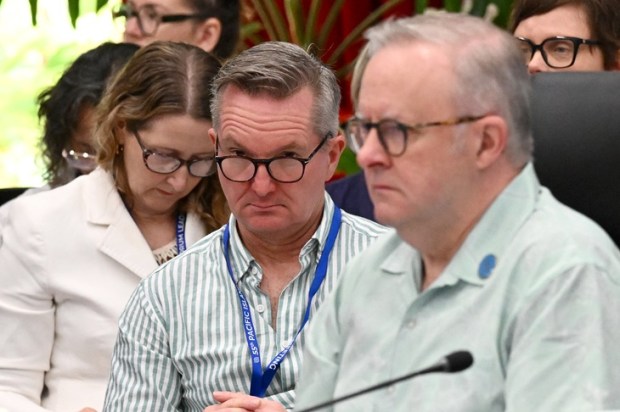
Worse, having now been forced to consider this new world of fuel insecurity, it remains painfully obvious that the Prime Minister and his Energy Minister are running around like headless chooks trying to patch the crisis with handshakes and soft-threats leveraged against Australian LNG and rare earths reserves.
Meanwhile, at no point did these ministers foresee the explosion at one of only two operational domestic refineries which has potentially cut Victoria’s petrol production in half overnight. In other words, they are so busy trying so survive the first crisis, there is no room for redundancy in the system.
The fire at the Geelong oil refinery, operated by Viva Energy, is nothing short of a catastrophe.
Reports today suggest that petrol production has fallen 40 per cent, which is not quite as dire as earlier reports that all production may have been lost.
Considering the plant accounts for half of Victoria’s petrol, what happens next is of critical importance.
‘The advice that we have received today is that 80 per cent of diesel production is continuing, 80 per cent of aviation fuel is continuing,’ said Prime Minister, Anthony Albanese. ‘It has been slowed down just slightly because of the circumstances which are there, but 60 per cent of petrol production proceeding today as well.’
The CEO, Scott Wyatt, confirmed that the ‘Mogas’ part of the refinery was impacted, also known as the motor gasoline production unit, which had been at full capacity to cover the gap left by import shortages.
According to some early reports, a gas leak was reported shortly before an explosion ripped through the petrol production part of the facility. The fire burned for many hours while over 50 firefighters attempted to contain it.
All workers have been accounted for and an investigation will take place into what is currently suspected of being an accident.
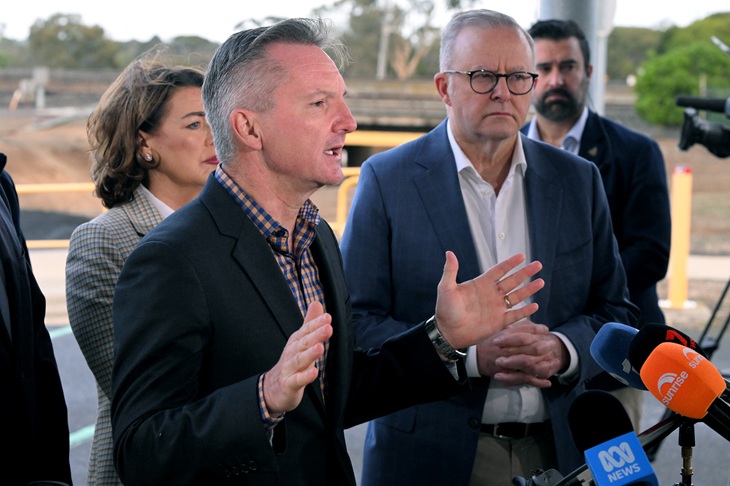
The comments from Energy Minister Chris Bowen have been far from enlightening.
‘Petrol, high octane petrol – in particular diesel and jet fuel – continues to be produced at the refinery. But obviously I’ve been talking to the Chief Executive over the last several hours and will continue to talk to him today to get better assessments. As you’d understand that it’s very early in terms of assessments on production. It will impact on production at this point, petrol rather than diesel and jet fuel. But we’re going to continue to really work closely with Viva, the company, and really monitor and work together on any impacts.’
There is no indication that fuel restrictions will be put in place as doing so would require a liquid fuel emergency to be declared by the federal government. This has never happened since the legislation was drafted in the 1980s in response to the previous Iran-led fuel crisis in the 1970s. Invoking this legislation would indicate a serious failure of government to maintain fuel security and could lead to an election disaster for Labor.
Defence Minister Richard Marles directly addressed this following the fire, insisting that fuel rationing was not on the agenda.
Albanese also said, ‘We’re not doing that…’
Instead, fuel prices could rise across Victoria in response to market demand, according to some (but not all) reports. The fuel shortfall will have to be made up either by a voluntary constraint on use or more international deals.
Mr Wyatt addressed the press, assuring Victorians that ‘a lot of units are unaffected’.
‘I think there’ll be no impact to the fuel supply for the Victorian market. Any shortfalls in production, we’re fairly confident we can cover that with our import schedule … I do not think the costs will go up. The costs will go up for us. Whatever cost this has caused the refinery will be absorbed.’
Australia is not the only country to experience a refinery explosion or fire as the world ramps up production to compensate for the loss of Middle Eastern oil.
On March 23, Valero’s Port Arthur refinery in Texas suffered a major explosion and fire. Inspections following the incident found a damaged tube in the AVU-146’s heater.
According to The Week:
‘The fire broke out near the plant’s fluid catalytic cracker, and the unit suffered severe damage, people familiar with the incident told Bloomberg. The 243-diesel hydrotreater unit produced about 47,000 bpd. The unit uses hydroge to remove sulphur from motor fuels during the production to comply with US environmental rules.’
In Russia, the Tuapse oil refinery is currently a ball of flames after a Ukrainian drone strike apparently hit fuel tanks. As one of the largest oil refineries in Russia, the resulting blaze has reached enormous proportions.
The lesson here is that the fuel market is unusually vulnerable to risks related to war, accidents, and geographic chokepoints.
And that Australia is currently flailing around in a panic.