Anyone for a spot of acoustic science? Apparently the distinctive colour of a musical note is concentrated almost wholly in the attack: the first split-second; the beginning of the sound wave. Obscure or somehow cut off, that first bite of a note or chord and what’s left sounds – well, not the same as everything else, exactly, but a great deal more samey. It’s like wine-tasting while holding your nose. Everything becomes neutral, and suddenly it’s remarkably easy to fool the senses.
The Italian composer Salvatore Sciarrino seems to enjoy playing these games. In Le voci sottevetro (1999) – four arrangements of works by the homicidal madrigalist Carlo Gesualdo – a quick splash of tuned percussion does the job of hiding the start of a line. What’s left hangs softly in the air, vibrating and almost unidentifiable as any specific instrument. True, you can work it out by looking: Sciarrino uses only eight players, and his three woodwinds (bass flute, cor anglais and bass clarinet) are calculated choices. But still, there it is, that sound, and you can’t quite tell what you’re hearing. It’s destabilising; uncanny.
Modernist composers have been dressing up old music in Andy Warhol colours since as far back as Webern, so it’s good of Sciarrino to bring something fresh to the table. But then, as far as I can tell, that’s the sort of artist he is. His technique has all the microscopic refinements of late modernism – Ligeti filtered through Berio – but his ideas are playful and not that subtle. A single viola and cello flurry madly away in the ‘Ouvertura’ of his Aspern Suite of 1987: a smudged suggestion of Mozart’s Figaro, like the feather patterns left on glass when a bird hits a window. But the kicker comes when a solo soprano enters, because she’s singing words by Lorenzo da Ponte. Seriously – the seventh movement is a literal setting of ‘Non piu andrai’. Sciarrino can’t possibly expect us to keep a straight face.
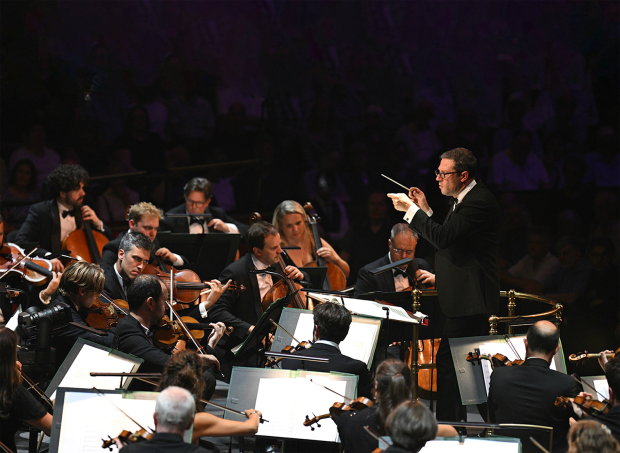
But you take the point. Some concerts deal in puzzles and private jokes rather than the beefier emotions, and why not? This one from Birmingham Contemporary Music Group, conducted by the composer Jack Sheen, was particularly quiet and knowing. Sheen has form as an opera conductor, and all the works in this concert (with the possible exception of Rebecca Saunders’s Stirrings (2011) – fifty shades of taupe, with nine musicians placed around the audience) had dramatic potential. But they were presented straight, with performers stationary at music stands and brief bursts of silent activity as the platform manager reset the stage. The whole tasteful ascetic ritual of the new music concert, delivered calmly and without apology.
The playing, of course, was precise and expressive, as was the singing. The soprano Eleonore Cockerham sounded pure and clean in the Gesualdo settings and then impossibly assured in the dabs and fragments of coloratura with which Sciarrino peppers the Aspern Suite. It was reminiscent of Emma Kirkby’s Handel, but diced into tesserae and hurled out of a car window.
Sheen’s own violin concerto Television Continuity Poses (2016/21) (an interestingly retro title for a composer in his thirties) had the soloist Darragh Morgan weaving a gold-wire lattice against bursts of electronic white noise that couldn’t decide if they wanted to make friends, or to intimidate. That’s how it felt, anyway. The applause was appreciative, from an audience which – perhaps inevitably – was small even for BCMG.
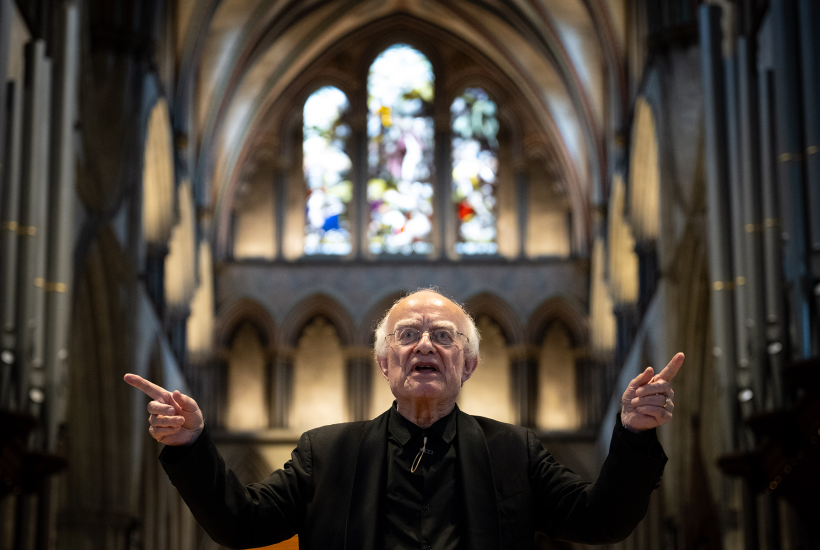
In London, meanwhile, new music was packing them in at Cadogan Hall. John Rutter conducted the Royal Philharmonic in the first London performance of his piano concerto, Reflections (1979). It wore its debt to Ravel with pride; elsewhere, shining melodies evoked romantic film scores by Richard Rodney Bennett and Angela Morley, and that last, half-forgotten moment in British music before minimalism came along and spoiled tonality for a generation. Steven Osborne was the soloist, and you could hardly ask for better, though it might have benefitted from a conductor who was prepared to be a little more forward. Reflections would be rather seductive with its hair mussed.
Then came the world première of Rutter’s A Shakespeare Sketchbook for oboe and strings, commissioned to commemorate the late RPO oboist Timothy Watts, and played with eloquent tenderness by Watts’s colleague John Roberts. Three movements were based on Rutter’s vocal miniatures – a veteran composer taking an easy (if attractive) path with an occasional work? Actually, no. Fully half of the six movements were brand new and in the fourth, ‘All this is but a dream’, Rutter took flight with a melody of such poignant, heart-melting loveliness that the Cadogan Hall crowd broke into spontaneous applause, like a 19th-century audience.
A 19th-century conductor would have encored it on the spot, but Rutter is a man of our own time. Not that we deserve him.
Got something to add? Join the discussion and comment below.
You might disagree with half of it, but you’ll enjoy reading all of it. Try your first month for free, then just $2 a week for the remainder of your first year.