Aharon Appelfeld’s Badenheim 1939 is a small, quiet book about a great, unspeakable thing. In a sunlit Austrian resort town, the Jewish middle class spend one last summer pretending nothing has changed. Bureaucrats from the ‘Sanitation Department’ appear, registration forms circulate, travel restrictions tighten – and the townspeople rationalise every new rule.
No blood, no camps, just paperwork and music and the slow surrender of a civilised people.
Appelfeld, who survived the Holocaust as a child, never shows the violence. He shows the denial. His genius was to reveal how evil becomes ordinary, how horror grows through etiquette and euphemism. The residents of Badenheim talk of festivals, not deportations. They reassure each other that this is temporary, that civilisation cannot collapse so politely. They even speak of how wonderful it is in Poland.
Half a century later, his parable is uncomfortably close to home.
In Australia – a country that once prided itself on decency and tolerance – antisemitism has returned with a speed that should terrify us. In the twelve months to September 2024, the Executive Council of Australian Jewry recorded more than two thousand antisemitic incidents, a fourfold rise on the previous year.
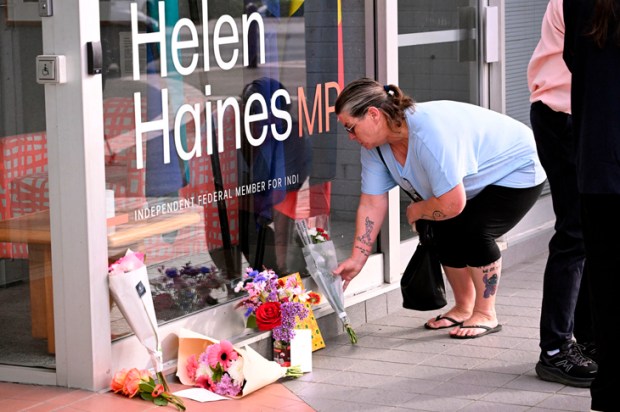
The numbers include arson, assault, vandalism and open intimidation. In December 2024, Melbourne’s Adass Israel Synagogue was burned to the ground. It took that fire, finally, for political leaders to admit the problem existed.
The escalation has been stunning. Surveys show that more than half of Australians now perceive antisemitism as ‘on the rise’, and that nearly seven in ten believe the Israel-Gaza war has made prejudice respectable again. Among Jewish Australians under thirty, almost half say they have been insulted or harassed since October 2023. Many now hide religious symbols in public. That is not cultural sensitivity. It is fear.
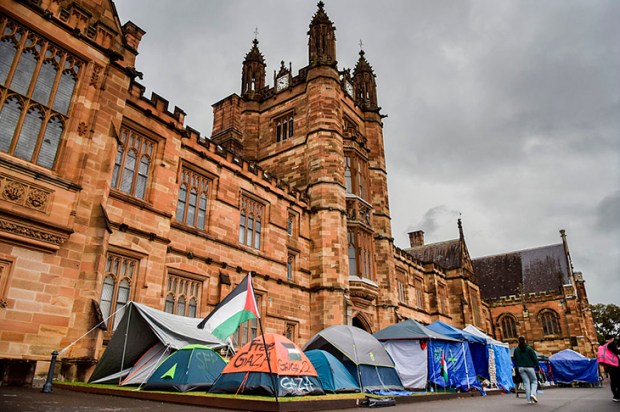
The worst of it is the tone. The new antisemitism is not the old gutter kind – though that still festers online on X and Telegram. Its modern form wears the manners of moral concern. It speaks in the accents of academia and politics, where every slur can be excused as ‘solidarity’ or ‘anti-colonialism’. At universities, Jewish students are shouted down, ostracised, or told that the Holocaust ‘wasn’t unique’. On social media, respectable commentators recirculate medieval conspiracies in the language of rights.
The old hatred has found a new costume.
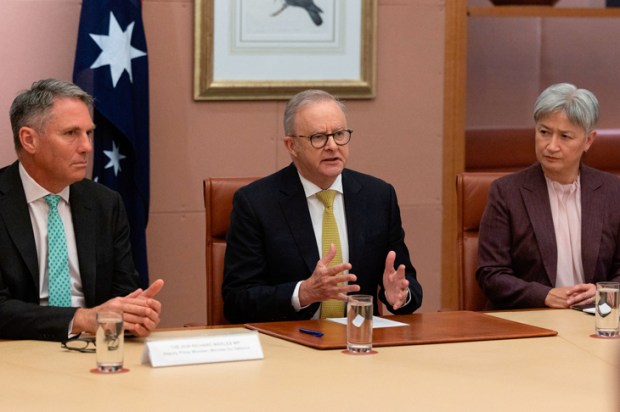
Appelfeld would have recognised the rhythm. In Badenheim, the cultured and educated classes led the way – insisting on normalcy while the danger closed in. ‘It’s only temporary,’ they said. ‘It can’t happen here.’ Our own leaders speak with similar calm.
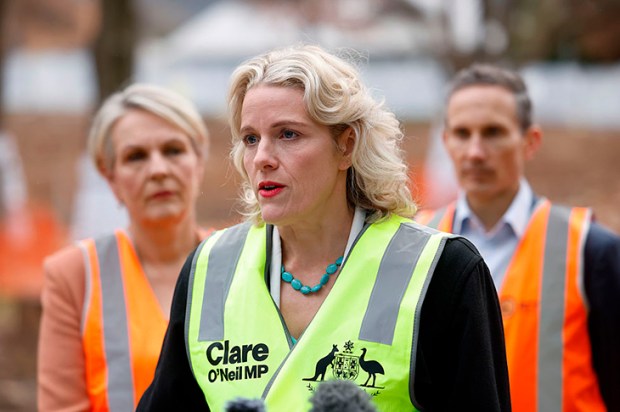
When Home Affairs Minister Tony Burke announced plans to resettle 700 Gazans this year, he brushed aside questions about ideology and antisemitism, quipping that ‘no one has asked me about the Israelis Australia has let in’.
The comparison was obscene, suggesting moral symmetry between democratic Israel and a territory long ruled by Hamas. Yet almost no one called him on it. Civility, once again, triumphed over clarity.
That same moral confusion infected Australia’s decision to recognise Palestinian statehood in September 2025, alongside Canada and the United Kingdom. It was done in the name of peace but achieved only to flatter sentiment. A symbolic gesture that offered nothing to the living Jews now afraid to walk to synagogue. As Lord Hailsham once warned, democracies can become ‘elective dictatorships’, where executive comfort matters more than conscience.
Australia’s crisis is not numerical; it is psychological. The hostility itself is bad enough – but the silence around it is worse. Civic leaders issue statements about harmony, then look away. Journalists avoid ‘sensitive’ angles. Universities talk of ‘diversity’ while Jewish students file complaints no one reads. Antisemitism has become the prejudice that polite society permits, the hatred with good manners.
In Badenheim 1939, the townspeople eventually accept deportation as though it were a train to a music festival. They board in orderly fashion, still believing in the system that will destroy them. Appelfeld does not describe their fate; he does not need to. The power of the book lies in the moment before annihilation, when civility has become surrender.
Australia stands in that moment now. Our hatred is diffuse, our violence sporadic, our leaders mild – but the moral rhythm is the same. Evil never announces itself as such; it enters through euphemism, fatigue, and the fear of appearing impolite.
When the synagogue burned in Melbourne, many said, ‘At least no one died.’ That is true. But in Badenheim, the train had not yet left either.
Blake’s terrifying question – ‘Did he who made the Lamb make thee?’ – is a profound moral inquiry into how the gentle and the terrifying can share a single Creator. Appelfeld showed us the human answer: the Beast of hatred doesn’t always announce itself with a roar. It is invited in with good manners and hidden by the very normalcy that polite society demands.
Australia, comfortable and fixated on its image as the gentle Lamb of tolerance, has no idea the Tyger of antisemitism is already stalking it – a sophisticated, well-spoken predator, utterly camouflaged by the etiquette we refuse to abandon.
History doesn’t repeat itself; it rhymes. Can you hear it yet?
Got something to add? Join the discussion and comment below.
You might disagree with half of it, but you’ll enjoy reading all of it. Try your first month for free, then just $2 a week for the remainder of your first year.