History is replete with examples of strong and successful leaders who made celebratory statements following a protracted period of uncertainty and conflict. Often, these statements constitute the expression of an aspiration and a prediction of future realities. A good example is Winston Churchill’s victory over Germany speech of May 8, 1945, when he prophetically stated that:
‘We may allow ourselves a brief period of rejoicing; but let us not forget for a moment the toils and efforts that lie ahead.’
After the Allied victory in the second world war, his prediction of ‘toils’ materialised in the form of the Cold War as tensions arose between different and incompatible political ideologies.
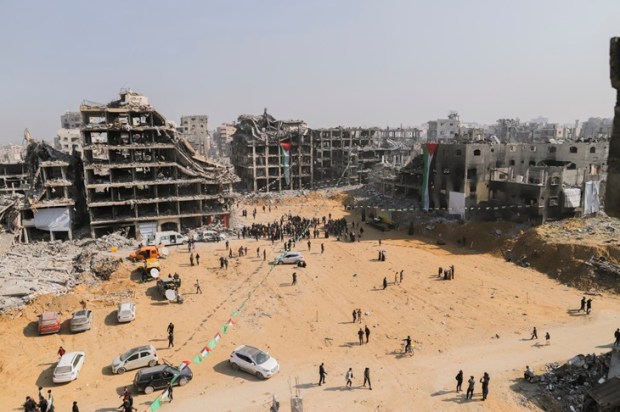
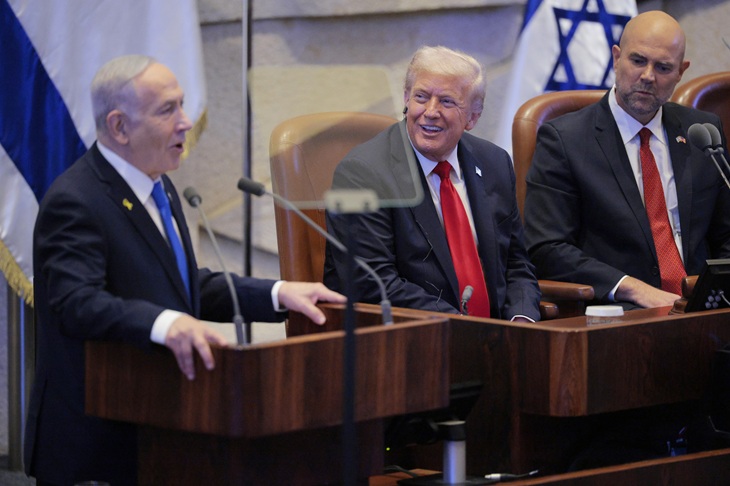
In the not-too-distant future, President Donald Trump’s speech at the Knesset delivered on Monday, October 13, may be offered as another example of such an occurrence. Of course, there is no doubt that the release of the remaining hostages and the signing of the ‘Trump 20-point peace plan’ are momentous achievements, not equalled by any other American President or Western politician. But, if history is an indication, the issue as to whether these achievements presage the beginning of a new period of instability needs to be considered.
In a spectacle heavy with symbolism and political theatre, President Donald Trump addressed Israel’s Knesset, declaring what he called the ‘historic dawn of a new Middle East’. The speech, delivered just hours after the release of the last Israeli hostages held by the murderous Hamas group in Gaza, was part victory lap, part warning shot, and part reaffirmation of Trump’s deep alignment with Israel’s (mostly hardline) visions of the future.
Trump’s central message was triumphalist: Israel, with American backing, had ‘won’. He described the ceasefire with Hamas and the return of hostages as the beginning of a ‘golden age of Israel, and the golden age of the Middle East’.
Trump promised continued American security guarantees, describing Washington as the indispensable partner in ensuring Israel’s safety. He further urged Israelis to transition from war to reconstruction, pledging American investment and diplomatic cover for what he called ‘a stronger, bigger, better Israel’ and floated the idea of a broader regional peace, hinting at expanding the Abraham Accords to include more Arab states.
The Abraham Accords are a series of diplomatic agreements brokered by the United States in 2020 under President Donald Trump, aimed at normalising relations between Israel and several Arab nations such as the United Arab Emirates, Bahrain, Sudan, and Morocco.
President Trump’s vision of peace was not one of compromise. Instead, it was peace on Israel’s terms: Hamas disarmed, Iran contained, and Palestinian aspirations sidelined.
If Trump’s rhetoric toward Hamas was conciliatory in tone, his words for Iran were edged with menace. He reminded the Knesset that American B‑2 bombers had dropped 14 precision weapons on Iran’s nuclear facilities in June’s Operation Midnight Hammer which he claimed had ‘obliterated’ Tehran’s nuclear program.
Trump warned that if Iran restarted enrichment, the United States ‘won’t wait so long this time’ before striking again. At the same time, he dangled the possibility of diplomacy, saying:
‘Iran, we are ready when you are. It will be the best decision you’ve ever made.’
This dual posture, threats of overwhelming force coupled with the promise of a deal, was vintage Trump: maximum pressure with a transactional opening.
The Knesset speech also highlighted Trump’s appreciation of the Adelson family, whose fortune has helped Republican politics for decades. Miriam Adelson, now majority owner of Las Vegas Sands and the Dallas Mavericks, sat in the Knesset gallery as Trump singled her out for praise.
Trump reminded lawmakers that the Adelsons had ‘more trips to the White House than anybody else’ during his first term. The Adelsons’ influence has been tangible: they pushed for the recognition of Jerusalem as the capital of Israel and the transfer of the American Embassy to Jerusalem, recognition of Israeli sovereignty over the Golan Heights, and a hard line on Iran.
Trump’s Knesset address also reaffirmed his alignment with the ideological current of ‘Greater Israel’, the vision of permanent Israeli control over Jerusalem, the West Bank, and beyond. His 2017 recognition of Jerusalem as Israel’s capital and the 2019 recognition of the Golan Heights as Israeli territory were early signals. His ‘Peace to Prosperity’ plan effectively legitimised Israeli annexation of large swathes of the West Bank, offering Palestinians only fragmented autonomy. In this latest speech, Trump again avoided endorsing a Palestinian state, even as protesters in the parliamentary chamber held up signs demanding recognition of Palestine.
Critics argue that his peace plans are less about reconciliation and more about entrenching Israeli dominance, paving the way for what some commentators call the ‘Greater Israel’ project.
Trump made a dramatic appeal to Israeli President Isaac Herzog during the speech, urging him to pardon Netanyahu, who is facing multiple corruption charges. He joked, ‘Hey, I have an idea. Mr President, why don’t you give him a pardon?’ – a line that drew applause and underscored Trump’s personal loyalty. Trump compared Netanyahu’s legal woes to his own, characterising both as ‘political witch hunts’.
Prior to the October 7 attacks in 2023, Israel experienced large demonstrations against Prime Minister Netanyahu due to his proposed judicial reforms. These demonstrations were among the largest in Israeli history and reflected deep societal divisions over democracy, governance, Netanyahu’s leadership, and alleged overall corruption of the Israeli state.
Trump’s Knesset speech was both a celebration and a provocation. To his supporters, it marked the culmination of his promise to be Israel’s greatest ally, delivering hostages home, striking Iran, and securing Israel’s regional primacy. To his critics, it was a dangerous blend of triumphalism and one-sidedness, deepening Palestinian marginalisation and risking further escalation with Iran.
What is clear is that Trump has bound his presidency and his legacy tightly to Israel’s fate. Whether this ushers in the ‘golden age’ he proclaimed or is the beginning of a new cycle of instability, will depend on how his promises, threats, and alliances play out in the months ahead. In the end, the Knesset Speaker said he would nominate Trump for the Nobel Peace Prize for 2026, citing his role in ending the Gaza war and expanding the Abraham Accords. Nonetheless, the decision for the 2026 Nobel Peace Prize is still too far away, and the Middle East political instability is too great.
One thing is certain: Trump’s Knesset speech was a masterclass in how to celebrate a victory – the release of the hostages. But Churchill’s admonition is a reminder that it may also be a prophetically uncomfortable prediction of the future.