When conservationist Steven Nowakowski quietly began mapping Australia’s renewable energy developments four years ago, few imagined the scale of what he would uncover, or the courage it would take to reveal it.
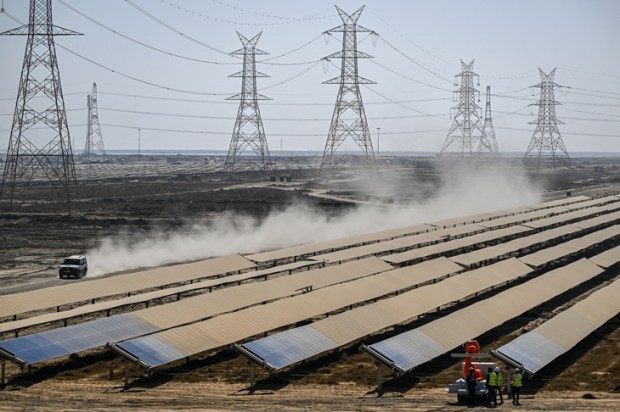
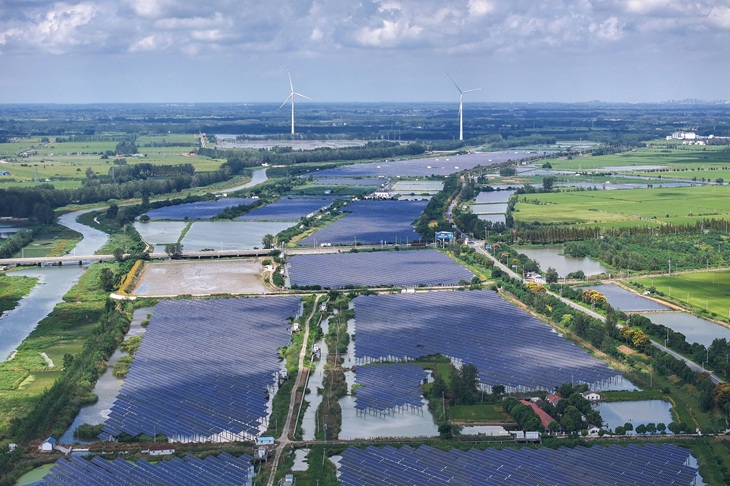
His data exposes the vast footprint of renewable projects spreading across forests, farmland and wildlife corridors – more than 1,200 project sites nationwide. It’s the first complete picture of how the ‘green revolution’ is transforming our landscapes. Built without government funding or institutional backing, Nowakowski’s mapping reveals what our leaders have chosen not to: the true environmental, social and economic costs of the energy transition.
What he’s produced is both a technical triumph and a moral act. It shows a nation racing headlong into an infrastructure revolution with no transparent business case, no cumulative environmental assessment, and little understanding of what is being sacrificed. It is, in many ways, a modern David versus Goliath story – one man, armed with data and conviction, revealing what bureaucracy and ideology have preferred to keep hidden.
Each coloured shape on his map represents more than a patch of land. It tells a story of clearing, fragmentation and displacement of species-rich habitats disrupted, of productive farmland dissected by transmission corridors, of communities blindsided by decisions made far away. The scale is staggering, and yet the public remains largely uninformed.
Billions in taxpayer dollars are being committed to projects that will reshape our regions for generations, but the full costings, feasibility studies and energy-security assessments remain concealed under the convenient label of ‘commercial in confidence’. Australians are being asked to bankroll an experiment that promises decarbonisation without ever proving how it will deliver affordability, reliability or genuine environmental protection.
Steven Nowakowski on Sky News last night on what was missed from his 4 Corners interview. pic.twitter.com/woC6IocVcb
— Rainforest Reserves Australia (@RainforestsAus) June 12, 2024
That secrecy should trouble anyone who values democracy as much as the planet. Because the true cost of intermittent energy is not only measured in dollars – it’s measured in social division and environmental loss. Without firm power or clear integration planning, storage and transmission costs balloon while reliability falters.
Even in Europe, where grids are far more interconnected, nations are rediscovering the limits of weather-dependent power. In France and Germany, hundreds of wind projects have stalled after years of community opposition over noise, shadow flicker and forest destruction. In Spain, solar farms in Andalusia were suspended after lawsuits from farmers and heritage groups who felt ignored. In Scotland, turbines planned for scenic Highland moors were rejected after residents rallied to protect fragile ecosystems.
Across the Atlantic, the United States is facing similar backlash. The huge Grain Belt Express transmission line, meant to carry wind power across the Midwest, has been tied up in lawsuits from landowners who say they were never properly consulted. Offshore wind projects in Massachusetts and New Jersey have been delayed or cancelled amid protests from coastal towns and fishing communities who claim their livelihoods and local environments are being sacrificed without consent.
The pattern is the same everywhere: when consultation becomes tokenistic, social licence collapses. Once that happens, even good projects fail.
The human cost of this imbalance is visible across regional Australia. Years ago, I stood with landholders in the Kiewa Valley as they faced high-voltage transmission lines cutting through farms and forests. Their frustration wasn’t with renewable energy itself, but with being excluded from decisions and treated as collateral in someone else’s vision of progress.
That pattern now echoes across the country. Communities that once welcomed the idea of clean energy are divided. Meetings are held after routes are finalised; environmental studies are perfunctory; concerns are dismissed. People are being managed, not engaged, and that’s how social licence is lost.
We’ve already seen it happen: wind projects in western Victoria collapsing under community opposition, transmission corridors suspended after residents fought back, councils withdrawing support. Trust, once broken, is almost impossible to rebuild.
Nowakowski’s work throws this trust deficit into sharp relief. His map captures the contradiction of a policy that claims to be green while industrialising nature itself. The same agencies that once championed biodiversity and heritage protection now look away as turbines tower over bird habitats and solar arrays consume fertile land.
To question this contradiction is not to oppose renewables – it is to demand that the transition be responsible, transparent and evidence-based. Real conservation has never been about blind acceptance; it’s about balance. A genuine environmentalist must weigh benefits against harms, progress against preservation. That balance has been lost.
In the rush to decarbonise, thoughtful planning has been replaced by slogans and targets. Gigawatts and deadlines have become the new currency of virtue. Meanwhile, essential questions remain unanswered: How much land is being cleared? What are the ecological offsets? What will consumers pay once storage, backup and grid stabilisation are included? And how secure will Australia’s power system be when the wind and sun fall short?
Nowakowski’s project doesn’t call for halting progress. It simply calls for honesty. It provides the transparency that should have come from government itself. Yet instead of being welcomed as a partner in accountability, he faces criticism and dismissal. That response says more about the fragility of our policy foundations than about the man himself.
It’s time for a reset, not of our climate ambitions, but of how we pursue them. Industry, environmental organisations and local communities must come together to demand full disclosure of costs, impacts and alternatives. This should not be left to one man with a map. Australia’s energy transition must be guided by open data, inclusive dialogue and shared responsibility, not secrecy and spin.
If developers truly believe in their projects, they should welcome scrutiny. If governments are confident in their modelling, they should publish it. And if environmental groups are sincere about protecting nature, they should insist on the same accountability from renewables as they do from fossil fuels.
The path to sustainability cannot be paved with silence. Transparency is not a threat to climate action – it’s its greatest safeguard.
Steven Nowakowski’s work is a wake-up call. It reminds us that trust, once lost, is far harder to rebuild than a power line or turbine. The future of Australia’s clean energy transition depends on whether we can listen, learn and lead together, before the social licence that underpins it disappears entirely.
Cristina Talacko is a conservationist and founder of the Coalition for Conservation.