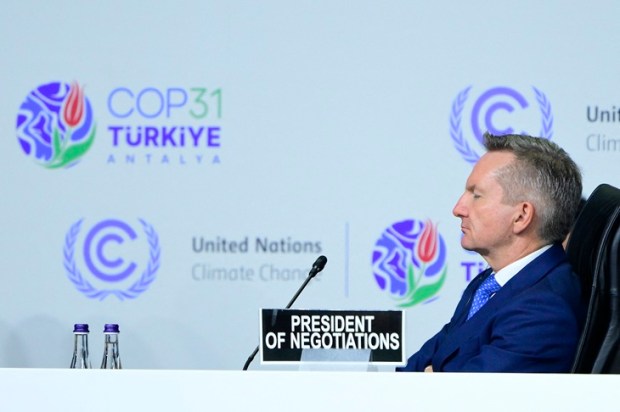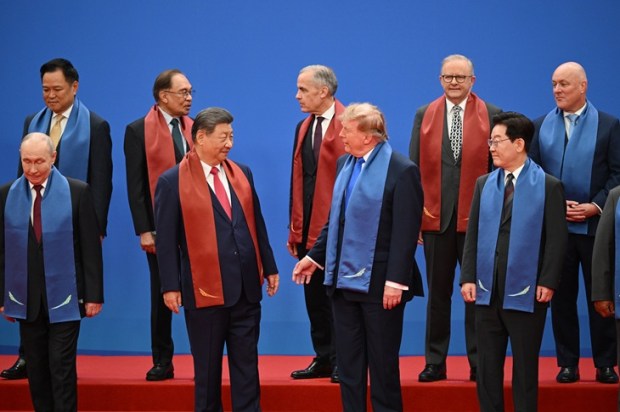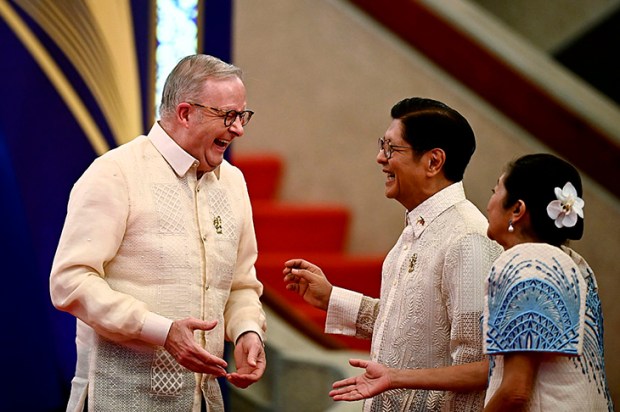
Formed in the aftermath of the second world war, the United Nations was established to maintain international peace and security. Initially created to oppose the Axis powers, it was later repurposed with the ambition of deterring aggression, resolving conflicts through negotiation, serving as the town hall of nations, and fostering stable relations among states.
Ineffective in nature
The UN Charter declares all states equal. Yet the General Assembly, where every member can speak, possesses no enforcement power.
Everybody can talk, yet nothing is required to happen.
Its resolutions are non-binding, there is no legislature, and the Charter largely confines itself to relations between states while remaining almost silent on internal affairs. This stems from an unrealistic founding premise: that formal equality could substitute for the reality of power.
Nations are not equal on the world stage because power, not Charter language, dictates relations between them. The result is an organisation with very limited capacity to take decisive action in genuine humanitarian crises.
The phantom power
Unlike the General Assembly, the Security Council can mandate sanctions and authorise interventions. On several occasions in the 20th Century these powers were exercised, yet the body has repeatedly been paralysed by the veto rights of its permanent members: US, UK, USSR (then Russia), China, and France. The creation of Nato only four years after the UN further sidelined the organisation’s peacekeeping role, given that three of the five permanent members belonged to the new military alliance.
By the end of the 20th Century, it had become clear that the UN was not merely ineffective but also astonishingly corrupt.
Its failures in response to ethnic cleansing in Rwanda and Bosnia, combined with billions of dollars lost or mismanaged in development programs, rendered the institution even more hollow. The pattern continued into the 21st Century: disagreement over the Nato-led intervention under Libya’s 2011 no-fly-zone mandate contributed to complete inaction in Syria in 2013, leaving millions of civilians unprotected from the Assad regime’s bombing of opposition-held cities. Later, both resolutions condemning Russia’s 2022 invasion of Ukraine were vetoed by Russia itself.
The alternative
After the dissolution of the Soviet Union in 1991, the United States became the most influential member of the Security Council by virtue of leading Nato, possessing the greatest military power, and commanding the largest economy. As the sole remaining superpower, it drew global attention toward its internal political system.
After 2001 it was evident that an American President could authorise military action against targets almost anywhere in the world. For decades the dollar has functioned as the principal global trade currency, so that an economy measured in the tens of trillions can pull the rest of the world along with it. Crucially, the American system also permits foreign agents to lobby for their interests. Countries outside the permanent Security Council circle could therefore influence global politics by working through Washington.
With the rise of institutional liberalism, the expansion of international trade, the creation of the petrodollar system, and the growth of the globalist movement, that influence intensified. Lobbying mechanisms originally designed to give ordinary citizens and small businesses a voice in legislative and executive branches of the system, absorbed billions of dollars in campaign donations, market incentives, and occasionally questionable contracts. The practical consequence is that the United States has become a far more consequential body than the UN. Investment in American politics produces actual change in contrast to most other international organisations. Sanctions and tariffs, in particular, have proven among the most disruptive tools available to a US president.
A different kind of influence
One form of influence that has quietly expanded is the presence in Congress of members with dual or ancestral ties to other countries.
In the past decade, dozens of members have been foreign-born or the children of immigrants. Not all of them advance the interests of their countries of origin or their parents’ homelands, but some do so in ways that are difficult to detect. Rashida Tlaib (born Rashida Harbi Elabed), Ilhan Omar (born Ilham Abdullahi Omar), Yassamin Ansari, and Ro Khanna illustrate the pattern.
These members operate inside the ordinary channels of American politics through campaigning, voting, and speaking on the floor. Yet their public positions, especially on foreign policy, frequently align more closely with the priorities of governments or movements connected to their family origins than with those of the median voter.
Tlaib has repeatedly advanced pro-Palestinian measures, including efforts to restrict military assistance to Israel. Omar has criticised US alliances in the Middle East and has opposed sanctions on regimes that have sheltered or armed groups hostile to American interests. Ansari, the daughter of Iranian immigrants and the first Iranian-American Democrat in the House, has been endorsed by NIAC and has aligned with progressive factions supporting rapid sanctions relief and diplomatic re-engagement with Tehran even while the regime’s nuclear and proxy activities remain unresolved. Khanna, whose parents emigrated from India, has advocated expanded H-1B visas and trade policies that disproportionately benefit Indian technology workers and firms, positions strongly supported by Indian-American PACs and business groups.
The difference is quite clear. Unlike non-binding General Assembly resolutions, a single well-placed amendment in the House Foreign Affairs Committee can freeze or redirect hundreds of millions of dollars. A well-organised diaspora network backed by a foreign government can secure a concrete result that no Security Council veto or General Assembly vote can match. Open lobbying, permissive campaign-finance rules, and the growing presence of dual-heritage legislators have turned the US Congress into a more effective instrument of international influence than the institution created in 1945 to manage such influence.
The hidden hand
Foreign influence does not stop at Congress. Podcasts, now one of the most widely consumed forms of media, have become a conduit for foreign money. Millions of dollars flow into these platforms to secure interviews for or against particular individuals or agendas, shifting narratives and, in turn, votes. The effect extends to politicians themselves: audience data and polls that incorporate those audiences can make elected officials reluctant to oppose views held by millions of potential voters. A recent illustration is the campaign surrounding US military action against the regime in Iran. A number of conservative hosts argued against military pressure, favoured negotiations with the IRGC, and pressed for an early exit. The outcome included a flawed memorandum of understanding, a prolonged period of talks rather than decisive action, and a severe midterm defeat for Republicans. Qatar was among the countries that advanced this agenda.
Cold truth
What has been described is the emerging operating system of world politics. Actors of every stripe, including Russia, now play this game. The equity-by-design of the United Nations has failed; American foreign policy conducted according to market rules has prevailed. As in any market, demand generates supply. Whether the arrangement ultimately serves American interests depends on the capacity of the American people and their constitutional system to resist manipulation.