In February 1945, three men sat at a round table in the Livadia Palace and settled, among a great many other things, how votes would be counted in a Security Council that did not yet exist. Three months later, in San Francisco, Australia’s HV Evatt and New Zealand’s Peter Fraser led the small nations’ attack on what the diplomats called the Yalta formula. Evatt lost the argument on the veto. He won the larger point: a country can be bound by arrangements it had no hand in making, and it ought to say so loudly and early.
Eighty-one years on, Moscow is reaching for the same comparison.
Pyotr Tolstoy, a senior Russian parliamentarian, has said the meeting of Donald Trump, Xi Jinping and Vladimir Putin on the sidelines of APEC in Shenzhen could produce a ‘new Yalta’. The Kremlin’s spokesman, Dmitry Peskov, has been at pains to add that nothing agreed there can be imposed on anyone else. When a Kremlin spokesman assures you that you will not be carved up, it is worth checking the knife drawer.
Anthony Albanese was in Shenzhen too, between the East Asia Summit in Manila and the Annual Leaders’ Meeting in Beijing. In his APEC speech he called on Mr Putin directly to stop the war in Ukraine: ‘End it now.’ But the room that mattered this week had three chairs, and none of them was ours.
He did get a seat with the American President first, at Tuesday’s Quad summit in Manila, where Mr Trump told the leaders: ‘We’re all friends. It’s a lot easier that way.’ Then he flew on to Shenzhen. The Quad was the antechamber. Thursday’s trilateral was the room.
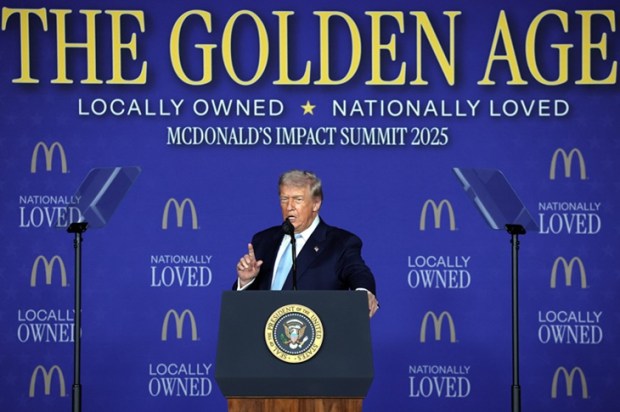
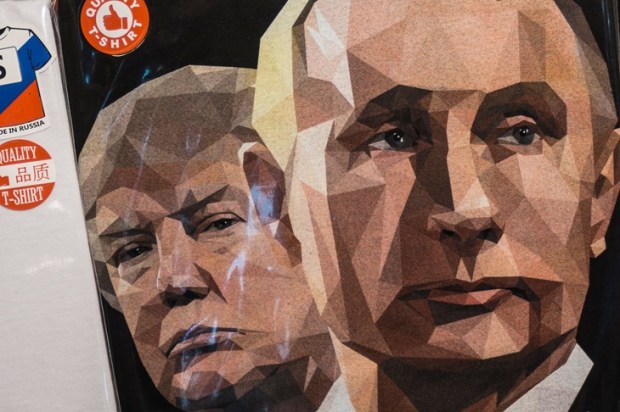
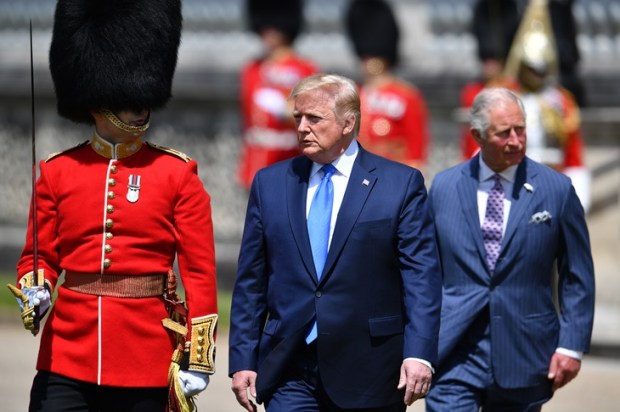
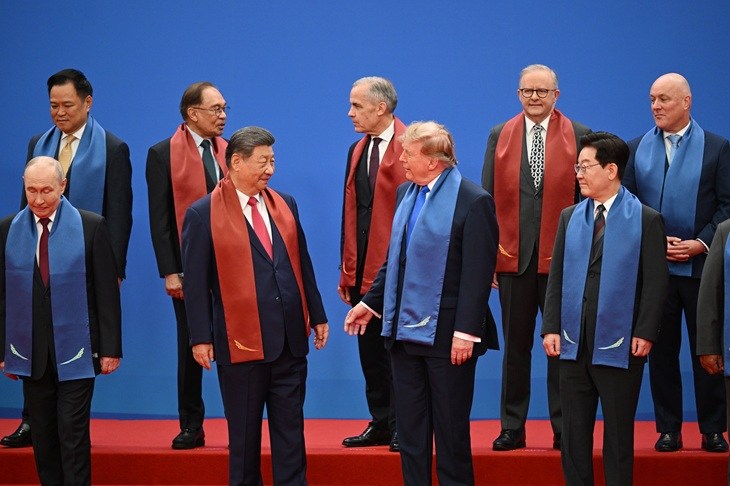
On Thursday, at the Kylin Villa, the three finally sat down together, Xi in the middle of the picture. What emerged was a short ‘trilateral peace declaration’: United Nations reform, details unspecified; more fuel to market; talk of reducing nuclear risks; and immunity for state officials from the International Criminal Court, which has a warrant out for one of the men at the table. Ukraine and Iran went unmentioned. No questions were taken. ‘We are really making history,’ said Mr Trump. The verdict since has been heavy on symbolism, light on substance. True, and beside the point. In great-power politics the symbolism is the substance: a photograph of three men at one table is a message to everyone who was not at it.
On the same day, half a world away, Friedrich Merz, Emmanuel Macron, and Andy Burnham hosted some 30 leaders of the Coalition of the Willing in Berlin, with Volodymyr Zelenskyy present. Australia is a member. Ukraine was discussed in Berlin by those funding Kyiv’s defence, and left out of Shenzhen by those with the most power to end the war. Canberra has a seat in one of those rooms. It is not the one with three chairs.
Three permanent members of the Security Council agreeing among themselves that the UN needs reforming: Evatt would have recognised the scene. On nuclear weapons, New START lapsed in February and Mr Trump wants a new deal that brings in China. Nothing of the kind was agreed. So why should Canberra care about a meeting that produced so little?
Because when great powers bargain, the pressure moves outward, onto the allies who shelter under the American umbrella. Australia will feel it through Pine Gap, the kind of facility any verification regime leans on, and through Aukus, whose logic assumes an American deterrent that is not being bargained over in rooms we cannot enter.
Then there is fuel, where abstraction becomes an invoice. Since American and Israeli strikes on Iran began, the Strait of Hormuz has been repeatedly shut. Australia imports around 80 to 90 per cent of its liquid fuel and is down to two ageing refineries. By the Climate Council’s reckoning it paid the world’s largest diesel premium between March and August: $9 billion, more than twice the next country. Russia, meanwhile, has profited, and Mr Trump has ruled out new sanctions on Moscow. The declaration’s fuel pledge came without a number, a date, or a mechanism.
The average day is not the problem. The bad days are, and they run through every truck, tractor and haul road in the country. The statement did not mention Iran at all; Mr Trump offered only that all three share an interest in oil moving through Hormuz. Australian farmers will pay for the minutes.
Trade is the quieter risk. China takes more than a third of Australia’s exports. We have seen this film: the 2020 Phase One deal committed China to buy an extra $200 billion of American goods over two years, and a Commonwealth Bank analyst warned that up to a tenth of Australia’s LNG exports could be lost. In Shenzhen Mr Trump said he would push Xi to buy more American farm products. Australian beef already sits behind a Chinese quota: this year’s 205,000 tonnes ran out in June, triggering a 55 per cent tariff, and the meat industry puts the cost at about $1 billion a year. When two great powers start swapping wants, a middle power’s market share becomes legal tender. Canberra likes to think it can have American protection and Chinese income at once. Shenzhen was the week the guarantor of one sat down with the customer of the other to discuss terms.
None of this is an argument for sulking. Waiting has value only while the decision remains yours. Once others start deciding, the moment passes. Three things follow.
First, Canberra should say in public, as Evatt did, that UN reform agreed among three permanent members is not UN reform; that any nuclear understanding must leave intact Washington’s commitments to its allies; and, as a party to the Rome Statute, that it does not share the three’s view of the International Criminal Court. Tokyo and Seoul, also left outside the villa, will want to say much the same.
Second, treat fuel as a defence problem rather than a retail one. Excise cuts relieve the bowser for a quarter. Stockholding, refining capacity, and firm supply arrangements with Asian refiners get you through the bad days.
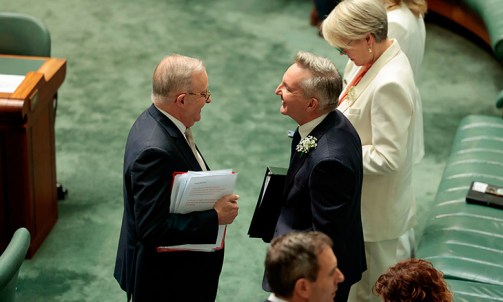
Third, keep using the rooms where Australia does have a chair. On Friday Albanese sat down with Xi for their fifth formal meeting, at the same guesthouse where the three had met the day before. Xi hailed a ‘full turnaround’ in relations, and Albanese was expected to announce better terms for beef and canola. Warm words are welcome. But Australian market access should never be a chip in someone else’s game, and the surer protection is to keep spreading exports across Indonesia, Vietnam, India, and the Gulf.
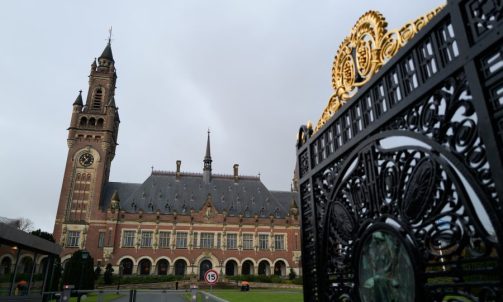
The round table at Livadia is still there. The palace is a museum now, on a peninsula Moscow seized from Ukraine in 2014, which says something about the shelf life of great-power guarantees. Visitors are shown the round table and the famous photographs. Nobody shows them the countries that were discussed in that room and absent from it, because there is no way to photograph a place that was never set.
This week there were three chairs in Shenzhen. Australia does not need a fourth. It needs, as Evatt understood, to make very sure that what is agreed at that table is never mistaken for a decision about us.