What is beauty and what is objective truth?
Modern society has neglected to ask this fundamental question, trading beauty and the sublime for speed and the acceleration perpetuated by Artificial Intelligence (AI) technology, and moral relativism that is antithetical to objective truth.
Take art as an example.
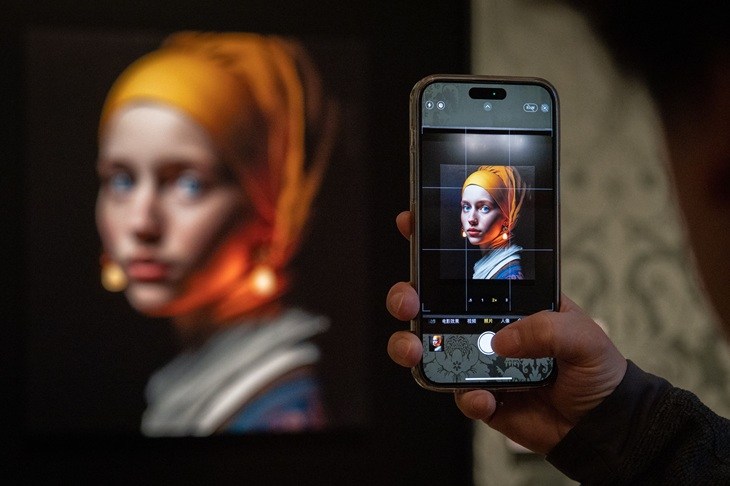
Throughout history, society valued artists who would spend enormous amounts of time to create by hand something that is transcendent. Now, ‘art’ can be generated by AI in a minute. Because the production of an AI image can be measured in seconds rather than weeks or months, what is the aesthetic value of the AI image? Rather than judging it on appearance alone, we must inquire into its meaning.
Evelyn Waugh’s Brideshead Revisited establishes the criteria for such an inquiry through the aesthetic education of its protagonist, the atheistic Charles Ryder, and his relationship with the Catholic aristocratic Flyte family. As a Catholic conservative, Waugh presents beauty and truth as a safeguard against the tide of progress for progress’ sake. Modernity is unmoored from continuity or inherited traditions.
Distinctly Burkean it its outlook, Waugh’s novel uses the house of Brideshead, first and foremost the actual ancestral home, a grand English country house with its chapels, architecture, gardens, and furnishings as both a physical place and a powerful symbol. Charles Ryder is repeatedly drawn to its beauty and the sense of continuity it represents, while the house itself stands for the entire aristocratic, Catholic, premodern world the Flyte family inhabits. Its eventual decline and wartime requisitioning, together with the demise of the family, dramatises the obliteration of the majesty of the Old World in favour of the superficial New World. Yet Ryder’s attraction to Brideshead is initially aesthetic rather than spiritual as he admires the beauty of the house long before he comprehends the religious traditions that give it meaning. In this distinction lies the danger of AI which is the ability to reproduce the appearance of beauty without understanding the human and spiritual inheritance from which it emerges.
While AI offers practical benefits for Australia’s sovereignty, its absorption into every aspect of life threatens the value of tradition and the depth of human experience. Students in a very short amount of time can access the plot and facts of Brideshead Revisited without ever comprehending the full extent of its meaning. This defeats the very purpose of literature and art, stripping the experience of reading a novel of its intellectual and religious significance, diminishing the human experience and ultimately stunting the intellectual and moral development of the next generation.
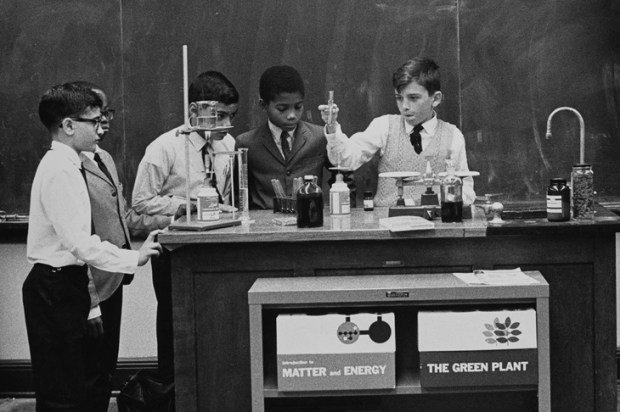
In Stanley Kramer’s 1955 film Not as a Stranger, a telling classroom exchange captures the same distinction between surface competence and genuine understanding. Alfred Boon (Frank Sinatra) casually remarks to a fellow student that medical students need only master about 70 per cent of the material. Pathologist Dr Aarons (Broderick Crawford) overhears him, hurls a heavy medical textbook at the young man, then proceeds to recite its contents from memory, insisting that a doctor must know everything. ‘A doctor is memory,’ Aarons declares. The scene dramatises the principle that modern technological culture has largely abandoned – that true expertise is not the selective extraction of convenient fragments, but the disciplined assimilation of the entire tradition of knowledge.
Just as the AI image or the student summary of Brideshead Revisited can reproduce outward form without inhabiting meaning, the 70 per cent approach treats knowledge as disposable information rather than as a living inheritance that must be fully internalised. Aaron’s rage is not mere pedantry, it is a defence of the idea that certain callings – medicine, law, art, literature, the care of a civilisation – cannot be practised at a discount. Waugh would have regarded this transformation as the product of superficial progress and the sidelining of tradition from both the civic and aesthetic spheres. Notably, Ryder does not initially embrace faith. For much of the novel, he remains an agnostic who regards the Flytes’ Catholicism with scepticism or active resistance. At the same time, he is deeply alienated by modernity. He idealises the beauty, continuity and hierarchy of the old aristocratic world embodied by Brideshead, while finding the contemporary age shallow, materialistic and aesthetically impoverished.
If this sounds familiar, one can substitute inter-war societal decline with the questions of the potential effects of AI and the opportunity for the imitation of genuine human intelligence. One of the issues with technological progress is that it occasionally, and unfortunately, coincides with the underappreciation of cultural traditions which have organically grown over several generations. Of course, society’s satisfaction with the artificial long predates the emergence of AI, having been cultivated through generations of mass production, consumerism, and the gradual displacement of inherited cultural traditions. Yet AI represents further development in this process, as technology no longer merely reproduces the products of human creativity but increasingly imitates the creative act itself.
Like Ryder, modern society desires the fruits of tradition while neglecting the prudence and inherited prejudices that make those fruits possible. Unfortunately, we have given AI the authority of decorating the house without first building the foundations. Therefore, AI has learnt about the concept of knowledge without learning its meaning, originating ideas such as beauty and mortality in abstract subjectivity rather than objective reality. AI generates these ideas and demeans them to create meaningless product degrading human art beneath the guise of progress and technological innovation.
It is evident that process unintentionally cannibalises aesthetics, transforming it into something mechanical and scientific to be methodically deconstructed and mimicked. It is artificial after all.
Place an AI image beside a Botticelli, and the contrast is immediate. One offers merely the imitation of beauty, devoid of the spiritual, and intellectual depth that gives art its meaning, the other awakens the senses to the sublime. That gulf defines the aesthetic distinction between AI product and artistic beauty. The distinction is not necessarily one of visual appeal, for an artificial image may be aesthetically pleasing. Rather, it concerns whether beauty can be separated from the human intention, experience and spiritual understanding that originally brought it into existence.
Roger Scruton warned that ‘beauty is vanishing from our world because we live as though it did not matter’. His point was not simply that modern art had become ugly, but that beauty institutes a genuine form of human judgement rather than an arbitrary preference. For Scruton, beauty belongs alongside truth and the heavens among the values pursued for their own sake. Thus, it is sacred and is in peril when replicated.
AI can imitate the outward characteristics of Botticelli, Waugh, or a Gothic cathedral, but imitation does not necessarily entail understanding the sanctity attributed to the object or its artistic significance in shaping sentiment. In essence, AI cannot understand art because it cannot metaphysically perceive it, nor the reason for its existence. Its function is only to identify and generate, encapsulating the bare minimum for the criteria of human intelligence.
The lesson of Brideshead Revisited is therefore not that culture can or should resist every technological change, but that advancement becomes destructive when it forgets what it is progressing towards. Ryder eventually discovers that beauty is not purely decorative. It points beyond itself towards memory, inheritance, faith, and ultimately truth. The same distinction should govern our response to AI.
AI may become extraordinarily capable of reproducing forms of human creativity, but a civilisation that mistakes reproduction for creation and information for wisdom risks losing the soul of its society.
Burke, Waugh, and Scruton each understood in different ways that civilisation depends upon inherited forms of meaning. The danger of AI is therefore not that the machine will suddenly become human, but that human beings may gradually become satisfied with the artificial. If beauty matters because it reveals something true about the human condition, then preserving our capacity to recognise it may prove far more important than teaching a machine how convincingly to imitate it.