In the hallways of modern universities, certain ideas have achieved near-hegemonic status. Among them, Critical Theory stands as perhaps the most influential intellectual framework of the past half-century. It shapes how students understand power, justice, identity, and even the nature of knowledge itself.
But what if this dominant paradigm rests on fundamentally flawed foundations?
What if Critical Theory is neither critical nor theory in any meaningful sense of those terms?
This is not merely semantic quibbling. The stakes extend far beyond academic taxonomy. When intellectually dubious frameworks govern how millions of young minds learn to interpret reality, the consequences ripple through politics, culture, and actual social cohesion.
Without any criticism of Critical Theory, young students are at risk of being brainwashed by pseudo-academics who are more akin to rabble-rousing cultists looking to expand their influence over society.
To recover genuine intellectual freedom and rigorous scholarship, we must subject Critical Theory to the very scrutiny it demands of others, especially as the social ‘sciences’ has been penetrating other, more rigorous disciplines, such as law, science, and medicine.
A Brief History of Critical Theory
Critical Theory did not begin in contemporary gender studies departments or campus diversity offices. Its origins trace to the Frankfurt School, a group of Marxist-influenced philosophers who gathered at the Institute for Social Research in 1930s Germany. Figures like Max Horkheimer, Theodor Adorno, Herbert Marcuse, and later Jürgen Habermas sought to develop a form of social analysis that could diagnose why socialist revolution had failed to materialise in Western Europe despite Marx’s predictions.
They aimed to shift focus from economic determinism alone to what they called ‘ideology critique’; examining how culture, psychology, and social institutions conspire to reproduce domination even among supposedly liberated populations. Critical Theory promised something radical: not just to interpret the world, but to transform it by exposing hidden structures of oppression.
Over subsequent decades, this framework migrated across disciplines and borders. By the 1980s and 1990s, it had permeated law schools, humanities departments, and eventually spread throughout higher education’s institutional infrastructure. What began as an obscure philosophical project and thought experiment, became, through successive waves of adoption, orthodoxy. And acceptance and progression through the modern, poisoned, academic world means one must simp to the new orthodoxy.
Yet this historical trajectory contains an irony that deserves mention. Many varieties of Critical Theory draw heavily upon postmodern scepticism: Foucault’s analyses of power/knowledge regimes, Derrida’s deconstruction of binary oppositions, Lyotard’s rejection of grand narratives. Postmodernism famously rejects the possibility of objective truth. But if all truth claims are merely expressions of power, then Critical Theory’s own assertions about oppressive structures must also be treated as contingent rather than authoritative. Either Critical Theory is merely another power play, or it possesses privileged access to reality that its philosophical foundations deny. This contradiction remains largely unaddressed within Critical Theory’s own discourse.
How Critical Theory Achieved University Dominance
The mechanism of Critical Theory’s institutional entrenchment deserves careful examination. It was not simply a matter of superior intellectual arguments winning the day. Rather, a confluence of factors facilitated its ascent: strategic appointments of sympathetic faculty, the creation of administrative bureaucracies centred on diversity and inclusion initiatives, funding streams tied to particular ideological orientations, and the gradual reshaping of hiring, tenure, and curriculum decisions.
My own experience illustrates this pattern. During my student time at university, one of my courses was focused on law and justice, a topic I have a great deal of passion for. One might reasonably expect heavy exposure to classical jurisprudence such as Natural Law theory from Aquinas and Grotius, Legal Positivism from Bentham and Hart, Legal Realism’s pragmatic insights, perhaps Constitutional originalism and living constitutionalist debates. Actual jurisprudence, the systematic study of legal philosophy, reasoning methods, and normative frameworks that have governed legal thought for centuries, was conspicuously largely absent. And whilst some of this was briefly touched on, the syllabus was overly dominated by ‘Critical Theory’, ‘feminist jurisprudence’ (without ever learning what jurisprudence was), and ‘Critical Race Theory’. Indeed, we were being taught to insanity that the idea that everyone should be equal before the law is actually racist. I am not saying there is no place for discourse around these, what I consider nonsense topics, but for easily swayed young minds in first year fresh out of school, I found it a great disservice at best, and dangerous brainwashing at worst, especially when there was no balanced critique (hence as I stated before, one must not question the orthodoxy in academia these days!).
This is not unique to modern law schools or even universities just in Australia. Similar patterns have emerged across numerous disciplines across Western institutions where methodological diversity yields to theoretical monoculture. Dissenting voices face professional risks: fewer publication opportunities, slower tenure tracks, exclusion from conferences and networks. Meanwhile, adherence to Critical Theory’s core assumptions accelerates career advancement. Universities claim to champion open inquiry while systematically constraining its practical exercise.
Why Critical Theory Is Not Actually Critical
To call oneself ‘critical’ implies genuine openness to questioning and revision. True criticism examines claims regardless of who advances them or whether conclusions align with prior commitments. Critical Theory, however, exhibits selectivity that undermines this aspiration. Power structures receive relentless scrutiny except when those structures include the ideology itself. Critical theorists routinely identify ‘hegemony’ in conservative organisations, religious institutions, corporate hierarchies, and traditional family formations. Yet the power dynamics operating within academia, progressive political movements, and Critical Theory communities themselves remain largely invisible to this analytical framework. Indeed, they all seem to be dominated by the very power structures they claim to be against.
Consider the treatment of dissenting scholars. When academics challenge Critical Theory’s core premises – questioning gender essentialism, disputing statistical interpretations of discrimination, or defending universal Enlightenment values – they face systematic marginalisation. Their publications encounter heightened barriers. They experience social ostracisation. Their careers stall. Some even lose status and professorships. This is precisely the kind of coercive conformity that Critical Theory theoretically opposes, yet it operates unquestioned when deployed in Critical Theory’s defence. To note, the Foundation for Individual Rights in Education, FIRE, is a great source of information relevant to this.
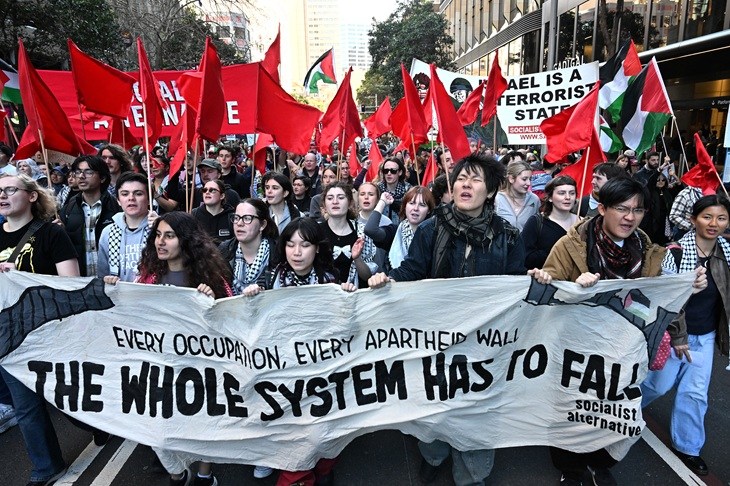
Furthermore, Critical Theory tends toward oversimplification in its treatment of power. The framework reduces complex social phenomena to binary categories: oppressor versus oppressed, dominant versus marginalised. This Manichean analysis ignores intersectionality’s insights too readily, fails to account for agency within disadvantaged groups, and treats entire demographics as monolithic blocs sharing identical interests. Real human beings disappear behind abstract positional categories. A great modern example is the conflict between Israel and Gaza, where Israel is deemed the oppressor simply because it has more traditional military might, whilst completely ignoring the power that Hamas makes use of in media manipulation (i.e. staging fake civilian casualty videos, showing real Gazan civilian casualties whilst not mentioning they prevented the civilians from using their terror tunnels as protection during Israel’s military response to terrorism, and getting militants to play dress up as journalists).
More problematically, Critical Theory’s conception of power is often unfalsifiable. Any resistance to Critical Theory’s conclusions becomes evidence of false consciousness or hegemonic internalisation. Any inconvenient counterexample gets explained away through appeals to systemic forces operating beneath conscious awareness. A theory that explains everything explains nothing, and cannot genuinely be tested.
Why Critical Theory Is Not Theory
In the philosophy of science, ‘theory’ carries specific requirements. A proper theory offers explanatory mechanisms that generate testable predictions. It remains open to falsification; if evidence contradicts the theory’s predictions, the theory must be revised or abandoned. Scientific progress depends precisely on this vulnerability to disconfirmation.
Critical Theory fails on both counts. First, its explanatory mechanisms are typically vague and underspecified. When does patriarchy operate? How do we measure privilege? What constitutes a ‘systemic’ effect versus random variation? Without operational definitions, these concepts function as rhetorical devices rather than analytical tools.
Second, Critical Theory resists falsification through elaborate immunising strategies. Contradictory evidence is reinterpreted as demonstrating the theory’s deeper truths. Consider racial outcomes: if disparities persist, Critical Theory claims this proves ongoing systemic racism. If disparities diminish, Critical Theory attributes this to temporary concessions extracted from powerholders before underlying structures reassert themselves. If no disparities exist, Critical Theory suggests dominant groups have successfully concealed their advantages. Either way, the theory wins.
This immunisation tactic mirrors what Karl Popper identified as pseudoscience. Marxism, aspects of Freudian psychoanalysis, and various conspiracy theories employ similar strategies: all possible observations get absorbed into confirmatory narratives. Critical Theory does the same with power analysis. Its immunity to refutation renders it philosophically vacuous as theory.
The Dangers of Teaching Critical Theory as Fact
When universities present Critical Theory not as one contested perspective among many but as established fact, they inflict real harms on students, discourse, and society. And this does not even have to be done in a simplified manner such as stating Critical Theory as ‘fact’ as more insidious methods can be and are employed. I have seen the psychological tricks I learned as a strategic management consultant used by Critical Theory-peddling academics, such as the bolding of key text to ensure the information is more fully absorbed as reality.
Several domains illustrate the aforementioned concerns.
Gender and Identity: perhaps nowhere is Critical Theory’s influence more visible than in contemporary debates surrounding sex and gender. Under Critical Theory’s framework, gender becomes a socially constructed performance rather than biological reality. While this insight had legitimate philosophical and practical origins (and indeed, there is a distinction between sex and gender), its present enforcement produces troubling consequences when militantly applied. Biological women face exclusion from spaces reserved for female athletes, domestic violence shelters, and prison housing policies. Medical professionals hesitate to provide sex-appropriate treatments for adolescent patients due to fear of accusations. Language itself becomes policed, with people fired for using incorrect pronouns.
The irony compounds when remembering Critical Theory’s philosophical lineage. Postmodernism rejected absolute truth, claiming all knowledge is contingent upon cultural and historical context. Yet Critical Theory now asserts with dogmatic certainty what it means to be a woman, man, or non-binary person. Absolute truth claims emerge from a philosophy denying truth’s possibility. This self-contradiction goes unexamined while individuals’ lives suffer from its implementation.
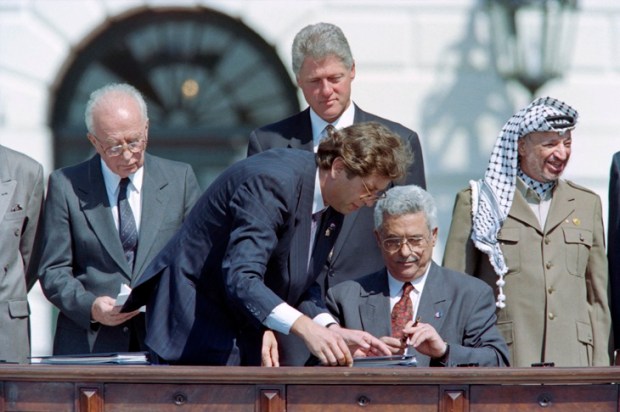
International Conflicts and Antisemitism: Critical Theory’s power-analysis framework also distorts how we understand geopolitical conflicts. Take the Israeli – ‘Palestine’ situation. Critical Theory reduces this complex historical dispute to simplistic oppressor-oppressed binaries: Israel falsely accused of being a colonial settler state versus ‘Palestinians’ as indigenous victims, despite Jews being indigenous to Israel and ‘Palestinians’ not being an actual ethnic group (and ‘Palestine’ never being an actual country), but those with an antisemitic ideology borne out of the marriage between the Soviets and Arafat. Historical nuance dissolves. Context disappears. Alternative explanations for ongoing tensions such as territorial disputes, security concerns, terrorist violence, reciprocal grievances, all vanish beneath crude categorisation.
More insidiously, this framing fuels antisemitism under progressive cover. When Jewish people are cast collectively as representatives of oppressive power structures, ancient prejudices find fresh justification. Campus protests calling for Israeli Jewish genocide through ‘river to the sea’ chants or celebrating terror attacks against Israeli civilians receive protection as ‘free speech’ when framed through Critical Theory’s liberation narrative. Meanwhile, Jewish students experience intimidation and exclusion that administrators dismiss as legitimate political expression.
Critical Theory’s blindness to these dynamics stems from its theoretical architecture. Anti-Jewish hatred doesn’t fit neatly within oppressor-oppressed binaries because Jews occupy contradictory positions depending on which critical theorist you consult. Sometimes they count as oppressed minorities; sometimes as ‘imperialist colonisers’ by those deficient in historical knowledge. The inconsistency reflects not analytical sophistication but rather the framework’s inability to handle historical complexity.
Academic Integrity More Broadly: Beyond specific case studies, teaching Critical Theory as truth corrodes the fundamental purpose of universities. Higher education should cultivate independent thinking, expose students to diverse perspectives, and train them to evaluate evidence dispassionately. Critical Theory teaches exactly the opposite: loyalty to predetermined conclusions, hostility toward opposing views, and selective evidence-gathering that confirms ideological priors.
Students graduate believing certain propositions are beyond debate. They encounter discomfort when confronted with actual disagreement. They lack tools for engaging respectfully across philosophical divides. Our increasingly polarised public discourse owes something to this grand pedagogical failure that universities are at the forefront of.
Conclusion: Recovering Academic Rigour
Universities exist to pursue knowledge, not to enforce orthodoxy. Yet Critical Theory’s dominance threatens precisely this mission. By masking itself in scientific language while lacking actual scientific rigour, and by claiming critical stance while resisting criticism, Critical Theory embodies contradictions it condemns in others.
Recovery requires several steps. First, faculty hiring and promotion must resume commitment to methodological pluralism. No single theoretical framework should achieve gatekeeping authority. Indeed there is an irony in the very institutions that promote ‘diversity’ we see a grand paucity of anything to the right of the further left on the political spectrum (recently it was shown that 99 per cent of Harvard’s faculty financially supported the Democrats). Second, curriculum design must restore intellectual history’s breadth – exposing students to competing perspectives rather than indoctrinating them into narrow doctrinal positions. Third, administrators must protect dissenters from professional retaliation. Academic freedom means protecting unpopular views as vigorously as popular ones.
Most importantly, students deserve honest intellectual preparation for civic life. The world presents complicated problems resistant to formulaic solutions. Universities should equip graduates with analytical tools capable of handling ambiguity, weighing evidence, and revising conclusions when warranted. Critical Theory’s reductionism leaves them ill-prepared.
The path forward demands humility. We cannot know everything. We must remain open to learning from unexpected sources. We must acknowledge where our own assumptions might prove wrong. Critical Theory, ironically, teaches none of these virtues. It is time for universities to remember what they’re supposed to be.
Dr Christopher Haggarty-Weir, Leadership Fellow at the QUT Leadership Institute and law student at the Queensland University of Technology.