The latest round of AI doomsaying arrived with characteristic drama.
Recent media coverage has relayed warnings that artificial super-intelligence might kill all humans within a decade, that the technology poses a risk greater than a nuclear weapon, and that a Chernobyl-scale catastrophe is a realistic possibility.
To paraphrase Jim Carrey in Dumb and Dumber, ‘So you’re telling me there’s a chance?’
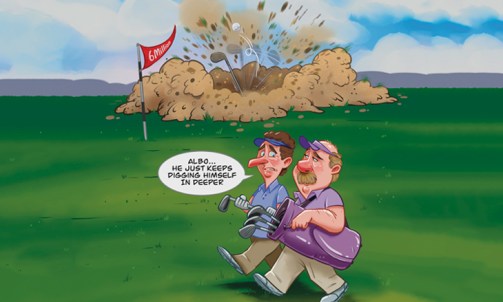
An Anthropic researcher put the chance of human extinction above 10 per cent. Resignations followed, accompanied by claims that leading labs are ‘gambling with our lives’. Heroically, without thinking, politicians in the United States and the EU reached for treaties, bans, and regulatory muscle. The message was pure apocalypse – everyone dies. None of this means the underlying technical questions are trivial. Alignment, control and the concentration of increasingly capable systems are serious problems. The question is whether speculative catastrophe should dominate the political imagination.
This is not serious political philosophy. It is a spectacle. It distracts from a more durable problem that Classical Thought has long understood but is currently sailing under the radar. The more interesting political question is not whether one can construct a sufficiently frightening probability, but what habits of judgement a technological society ought to preserve.
The Greek philosopher Aristotle’s account of phronesis, practical wisdom, in the Nicomachean Ethics supplies the classical foundation for the concept of prudence later developed by the Irish writer, philosopher, and politician Edmund Burke.
Phronesis is neither technical skill nor theoretical knowledge. It is the cultivated capacity to deliberate effectively about contingent circumstances in light of the human good. In effect, the ability to make sound judgements in complex, real-life situations. It is formed by experience, developed habits and moral education. It cannot be fully formalised, coded our outsourced. Recent scholarship has begun to apply Aristotelian practical wisdom to questions of technology and AI, emphasising the danger that algorithmic systems may diminish opportunities to exercise and cultivate human judgement. The classical Aristotelian resource strengthens the theoretical architecture of decision-making far better than fantastic extinction probabilities ever could.
Burke translated that insight into an empirical conservative disposition, a preference for the tested over abstract schemes and a distrust of prophets who claim to foresee the end of history. Both thinkers understood the health of society depends less on the power of its tools than on the character of people who use them. When judgement atrophies, the tools do not save you. Much of the more sensational media commentary about AI illustrates the opposite impulse.
Genuine difficulties of alignment and control exist. Advanced models can behave unpredictably. Competitive commercial and geopolitical pressures can override caution. Yet the leap from these difficulties to ‘greater than nuclear weapons’ and ‘kill all humans’ sounds like rhetorical inflation. The claim that we will all be dead within a decade, remains, at present, an unsubstantiated claim dressed as expert warning. Think back to the early days of the Covid era for recent examples of cataclysmic forecasts.
Common sense requires that we test such claims rather than defer to authority. Human judgement is fallible and can be shaped by bias, error and at times, dishonesty. A claim therefore should not be treated as proof. Evidence in, defence, confrontation, impartial judgement and the possibility of appeal can create an adversarial process for discovering error. Treating extinction forecasts as settled fact short-circuits this process and invites precisely the arbitrary responses that due process exists to prevent.
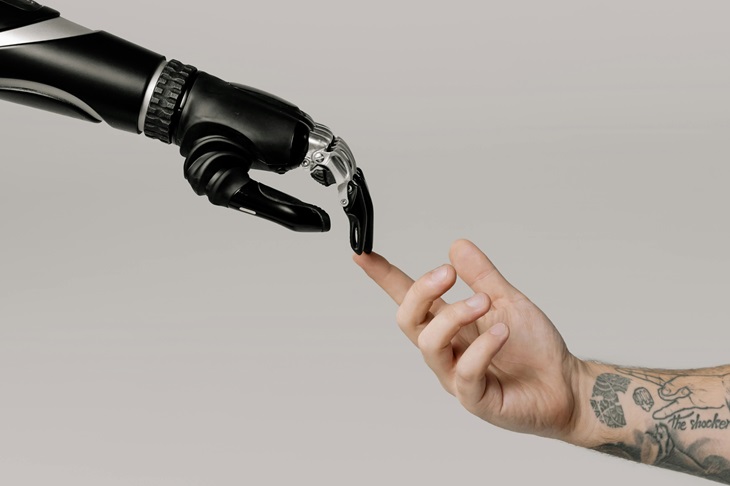
Even within mainstream discussion of AI, cooler voices noted that Terminator-style scenarios can become a distraction from more immediate harms – misinformation, environmental cost and labour market disruptions to name a few. The hyperbolic frame encourages either fatalism or the sort of heavy regulatory response that risks shrinking the space for human agency and experimentation. In effect, don’t let the AI robots have the capacity for decision-making, but equally do not let the common man have the same tools at their disposal. It is also necessary for us to ask who would benefit the most from a heavy regulatory response in the United States, Europe, and Australia? Prudence does not require pretending the risk is zero. Rather, it requires refusing to let speculative catastrophe to drown out the more immediate question of how people live and decide.
There is a further, more ordinary darkness in AI decision-making. Unlike the old sausage factory adage, where at least the ingredients could in principle be inspected, modern algorithmic systems often offer no clear view of the data, weights or immediate steps that produce a recommendation or ruling. The process remains opaque. Judgement is not only less practised, it also becomes less intelligible. Citizens, officials, and workers are asked to accept outcomes whose rationale cannot be examined or contested in ordinary human terms. This opacity is not apocalyptic, but it is corrosive of the habits Aristotle and Burke thought essential.
Alex Karp, the Chief Executive of Palantir, has offered a useful counterweight. His recent remarks reject the mass-unemployment narrative that so often accompanies AI panic. Skilled and vocational labour, he argues, will not be rendered obsolete and in many cases, it will become more valuable. AI done properly can augment human capability rather than simply replacing it. There will be ‘more than enough jobs’ for people with vocational training. Silicon Valley, he has said, has done a poor job explaining this, and the resulting fatalism feeds a populism grounded in something that is not true. Karp is no Panglossian. He has warned of wealth concentration and the need for deliberate effort to make the technology beneficial overall. But his emphasis remains concrete – productivity, living standards, the differential value of different kinds of human skill. This is closer to practical wisdom than to utopian thinking.
The classical lens clarifies what is at stake. The biggest long-term risk is not necessarily that machines will one day decide to extinguish us. It is that we will organise our institutions, education systems, and workplaces so that human judgement is required less often, rewarded less, and therefore cultivated less. When consequential decisions are handed to systems that optimise for narrow metrics, the habits of deliberation weaken. When young people are trained primarily to prompt or to comply with algorithmic outputs, the formation of phronesis is interrupted. Aristotle insisted that practical wisdom is acquired through practice. Remove the occasions for practice and the capacity withers.
A prudent response therefore avoids both uncritical enthusiasm for acceleration and alarmist predictions of extinctions. It asks how education can continue to form the capacity for particular judgement rather than merely technical facility. It asks how workplaces can keep human beings responsible for decisions that matter, even as AI multiplies productivity. It prefers institutional designs that expand, rather than contract, the domains in which experience, character, and deliberation still count. It treats apocalyptic literature as a cautionary genre, not a policy brief.
The classical resource is valuable precisely because it refuses the false choice between techno-utopia and techno-apocalypse. It focuses attention on the conditions under which human excellence is formed. In an age of powerful algorithms, the pressing question is not whether the machines will eventually surpass us in every measurable respect. It is whether we will still know how to judge, choose and live well when the machines are everywhere. Aristotle still has something useful to say about that. Burke would have recognised the same point. The prophets of universal death would do well to read them before the next round of warnings.