Imagine an entire Lufthansa fleet of 27 Boeing-747s, at maximum capacity, picking up migrants from South and Southeast Asia, among other regions, and then dropping them off in Australia – mostly in Sydney, Melbourne, Perth, and Southeast Queensland.
Now imagine the fleet of jumbo jets flying back empty to pick up yet another cohort, to drop off in Australia, all with one-way tickets. Then, repeat the fleet’s journey – at least five and a half times over.
This is illustrative of the net overseas migration that took place in just the first three months of this year.
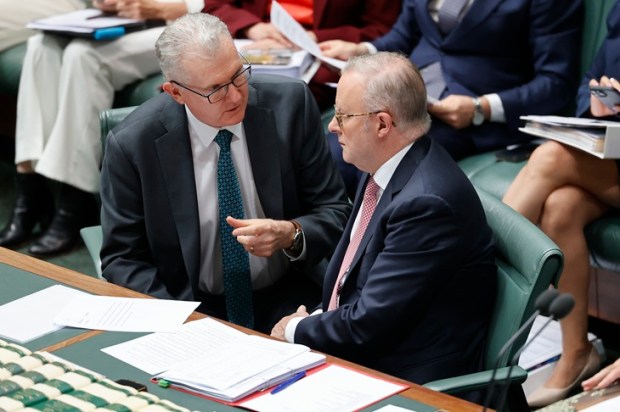
On Thursday September 17, at his National Press Club address, Home Affairs Minister Tony Burke tried to gaslight the Australian public into thinking that ‘mass migration’ has not been happening at all and downplayed the role of record migration in the housing crisis.
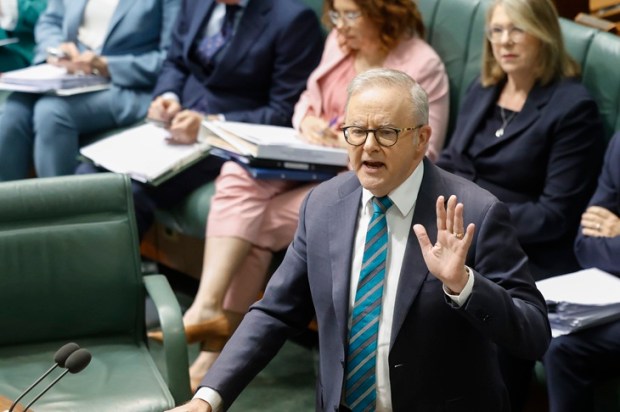
Earlier, in August, Prime Minister Albanese boasted that his government’s housing policies ‘are working’ to deliver new homes for Australians. This claim was based on an obscure metric that most Australians have never even heard of, and the assertion is inconsistent with direct statistical measures of housing supply.
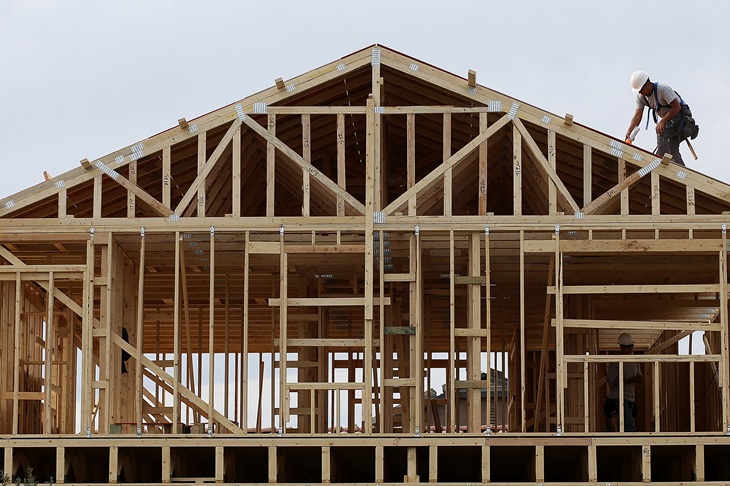
Net new housing supply for the most recent full financial year (ending June 2026) totalled 173,600. This was below annual housing supply five years prior, in 2021 (which was 202,400), and ten years prior, in 2016 (which was 212,400).
Net migration intake, on the other hand, is expected to be more than 40 per cent higher than in 2016. Back then, there were more homes built than migrants coming in.
Sydney, followed closely by Melbourne, took in more post-pandemic overseas migrants than any other city or region in Australia. At the same time, the New South Wales government is struggling more than its state counterparts elsewhere in delivering its share of the promised 1.2 million new well-located homes by 2029.
For NSW, the shortfall in the number of housing approvals to date is close to 50,000 homes, more than the shortfall in every other state combined. And that is based on the most generous interpretation of progress towards the National Housing Accord target.
On May 28, 2026, the Productivity Commission launched an inquiry into housing supply regulation with the aim of addressing what it conceded to be a housing shortage facing the nation.
Institute of Public Affairs submission into that inquiry foresaw what was coming and warned – in no uncertain terms: ‘Urban densification is not the answer to the housing crisis.’ We knew that this inquiry is at risk of simply creating an excuse for cramming more people into Australia’s already overcrowded metropolitan centres. In turn, this could have the effect of city-based politicians further dominating Australia’s political landscape.
The Productivity Commission’s interim result speaks for itself. It claims: ‘Of all the housing supply reform areas in our terms of reference, reforming land-use controls to increase housing density in cities is likely to have the greatest impact on supply.’
It is hard not be cynical about the Commission’s conclusion, especially when they have been warned, by the IPA, that the inquiry’s ‘integrity should not be undermined by a pre-determined [solution] and oversimplistic argument that the primary or only solution to housing supply challenges is more high-density housing and urban densification’.
Urban residential land use takes up only about 0.20 per cent of Australia’s 7.69 million square kilometre landmass. At just four people per square kilometre, Australia is the second least densely populated country on earth, just behind Mongolia.
Cutting red tape, investing in the regions, and slashing migration into large capital cities are what would sustainably address Australia’s housing crisis, not cramming more and more people into Sydney and Melbourne.
A 2024 issue of the IPA Review documented a case of a housing developer’s fight against environmental red tape imposed by a city council, which refused to allow an expansion of the developer’s housing project supposedly due to environmental risks.
For context, while Sydney and Melbourne boomed, the region in question’s population between the financial years ending 2023 and 2025 actually fell by 1,228 people.
What has been happening, in my view, is crystal clear. Australia’s overcrowded and congested capitals have become even more crowded and even more congested, thanks to mass migration, while the regions are being left behind.
Dr Kevin You is a Senior Fellow at the Institute of Public Affairs