Phrenology, eh? It’s cobblers, plainly, but Robert Schumann didn’t know that and his biographer Martin Geck tells how in 1846, near Dresden, he submitted to a full once-over from Europe’s leading cranium-fondler Robert Noel. Noel clearly knew his patient, because his analysis echoes what anyone who knows Schumann’s music might say about the personality of this supreme romantic. Noel detected ‘sense of form – modesty – strength of purpose’. Touchingly, he also detected ‘anxiety that stands in the way of happiness’. Then the clincher, the observation that grabs straight at the heart of any Schumann fan: ‘emotional through and through’.
Well, we Schumann-lovers will take all the back-up we can get. Few great symphonists are so readily belittled, and the really hurtful thing is that we know (particularly if we’re not pianists) that his enemies have a point. Schumann’s orchestration doesn’t lift effortlessly off the page like Mendelssohn’s; his chamber music leaves string players wrestling with unwieldy keyboard figuration. Behind it all, there’s the horror and pity of his final mental collapse; the cruel implication that some of his most personal late works are the music of a disintegrating personality. To persevere with all this, you need to identify with Schumann and love – really love – his music. Many conductors don’t. Whatever: that’s fine.
But it’s clear that Simon Rattle does. I mean, he keeps programming the overture to Schumann’s opera Genoveva. No one does that. And why else has he taken the Second Symphony on tour with two different German orchestras in the space of 12 months? In truth, you can see how an artist of Rattle’s temperament might identify with the qualities that make Schumann’s music so intensely loveable: the ability to find wonder in the tiniest detail; and an emotional honesty that can inch dangerously close to sentiment. Above all, the ardent, boyish spirit that simply pushes on undaunted – ever youthful, ever green, sweeping objections before it.
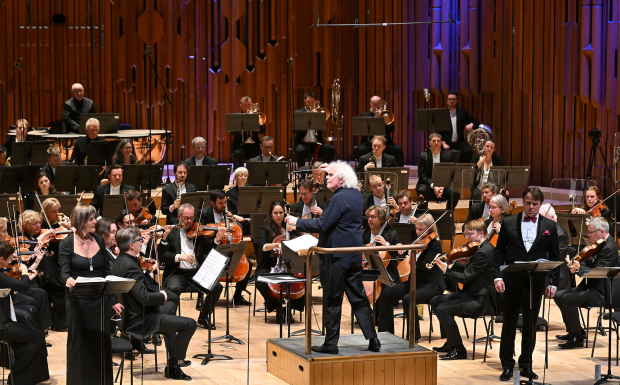
Rattle also senses when Schumann needs special care (again, that protective impulse is a hallmark of the true believer). This Prom with the Freiburg Baroque Orchestra was specially fascinating, because few romantic masters have more to gain, potentially, from the clarifying effects of a period instrument orchestra. Back in the 1980s Rattle was one of the first mainstream maestros to embrace historical techniques, and now he’s reaping the harvest: using the textures of the Freiburg orchestra (which numbered around 50 players) to make Schumann’s writing shine and sing.
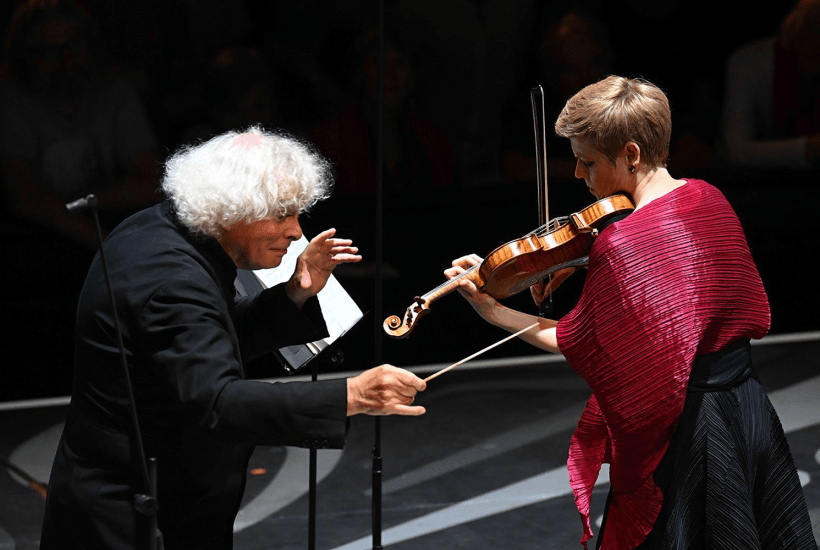
That’s vitally needed in the late, troubled Violin Concerto, a work which even Schumann’s closest allies Clara and Brahms felt would be misunderstood, and which they duly suppressed. The right call? It’s an open question, but with Isabelle Faust as soloist and Rattle supporting her with infinite tact, you could at least discern what Schumann was trying to say. Faust’s command of light and shade felt both instinctive and intelligent. Ravishing to hear, too – like a silver thread twisting in the evening light. Rattle, Faust and the Freiburgers found and articulated the tender, fragile glimpses of intimacy and truth that make this all-too-human concerto worth hearing, whatever the discomfort.
Then came the symphony, and with the strings acting as a veil rather than a wall, the trumpets took their place in the middle-distance of the slow introduction: not hectoring, but heraldic. Rattle and his players sprang like athletes from the starting line of the Allegro, while woodwinds glowed through the mêlée like coloured lights (with careless hands and a modern orchestra, their effect on the texture can be more like corn starch). The Freiburg violins shimmered all over their semiquavers in Schumann’s borderline-unplayable Scherzo. And if your heart didn’t quicken in the finale, when (after Rattle’s theatrical pause) the marzipan-soft Freiburg woodwinds sang their hymn to Clara, there’s probably no hope for you, at least as regards Schumann.
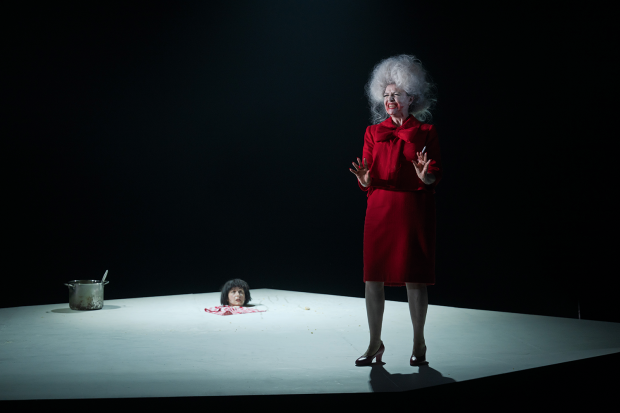
The Royal Opera season kicked off even before the Proms had finished with a revival of Kasper Holten’s production of Don Giovanni – the one with the revolving ‘mind palace’, which looks mighty impressive and makes far more sense on stage than (the sole occasion I’d seen it) in the cinema. If you’re serious about Mozart as theatre, you should know that in Victorian style, the final scene is cut, distorting the moral, musical and dramatic logic of the whole piece. Giovanni (Gordon Bintner) expires, twitching (the damnation scene is the one really feeble sequence in a generally inventive staging), and the curtain falls.
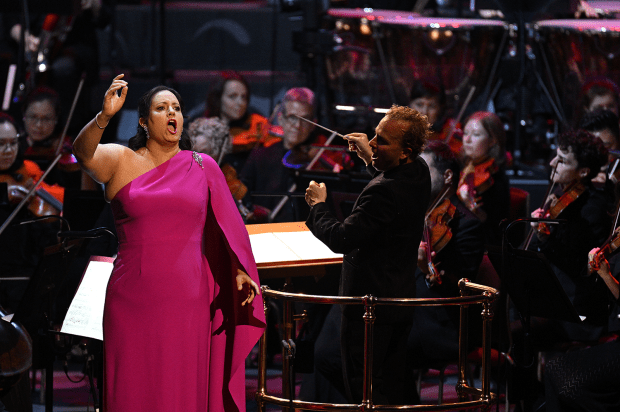
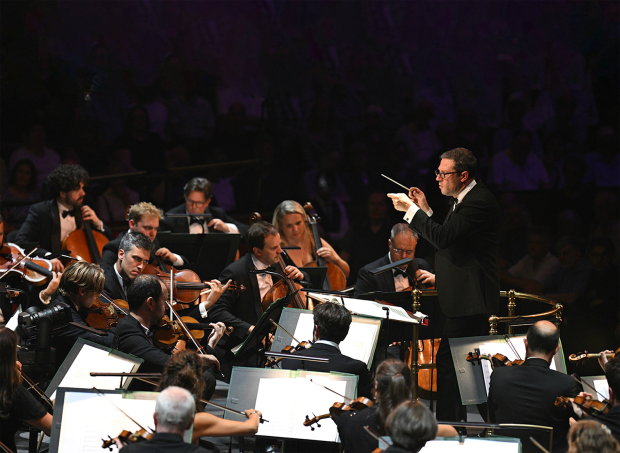
But it’s a fine cast, with Bintner as a cocksure, hollow anti-hero and Aigul Akhmetshina as a passionate and suitably unhinged Elvira. Holten’s Donna Anna, meanwhile, is acutely aware of her own culpability, and Rachel Willis-Sorensen portrays her psychological decline in powerful acting and some intensely beautiful singing. There was zesty, unsentimental conducting from Stefano Montanari, and a continuo player with a sense of slapstick which certainly helped, too.
Got something to add? Join the discussion and comment below.
You might disagree with half of it, but you’ll enjoy reading all of it. Try your first month for free, then just $2 a week for the remainder of your first year.