How can Australians trust the energy debate when the government is helping to pay the journalists reporting on its own policies? This is not a hypothetical question. The Albanese government’s $67.6 million Journalism Assistance Fund subsidises more than 2,000 journalists across 185 private news organisations. Publishers receive up to $39,000 for each eligible full-time journalist over three years, with payments and reporting obligations continuing until 2028.
Every grant is published on GrantConnect, the federal government’s register. So, in one sense, the money is already public. But it is only disclosed by the department that pays it, in a database most readers have never heard of, let alone opened. It is not disclosed where it would actually matter: on the publication’s own website or beside its political and policy reporting.
An investigation of those records, subsequently reported by the trade press, found that Nine-related entities received more than $16 million. Recipients also include the Conversation, Crikey, the Daily Aus, the Saturday Paper, Mamamia, and Michael West Media, which together received more than $3 million. The money went to the companies, not into reporters’ personal bank accounts, and there is no evidence or suggestion Anthony Albanese, Chris Bowen, or any other minister dictates what they publish.
But that is not the test journalists apply to everyone else. When an advocate has industry links, the relationship is disclosed. When a company funds research, its independence is questioned. When a lobby group pays for a report, readers are warned about a potential conflict. Why should newsrooms be exempt from the same standard?
The question matters most in energy because the government has already picked the answer. Labor’s plan is built around 82 -per-cent renewable electricity by 2030, supported by storage, gas and thousands of kilometres of new transmission. Through the Capacity Investment Scheme, the government will underwrite 40 gigawatts of additional capacity by 2030 as ageing coal-fired power stations close. Meanwhile, nuclear power remains prohibited under federal law, and Labor’s national platform commits the party to keeping it so.
Australia is therefore not pursuing a technology-neutral transition. The government underwrites renewables while excluding nuclear before its costs, benefits or potential contribution can be tested in the Australian market. That makes independent reporting essential. When the government has chosen the technology, is spending public money to deliver it and is also helping fund the newsrooms covering it, Australians deserve to know whether its assumptions are being tested or simply repeated.
Crikey’s publisher received $737,022. Since the grant began, Crikey has described nuclear as a $600-billion ‘nuclear power fantasy’. The Saturday Paper received $300,300. Its subsequent commentary called nuclear a ‘brain fart’, described the case for it as dishonest and declared renewables the cheapest form of electricity and nuclear the most expensive. Another article said advocates had ‘brazenly’ proposed nuclear power for data centres. The Conversation received $1,033,890. It later published, ‘Australia’s long, complicated energy transition is finally working – and not a moment too soon’, presenting rising renewable generation and lower wholesale prices as evidence that the transition was succeeding. Michael West Media received $128,700. Its article ‘Half-price power: record renewables push prices down’ quoted Bowen saying the figures proved renewables could reduce electricity bills. These are all legitimate editorial positions, and there is no evidence, nor are we suggesting, that the government influenced any of them. But that is not the point.
The subsidy supports the institution through which reporting and commentary are produced. When that institution reports on policies pursued by the government supporting it, readers are entitled to know about the relationship.
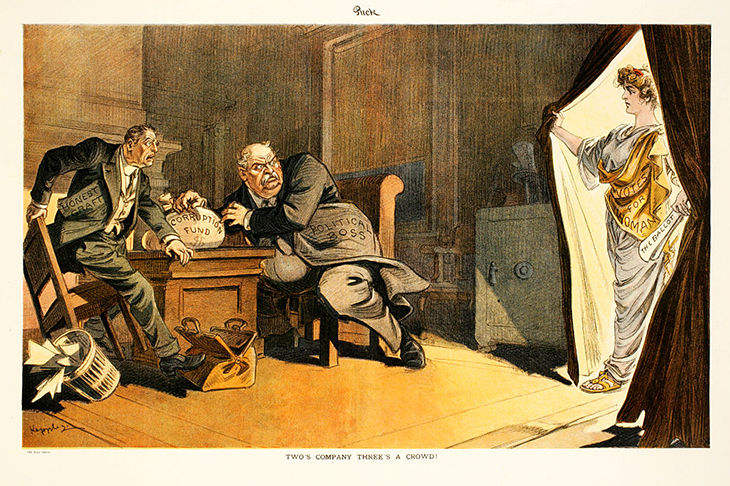
The concern is not limited to proven bias. Independence in a democracy must be real, but it must also be visible. A system that asks journalists to investigate the government while making their employers even only partly financially dependent on that government creates an unavoidable perception problem.
Government-supported institutions produce much of the modelling. Government-supported experts interpret it. Government-supported newsrooms communicate it. Everyone may believe they are acting independently, and the result can still be a closed circle in which shared assumptions harden into accepted truths. The consequences can be seen in the way energy technologies are measured. With nuclear, everything is counted: the cost of construction, the cost of finance, how long it takes to build, what happens to the waste and how many years pass before it produces power. That is fair. Every project should face those questions.
With wind and solar, reporting often focuses on the cost of generating the electricity. Less attention is given to the transmission required to reach projects built far from demand, the batteries and firm generation needed when output falls, connection delays, land requirements and the need to replace turbines, panels and batteries.
A wind or solar project’s nameplate capacity is also frequently reported as though it represents continuous output. It does not. And a government target can gradually become a forecast before the forecast is repeated as an established fact.
The repercussions extend beyond energy. An independent media is not simply another industry seeking government assistance. It is a foundation of democracy. It decides which questions are asked, which assumptions are challenged and which failures are pursued.
Once voters believe the referee is being paid by one of the teams, every decision becomes suspect. We cannot allow taxpayer-supported journalism to become normal without safeguards. A future government could change the eligibility rules, alter the definition of qualifying journalism or impose tighter conditions. Democratic protections must be designed for the government we may distrust tomorrow, not merely the one in office today.
The fix is small and costs nothing. Publication on GrantConnect is not enough. The duty should sit with the recipient, in front of the reader, not merely with the payer, in a register few people open. Each funded outlet should carry a standing disclosure setting out how much it receives, how many positions the subsidy supports and what conditions apply. Political and policy reporting should carry a brief declaration, just as commercial partnerships and relevant financial interests are declared. The funding should also be administered independently, with published criteria, parliamentary oversight and no ministerial discretion.
Thomas Jefferson put it well in 1787. ‘The basis of our governments being the opinion of the people, the very first object should be to keep that right,’ he wrote to Edward Carrington, ‘and were it left to me to decide whether we should have a government without newspapers, or newspapers without a government, I should not hesitate a moment to prefer the latter.’
Australia’s energy transition affects every household, business and industry. It deserves a fair comparison between all technologies based on cost, reliability and real-world performance. If Labor’s energy policy is as strong as it claims, it should withstand independent scrutiny. If taxpayer-funded journalism is equally defensible, it should withstand full disclosure.
Got something to add? Join the discussion and comment below.
You might disagree with half of it, but you’ll enjoy reading all of it. Try your first month for free, then just $2 a week for the remainder of your first year.