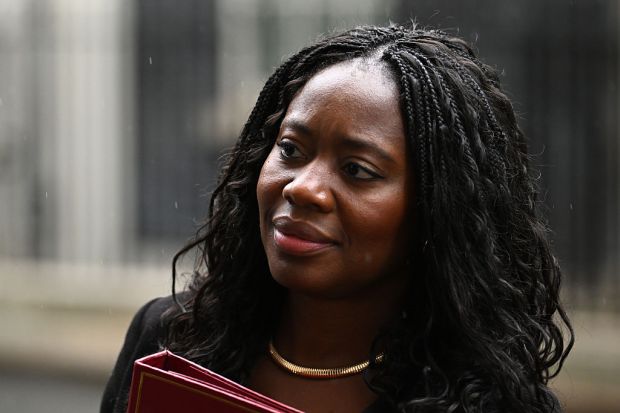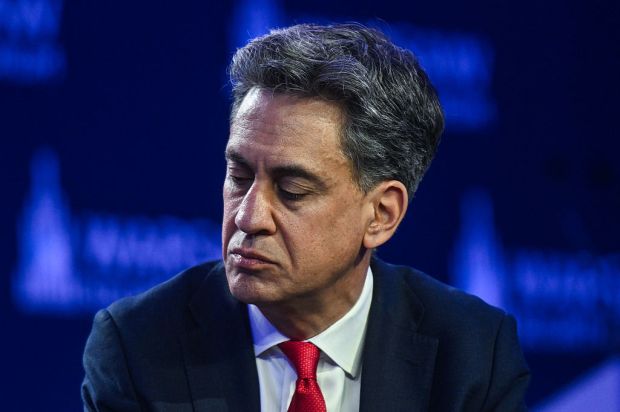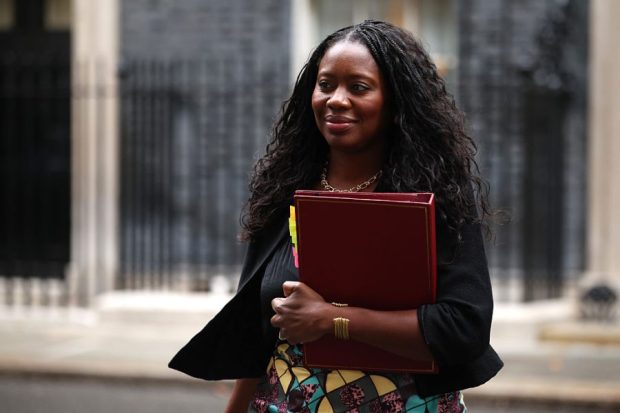

Many were the voices arguing that Ed Miliband would be a disaster if appointed Chancellor, frightening markets and sending Britain even further down the dark alleyway of net zero. Few, though, stopped to wonder who would replace Miliband at the Department for Energy Security and Net Zero (DESNZ). The answer, we discovered very late on Monday evening, was Miatta Fahnbulleh; not a household name but a prominent Burnham adviser who, prior to becoming an MP in 2024, ran the think tank the New Economics Foundation (NEF). She was also, between July 2024 and September last year, a junior minister in the DESNZ, where she was charged with improving the lot of energy consumers, as well as trying to retrofit existing homes with insulation and heat pumps.
Much has been made in recent days of Andy Burnham’s reported open-mindedness on the issue of new North Sea drilling, but the appointment of Fahnbulleh does not suggest that he intends to water down the government’s net zero commitments. On the contrary, Fahnbulleh in the past has entertained even more unrealistic ambitions in this field. In 2019, while still working for the NEF, she penned an article calling for Britain to achieve net zero ‘within 10 to 15 years’ – i.e., some time between 2029 and 2034. She suggested it could be funded with wealth taxes and extra borrowing.
Like so much connected with climate change, it was posturing. Fahnbulleh didn’t have the faintest clue as to how decarbonisation of the entire economy could be achieved within this timeframe. Like many others who have pontificated on the subject, it was a case of taking someone else’s target and bringing it forward by a few years because it sounded ambitious and virtuous. Set a target, goes the thinking, and all will magically fall in place.
Set a target, goes the thinking, and all will magically fall in place
Alas, ambition on the part of politicians and activists does not overcome fundamental engineering problems. Whether Fahnbulleh still believes Britain can decarbonise its entire economy in just eight years’ time will perhaps become apparent when she starts to address the Commons in her new capacity. But as a junior DESNZ minister, she was rapidly given a lesson in reality.
A month after she left that job, the National Audit Office published a damning report into the ECO4 home insulation scheme. By that time, the scheme had provided grants toward retrofitting 243,900 homes and it had been her job to oversee this.
Of the 22,000 to 23,000 homes fitted with external wall insulation, an astounding 98 per cent were found to have major issues requiring remediation, at a cost of between £250 and £18,000 apiece. Six per cent were found to present immediate health and safety risks to the buildings’ occupants. Installations of internal wall insulation were found to be less problematic, but even so, 29 per cent were found to have major issues and 2 per cent presented immediate health and safety risks. Moreover, the scheme was found to have encouraged mass fraud, with an estimated 5,600 to 16,510 falsified claims made by insulation firms.
Fahnbulleh can’t be blamed for all this, given that the ECO4 scheme began under the previous government in 2022. Nevertheless, the experience comes as a rude awakening to any government which tries to chuck money at trying to achieve net zero with indecent haste. To replace proven technologies with cost-effective zero-carbon alternatives will take a serious amount of time and effort; in some cases it may never be achieved. If you think you can force it to happen in a handful of years through striking an attitude you are going to waste a fantastic amount of money.
One hopes that Fahnbulleh has learned her lesson about the practicality of net zero schemes and will show a bit more realism in office than did Ed Miliband. But I wouldn’t count on it.