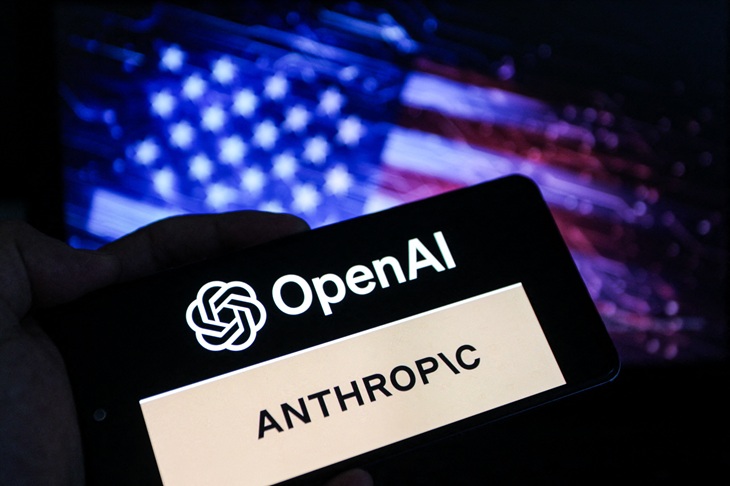
Anthropic and OpenAI have spent the past few years laying the groundwork for public listings, but the path to a public market debut is growing more fraught by the day.
Recent breakthroughs by Chinese AI models on benchmark tests have sparked new concern about the affordability of American-made models and sent AI stocks reeling.
For years, investors assumed the biggest AI companies would be protected by an insurmountable technological lead. That assumption is now being challenged.
This comes as rumours circulate throughout Silicon Valley that the negative reception of Musk’s AI investment (as part of SpaceX), which is now down 50 per cent from its peak, could delay IPO plans until next year.
Instead of enjoying delivering the outsized profits investors once expected, OpenAI and Anthropic now find themselves competing in a token price war, prompting investors to question whether the billions of dollars invested in American AI may have been misallocated.
Other prominent Silicon Valley executives have warned companies to reconsider handing their proprietary data to OpenAI and Anthropic, arguing that they may ultimately use that proprietary data to build competing products.
Even if OpenAI and Anthropic can overcome these commercial challenges, they still face an even bigger obstacle: whether the enormous physical buildout required to meet investor expectations can actually be achieved.
The enormous demand for data centres is putting pressure on electricity grids, construction capacity, and skilled trades.
It is also creating inflationary pressures across everything from memory chips to the copper needed to build and fit out data centres, while communities are pushing back harder against new developments in residential areas.
Regulation presents another challenge: unlike traditional software companies, AI companies are growing more dependent on government decisions about where and how their technology can be deployed.
Earlier this year, the Trump Administration criticised Anthropic and moved to restrict government agencies from using Claude, sparking a conflict with the company.
Washington has shown it is willing to use export controls to limit access to advanced AI technology, creating additional uncertainty for future investors in an IPO.
OpenAI’s recent proposal to give the US government an equity stake has been framed as an effort to align itself with national interests. A more cynical interpretation is that it represents an attempt at regulatory capture, making the company too politically important to fail.
The recent lawsuit brought by Apple is just the latest example of the litigation risks hanging over the AI sector.
Apple alleges the maker of ChatGPT engaged in a ‘coordinated effort’ to recruit its employees and encourage them to disclose confidential information. The case also highlights a broader problem for investors: many of the industry’s biggest legal questions remain unresolved.
Beyond the Apple allegations, AI companies face a much broader legal challenge: the unresolved question of where the training data that powers their models comes from.
There are already more than 100 lawsuits against AI companies related to copyright claims, alongside separate cases alleging harm caused by AI systems.
Critics, including myself, argue that companies have built enormous valuations by using the work of others without permission or compensation.
Investors do not like litigation uncertainty, particularly when it relates to the fundamental inputs of a company’s product.
Given the extraordinary amount of capital flowing into AI infrastructure, and how large the AI trade has grown, investors have even more reason to be cautious. A sharp reversal in markets wouldn’t just hurt technology stocks. It could plunge entire economies into recession.
It’s much easier for these companies to protect their valuations in shadowy secondary private markets than have their share prices revalued on a daily basis by the public markets on every bit of news that breaks.
As more competition enters the market, as public sentiment turns against them, and as litigation risk rises, the much-anticipated IPOs of Anthropic and OpenAI could face delays or potential abandonment.
It looks like Elon may have taken the last IPO parachute, leaving his market competition circling a runway they may never land on.