What’s wrong with National Service? Nothing.
It’s the name that’s the problem…
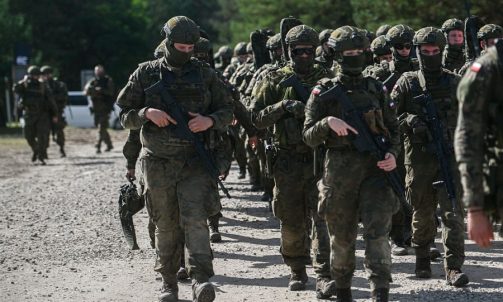
Mention ‘National Service’ to anyone over fifty and you’ll receive exactly the same reaction. Vietnam. Birthday ballots. Young men desperately hoping their number never came up. Political leaders who seemed more interested in pleasing Washington than listening to Australians.
Poorly trained conscripts being sent into an unpopular war…
For many Australians, National Service is remembered not as nation building, but as political failure wearing camouflage.
Understandably so.
But what if we’ve been throwing away a good idea because of one disastrous execution?
My son is eighteen. He wanted to join the Australian Defence Force, like his Father, Uncle and other Family before him. He wasn’t pushed. He wasn’t persuaded. He wanted to serve.
He wanted to sign that unwritten contract every serviceman and woman understands:
‘Dear Australia. Do with me what you will.’
Unfortunately, circumstances beyond his control meant he was medically unsuitable for military service. That was disappointing. Not only for him but for me as a Veteran. I knew the adventures and fun he was about to embark on and now unfortunately misses out on.
But it also made me ask a question. Why is military service the only recognised form of national service? Surely defending a nation isn’t limited to carrying a rifle.
A hospital orderly serves Australia. A teacher’s aide serves Australia. A volunteer firefighter serves Australia. A park ranger serves Australia. An aged-care worker serves Australia. The young woman helping Indigenous communities in Arnhem Land is serving Australia just as surely as the sailor patrolling the Timor Sea.
One protects the nation from enemies.
The other strengthens the nation from within.
Both matter.
Perhaps it’s time we stopped thinking about National Service as military conscription and started thinking about it as civic duty.
Imagine every Australian leaving school knowing that before university, before apprenticeships, before careers, they would spend two years contributing to the country that raised them.
Not marching through jungles. Building Australia. Working in hospitals. Helping disability services. Supporting remote Indigenous communities. Assisting emergency services. Restoring national parks. Maintaining local infrastructure. Helping councils. Supporting schools. Working alongside aged-care providers. Learning how Australia actually functions.
The military would still play a role, but not because everyone needs to become a soldier. Because nobody organises people better than the Australian Defence Force.
Anyone who has spent time around the military knows that discipline, punctuality, accountability and teamwork are not optional extras. They’re habits.
Imagine creating a fourth arm of national service.
Not Navy. Not Army. Not Air Force.
A National Service Corps.
Its mission would not be preparing Australians for war.
Its mission would be preparing Australians for citizenship.
The discipline would remain. The uniforms would remain. The expectations would remain. The objective would change. Instead of producing infantrymen, we’d produce capable adults.
Of course there would be incentives.
Pay them properly. Provide accommodation. Feed them well. Complete two years of service and your HECS debt disappears. Maybe. Want to study medicine? Excellent. Spend your national service working in hospitals before entering university. By the time you become a doctor you’ll understand how hospitals actually function, not simply from the operating theatre but from the laundry, wards, administration and patient transport.
The same applies to nursing. Radiography. Allied health. Engineering. Construction. Teaching. Imagine future teachers spending two years working in classrooms before they ever stand in front of one. Perhaps then we’d begin treating teachers as they deserve to be treated. Not as an expense. As the architects of the Commonwealth.
If teachers shape every profession that follows, why aren’t they among our highest-paid professionals?
Why shouldn’t teaching degrees be fully funded?
Why shouldn’t our best students compete fiercely for teaching places?
If education is truly our future, our schools should be our finest public buildings, not afterthoughts squeezed into state budgets.
National Service becomes the bridge between education and adulthood.
Not a punishment. Not forced labour. A finishing school for citizenship. Naturally there will be objections.
Some will call it authoritarian. Others will compare it to conscription. Someone, inevitably, will invoke slavery before the ink has dried. The same criticisms greet almost every idea requiring citizens to place obligations alongside rights.
Yet we’ve somehow accepted that 18-year-olds can borrow hundreds of thousands of dollars, vote for governments, drink themselves unconscious and sign mortgage contracts. But asking them to contribute two years to the nation that educated them, fed them, clothed them, invested in them?
Apparently, that’s outrageous.
Countries with compulsory national service, whether military or civilian, often report stronger civic participation, lower youth unemployment, and higher levels of social cohesion than many comparable nations. Their systems differ substantially, and outcomes depend on culture and implementation, but they demonstrate that structured national service can be more than simply preparing for war.
Australia doesn’t need to copy another country’s model. We should build one that suits us. One that strengthens regional Australia. One that fills chronic workforce shortages. One that develops practical skills. One that creates friendships across class, postcode and politics. One that reminds us that citizenship is more than possessing an Australian passport. It means belonging to something larger than yourself.
Perhaps some people will discover that their calling is in that National Service Corps.
Perhaps they’ll stay.
Perhaps they’ll spend their lives serving Australians.
There is no shame in that.
There is honour in every honest job that strengthens the country.
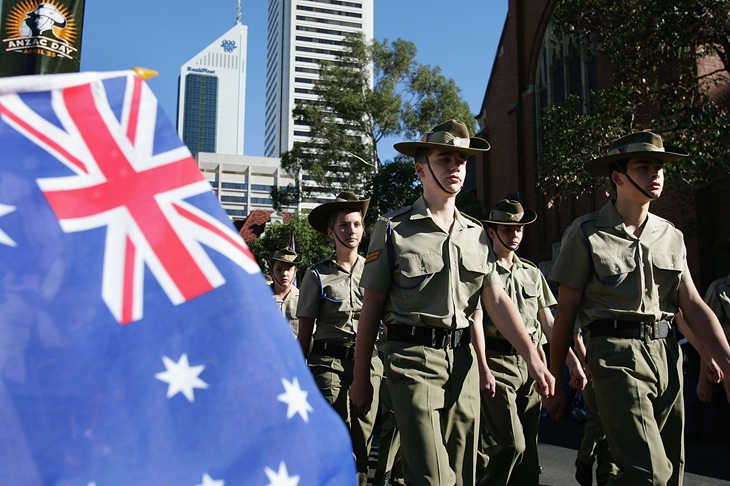
The ANZAC spirit was never really about war. It was about service. About putting the nation ahead of yourself. About the quiet understanding that if everyone carries a little of the burden, no one carries it alone.
Perhaps that’s the lesson we’ve forgotten.
We’ve spent decades arguing about what Australia owes its citizens. Maybe it’s time we also asked what citizens owe Australia. Because nations aren’t built by governments. They’re built by people who decide they’re worth building. I wonder do we have any leaders left with the ability to build this Nation again, the ones we have seem content presiding over a ruin of ashes and the tears of our forebears.