Everyone has their own way of thinking about America’s Declaration of Independence.
For some, it is the birth certificate of modern democracy. For others, it is the founding text of classical liberalism. Jordan Peterson’s academy posted last week that America’s founders were ‘Enlightenment-drunk revolutionaries’ who wagered that free people, left largely free to think, invent and trade, would out-perform every empire on earth’. The Australian Financial Review, marking America’s 250th birthday, made a different but equally optimistic point: whatever one thinks of Donald Trump’s second presidency, America’s extraordinary constitutional experiment still gives it a unique capacity to anchor the democratic world. New York’s mayor, Zohran Mamdani, chose instead to dwell on America’s inequalities, condemning concentrations of wealth and power and arguing that patriotism means confronting the country’s flaws. Of course, the founders would have defended to the death any person’s right to argue the negatives and criticise all and sundry.
Over the anniversary weekend, though, I found myself reading Professor David Armitage’s The Declaration of Independence: A Global History. His argument is slightly different from many of those being made last week. Most discussions of the Declaration focus on what it means inside America. Armitage asks us to look at it from the outside.
His central point is that the Declaration’s greatest significance may not simply be that it created the United States. It created a model. From South America to Eastern Europe, from Africa to Asia, and Israel, it became the document that independence movements reached for when announcing themselves to the world. More than the Constitution, and perhaps even more than the Revolution itself, the Declaration became one of history’s great export documents.
Reading Armitage reminded me of another book that I reviewed for The Spectator Australia several years ago: Australian constitutional historian James Philips’ Two Revolutions and the Constitution. It makes a different, but wonderfully inverted yet complementary, point. In many ways, this piece owes more to his insight than my own. It is one of those ideas that, once you’ve seen it, is difficult to unsee.
The Declaration is often treated as though the real history of global liberty began on 4 July 1776.
Philips reminds us that the men gathered in Philadelphia were looking backwards as much as forwards. They did not imagine they were inventing liberty from nothing. They believed they were defending principles that had been developing for centuries through the English constitutional tradition: Magna Carta, the Petition of Right, the Civil War and, above all, the English Bill of Rights of 1689.
What struck Philips – and still consumes me – was not just the similarity in wording between the 1689 Bill of Rights and the 1776 Declaration, but also the evident frame of mind of the drafters.
Read with a lawyer’s eye, both are structured in remarkably similar ways. Both begin by identifying the principles on which legitimate government rests. Both accuse the Crown of repeated constitutional breaches. Both set out a lengthy bill of particulars. Both conclude that the sovereign has broken the constitutional compact. And both declare the legal consequence.
They read less like manifestos than pleadings. The similarities are quite remarkable.
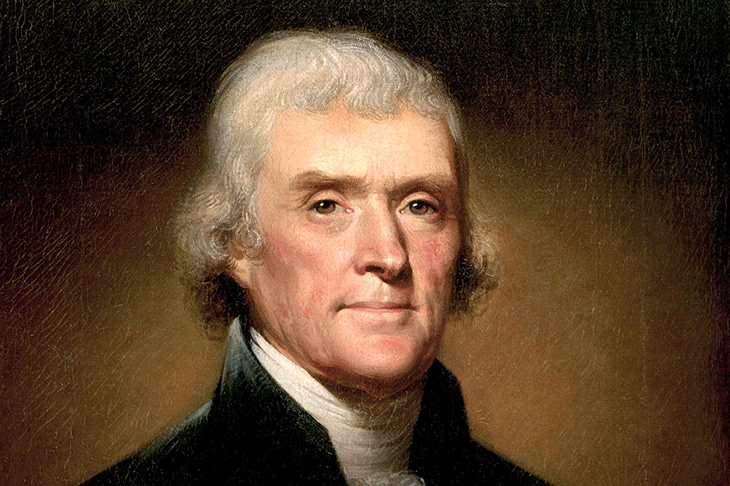
That is not to say they are the same document. They plainly are not. The English Bill of Rights appeals principally to the ancient rights and liberties of English subjects. By 1776, those inherited constitutional liberties had been sharpened by the Enlightenment. Locke’s ideas about natural rights, equality and government by consent had profoundly influenced the American founders. Jefferson’s immortal words – ‘We hold these truths to be self-evident…’ – reflect a philosophical language that simply was not deployed in 1689.
But the legal architectures remained strikingly familiar. In both cases, the argument is not that government itself is illegitimate. Quite the opposite. Both documents accept that government derives its authority from constitutional arrangements that impose obligations on ruler and ruled alike. The complaint in both is that the King has violated those obligations again and again. And there is almost a lament as they declare, however, that the remedy must follow from the breach.
That is a remarkably English way of thinking. You know the rules, you’ve broken the rules, and now consequences must follow.
The American founders were unquestionably revolutionary in what they achieved. Yet they were deeply conservative in the constitutional thinking by which they arrived at it. They inherited an English legal tradition and clothed it in the richer philosophical language of the Enlightenment. They did not discard one in favour of the other. They combined them.
Seen together, Armitage and Philips answer two different questions. Armitage explains what the Declaration became and its incredible global impact from there. Philips explains where it came from.
Perhaps that is why the American project has proved so durable. It was an act of extraordinary imagination, but it was anchored in deep, long-evolved institutions that had worked and were still working in the motherland. It was also founded in history and accumulated constitutional experience, norms and conventions. The founders were bold enough to embrace Enlightenment ideas about liberty and equality, yet practical enough to build on foundations they already understood. Plainly put, the American revolutionaries, unlike the French, did not throw the baby out with the bathwater. And that is almost certainly the reason that their system worked and continues to work – even while it wobbles – today.
Our big little nation, Australia, of course, arrived a century later. We inherited Westminster, borrowed heavily from Washington, and somehow, over more than a decade, conjured a Constitution without a revolution at all. Why that gave us a country both like and unlike either of its constitutional parents is a story that we should think much more about right now; but that is a story for another day.
Got something to add? Join the discussion and comment below.
You might disagree with half of it, but you’ll enjoy reading all of it. Try your first month for free, then just $2 a week for the remainder of your first year.