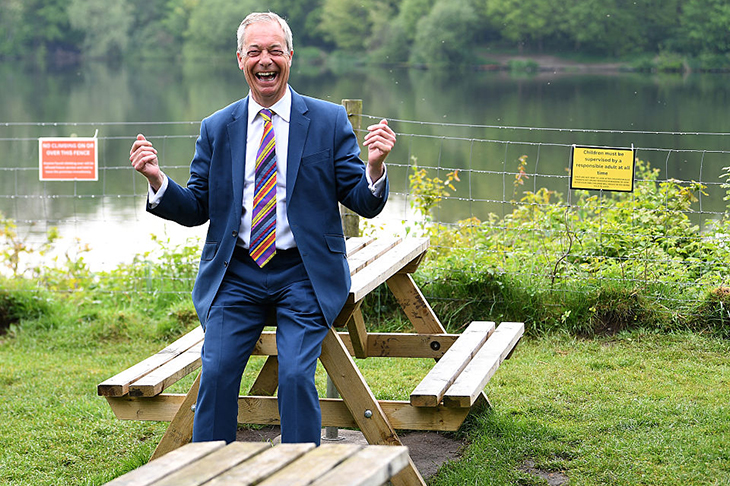
Has there ever been such a case of political buyer’s remorse? At Britain’s last general election less than two years ago, the Tory base, furious with the party’s broken promises and surrender to leftism, went on strike, so allowing Labour – supported by just 20 per cent of voters – to return to power. At last week’s local and regional elections, voters showed they now see this as a terrible mistake.
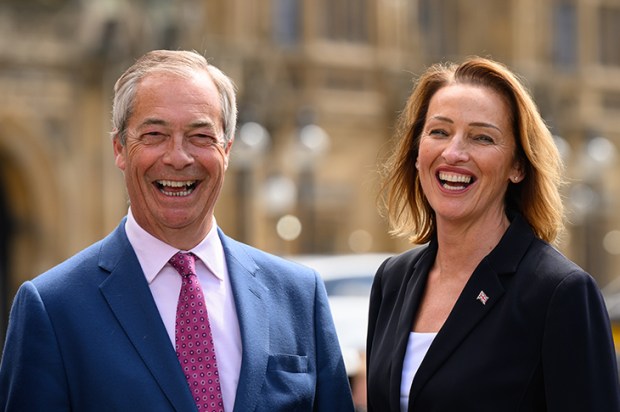
The Whitehall commentariat long refused to accept that Nigel Farage’s Reform UK party would ever amount to anything more than a Brexit aftershock and fringe protest party. How wrong they were. Since the 2024 general election, as it rapidly emerged that Keir Starmer was as much a far-left fanatic as his predecessor Jeremy Corbyn – and Farage persuaded voters that, unlike the Tories, he was a genuine conservative – Reform quickly consolidated in the opinion polls as easily Britain’s most popular party.
The 7 May elections for 5,013 local authority seats in England were not so much a contest over who was best suited to manage potholes and rubbish collection as Britain’s mid-term elections, with voters casting a verdict on Starmer. That was partly because Labour, once it got a whiff of the opinion polls pointing to disaster, tried to defer many of them into the distant future. Only Farage’s legal threats allowed them to proceed.
Reform showed in the elections that its opinion poll lead was real and inflicted among the worst bloodbaths on Labour in its history. Starmer’s party lost over half of the 2,557 English council seats it was defending, mainly to Reform, who won over 1,400, up from the two they previously held. Farage decimated Labour especially in its former Northern and Midlands strongholds.
He also added to Labour’s humiliation in Wales, which it had dominated since 1922, and where it not only lost government to the Welsh nationalists Plaid Cymru but was driven to a distant third after Reform. Labour’s outgoing First Minister, Eluned Morgan, finished fourth in her seat with 7.3 per cent of the vote.
Farage also did well in Scotland. Reform came from having one member in the previous parliament to drawing equal second with Labour, so helping to deny the Scottish Nationalists the majority with which they would probably have demanded another independence referendum.
Meanwhile, Britain’s Guardian-reading urban areas swung heavily to the Greens. The modern Labour party is famously more comfortable at a London vegan dinner party than in a Northern milltown pub, so its loss of Hackney, Southwark and Lambeth, packed with what the party thought were ‘its’ people – ‘creatives’, public sector employees working from home – will be especially mourned. Yet not everything went the Greens’ way. In some areas they were punished for their antisemitism. Having gone into the elections with multiple candidates being investigated and some arrested for antisemitism, in Richmond, London, which has a significant Jewish population, they lost all of their five seats to the Liberal Democrats.
Farage also caused misery to the Tories, who, because of the Reform surge, lost control of all the East Anglia counties, Hampshire and several outer areas of London. The Tories also did terribly in Wales and Scotland. But unlike Labour, the Tories’ performance was disastrous rather than catastrophic – their losses were limited to less than half of their seats. They even had a few morale-boosting victories, including winning back Labour-controlled Westminster and Wandsworth councils.
The reasons Labour bled to Reform aren’t hard to fathom: topping the list are border chaos, broken promises on tax, cost of living including the West’s second-highest electricity bills and endless grovelling to Islam. Beyond these factors, Starmer is unpopular to a degree rarely seen in UK politics. He’s widely viewed as a bloodless ideologue, catastrophically lacking in judgment and tin-eared. A staggering 75 per cent of voters view him negatively. Significantly, there were no Labour complaints when he spent the lead-up to the elections in far-away Armenia rather than campaigning.
Despite its mauling by Reform, Labour seems more upset by its humiliations at the hands of the Greens.
That means, suicidally but grimly for Britain, that it’s likely to react to the elections by moving further to the left – whether or not Starmer stays.
British Labour is famously reluctant to depose its serving prime ministers and Nigel Farage has unsurprisingly said he’ll be ‘very sad’ if it breaches that principle. Just like the Liberal party mourning Kevin Rudd’s toppling ahead of the 2010 election. Yet Labour will probably eventually throw the dice in favour of one of the unimpressive chancers hoping to replace Starmer. None would turn around Labour’s unpopularity – the boats, net zero lunacy and general wokery will continue.
A contest will probably be delayed as the favourite, Manchester mayor Andy Burnham, needs first to find a safe Labour seat, which, in the Farage era, no longer exists. Of the other wannabes, Angela Rayner, a dim, much-parodied tax-dodging version of Julia Gillard and author of catastrophic labour market reforms driving up unemloyment, would be a particular gift to Reform, as would eco-fanatic and previously rejected Labour candidate for prime minister ‘Mad Ed’ Miliband. Health Minister Wes Streeting was long a mate of Mandelson’s, will be blamed for the hopeless NHS and, worse, is seen by the dominant Labour left as the lowest possible form of life, a Blairite.
Reform would clearly be the biggest party if the local election results were replicated at a general election, with the Conservatives coming in second. But at its current level of popularity Farage would probably fall just short of an outright majority and would need a deal with the Tories to form government.
There’s a good chance that could change given Labour’s left-Green instincts and its preference for calling its traditional working-class base racist rather than trying to reconnect with it. Its fate in Wales could be a portent for a further collapse in England.
Farage and his party have won a great victory and Labour can be expected to collapse into disarray indefinitely. And yet the tragedy for Britain is that, with the next general election not required until 2029, a wounded but even more fanatically leftist regime will likely have years more to continue inflicting misrule and misery.
Got something to add? Join the discussion and comment below.
You might disagree with half of it, but you’ll enjoy reading all of it. Try your first month for free, then just $2 a week for the remainder of your first year.