I received a worried message from one of my oldest friends recently. She has a brother with a significant disability, and her mother has set up a discretionary testamentary trust to govern her estate when she dies. The idea is that this brother will be provided for and any residual will be distributed to her and her other brother.
The imposition of a minimum 30-per-cent tax on the distributions would destroy any benefit from having the trust.
I tried to reassure her that there was no legislation yet and the wording of the budget papers indicates that an existing testamentary trust might be exempt from the change, although this is not certain.
The family had considered setting up a disability trust, but this was seen as more complicated than the route that was taken.
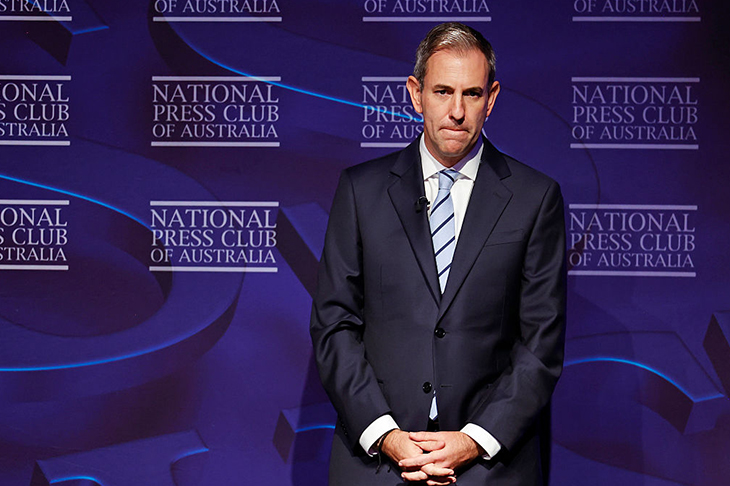
Is this the sort of instance that Jimbo, our senseless money man, had in mind when announcing the inclusion of discretionary testamentary trusts in his tax package? There’s not a lot of money involved, but the trustee needs the flexibility to ensure that the brother with special needs can live the rest of his life with dignity.
The budget papers talk about exempting ‘certain income to vulnerable minors’, but the brother is not a minor. In any case, it’s not clear how an exemption would work as the trustee will be required to pay the 30-per-cent tax on the total distribution as a withholding tax before any dollars are handed over to the beneficiaries on a non-refundable basis.
(I understand that trust talk can get complicated and I will try to simplify it as much as possible. The fact that it is so complicated is yet another reason why someone as wet-behind-the-ears as Jimbo should not have gone there. My guess is that a month before the budget he had never heard of discretionary testamentary trusts.)
As for the gratuitous advice offered up by the prime minister, who is as ignorant on these matters as Jimbo, that fixed testamentary trusts will not attract the 30-per-cent minimum taxes, spare us. Almost no one sets ups a fixed trust because of its inherent inflexibility – there is simply no point.
What then explains Jimbo’s decision to tackle the tricky terrain of the taxation of trusts? There is no doubt a widely held view among the lefties who occupy positions within Treasury that trusts are just a cunning way for people to avoid paying the ‘right’ amount of tax. This opinion is also held by many in the Australian Taxation Office, although its officers regularly harass trustees whom they assume are up to no good
The need to protect assets and provide for easy succession are reasons that are just dismissed out of hand.
When John Howard was prime minister, he toyed with the idea of tightening up some of the regulations related to trusts. The two most important changes had already been enacted – the exclusion of children under 18 years of age as tax-preferred beneficiaries and the insistence that trusts act as pass-through entities.
Trusts cannot effectively retain earnings and need to distribute 100 per cent of them each year. Losses also cannot be passed through. Beneficiaries are taxed at their appropriate marginal income tax rates.
David Stevens, who was a cabinet policy unit senior adviser to the Howard government at the time, wrote about the consideration that was given to altering the regulation of trusts leading up to this year’s budget. ‘The Howard government considered such a measure [but concluded] that it would be very messy, complicated and, at the end of the day, counterproductive with vast resources wasted in working through its implications.’
Unsurprisingly, this wise warning fell on the deaf ears of Jimbo, who would have been egged on by the ideologically driven Treasury Secretary, Jenny Wilkinson. Like an addict glued to a poker machine, Jimbo could only see the winning combination generating billions of dollars of additional revenue to feed the beefed-up beast he has helped to nurture.
But here’s the thing: trusts are a completely legitimate arrangement that fit certain circumstances, including the operation of small business. This has been admitted by Andrew Charlton, Cabinet Secretary, who acknowledges that his family uses trusts. It is estimated that around one-fifth of small business are set up as trusts, sometimes in combination with bucket companies.
But the pinko teenagers down at Treasury think they know better. Using an extraordinarily condescending tone, we are told in the budget papers that ‘while discretionary trusts can provide tax benefits, businesses operating through trust structures often miss out on the benefits of corporate structures’.
Give us a break here: Treasury officials handing out advice to business owners on how they should structure their affairs. The idea that these businesses can simply restructure and set themselves up as companies – and into the clutches of the Australian Securities and Investments Commission and its high annual fees – is just breathtaking.
It is also very clear that Treasury completely ignored – the officials probably didn’t even know – that the disposal of a trust will trigger the payment of stamp duty, which is based on a set percentage of the entity’s total assets. This will be an insuperable barrier for many business owners thinking of restructuring.
It goes without saying that the trust beneficiaries who will be really hurt by the minimum 30-per-cent tax will not be from very wealthy families, but ones with relatively low incomes and assets.
A large family trust distributing significant annual income will not be affected because the average rate of income tax paid by the beneficiaries will already be greater than 30 per cent, particularly since trust distributions will generally only form part of their total income. This will be another example where the rich are not affected, but the aspiring middle class is hit hard.
There are some other unfortunate consequences, including the distribution from trusts to charities without tax-deductible status. This is a very common device used by generous donors to direct monies to worthy causes in a tax-effective way. Good on you, Jimbo. This route will be effectively closed with the changes in the budget.
It’s not entirely surprising that the Teals have been rather quiet on some of these issues, including the taxation of trusts. Let’s face it, the inner-city Teal seats with wealthy voters contain a disproportionate number of trusts, often directing funds to grateful children and grandchildren. Trust distributions are known to fund private school fees.
Notwithstanding their overt support for green-left causes, this new development is something of a spanner in the works for the Teal parliamentarians. They will claim we all need to pay more tax to fund a good society – pause for a sigh, here – but the budget tax measures really do change the game.
On top of the higher rate of tax on large superannuation accounts, there’s only so much a good Teal voter can take.
The Liberal party needs to grab this opportunity to make its case and to vigorously oppose the budget tax measures and promise to rescind them.
Got something to add? Join the discussion and comment below.
You might disagree with half of it, but you’ll enjoy reading all of it. Try your first month for free, then just $2 a week for the remainder of your first year.