If an election were held now, an opinion poll in the Australian Financial Review concludes that One Nation could win fifty-nine seats, with Labor clutching on to power with a margin of just one seat. With an election likely by May 2028, Mr Albanese may decide to go earlier. He might be especially tempted to do this when he sees Coalition heavyweights attacking One Nation rather than concentrating on Labor.
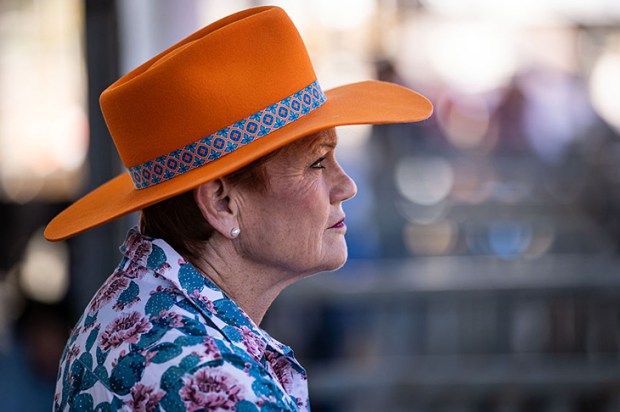
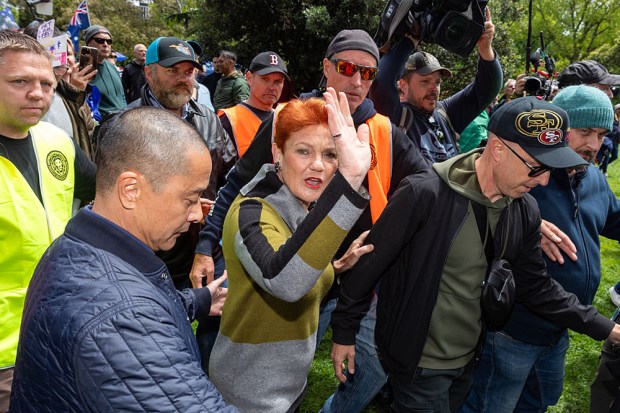
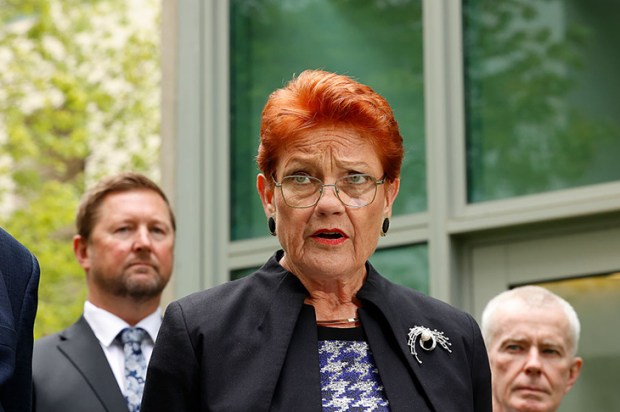
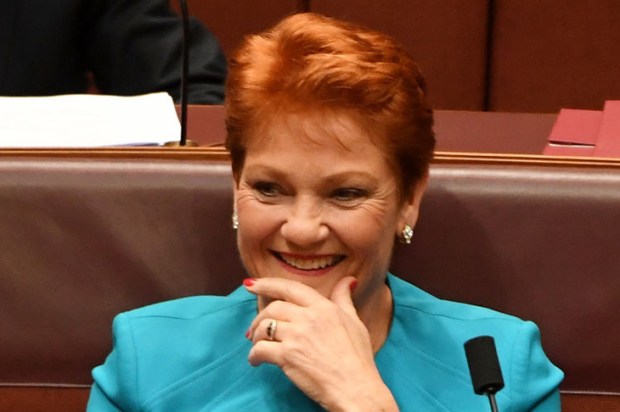
Senator Hanson remains one of our most attractive and courageous politicians. This became obvious years ago when she was almost carried into public meetings all over the country by the police, a slim, attractive young woman braving screaming crowds of thugs. As I mentioned in a previous column, with the budget-in-reply speech obviously significantly influenced by One Nation policies, they cannot be dismissed as just a party of complaint.
The question arises as to whether, in the next election, Senator Hanson should contest a lower-house seat. There’s a certain danger in that. Her instincts may well tell her not to, and her instincts may well be right. It may be better for her to do what Senator John Gorton did: be commissioned as prime minister and then seek a lower house seat through a by-election or just stay in the Senate.
A somewhat uncertain British convention, which emerged only after our federation, holds, that the UK Prime Minister should be in he lower house. The reasons offered were: First, the government is formed by whichever party or coalition can command a majority on the floor of the lower house. Second, by long-standing tradition, supply and money bills can only originate in the lower house. Third, democratic accountability dictates that the leader of the executive should sit in ‘the house of the people’ rather than an unrepresentative upper chamber. The differences in Australia are that the constitution requires money bills to originate in the House, and that, except for filling vacancies, the Senate is popularly elected.
In colonial Australia, it was not unknown for a premier to govern from the upper house. In Tasmania, between 1856 and the 1890s, leaders like William Crowther, Adye Douglas, James Agnew and Philip Fysh all successfully governed from the Legislative Council. Victoria saw Sir Charles Sladen serve as a stop-gap premier from the upper house in 1868, and in Western Australia, Sir Hal Colebatch briefly led from the Council in 1919.
There were several very considerable British prime ministers who governed from the House of Lords, including the Duke of Wellington, Lord Melbourne, the Earl of Derby, and most recently, the Marquess of Salisbury, who retired in 1902.
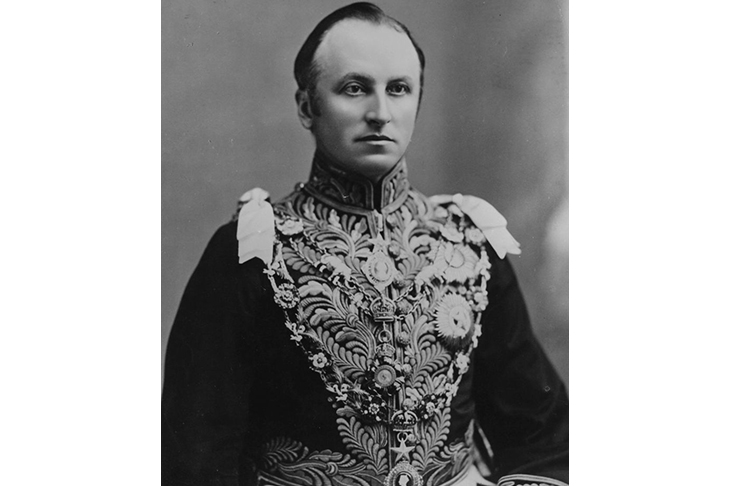
Perhaps the most poignant example of the new British convention biting is that of George Nathaniel Curzon, 1st Marquess Curzon of Kedleston. He possessed an unbroken aristocratic lineage and a supreme self-belief perfectly captured in a famous Balliol College rhyme from his youth:
‘My name is George Nathaniel Curzon,
I am a most superior person.
My cheeks are pink, my hair is sleek,
I dine at Blenheim twice a week.’
When Conservative prime minister Andrew Bonar Law resigned in 1923, Curzon – a former Viceroy of India and by far the most senior figure in the party – waited at home for the King’s summons.
Instead, King George V sent his private secretary, Lord Stamfordham, to inform Curzon that he would not be called to form a government.
The King’s advisors had reasoned that with Labour now the official opposition and having almost no representation in the Lords, a prime minister governing from the upper house was now democratically untenable. Curzon was devastated, breaking down in tears and bitterly dismissing the man chosen over him, Stanley Baldwin, as ‘a man of the utmost insignificance’.
If, after the next election, One Nation and the Coalition win 76 seats or more, they will decide who should form the government. If it were One Nation, there is no legal reason why Senator Hanson should not stay in the Senate as prime minister. She could follow what used to happen at Westminster: she could name a senior minister as the Leader of the House of Representatives to represent her. Alternatively, she could follow John Gorton’s precedent.
It is not necessary that the winner of the most seats forms the government – it’s a matter of negotiation. In Victoria, for example, small conservative governments have been formed supported by a larger Labor party. Albert Dunstan achieved the premiership in 1935 by leading a minority Country party government supported from the crossbenches by the Labor party, an arrangement that lasted eight years. John McDonald similarly formed a minority Country party government with Labor support in 1950.
Pauline Hanson‘s instincts seem to be against the formation of some ‘grand coalition’ with the Liberals and the Nationals. She is probably right. Otherwise, One Nation would be stifled by cabinet conventions, which would make it difficult or impossible to argue its range of policies to the world. Those policies are, after all, far more in the Menzies tradition than recent Coalition ones have been.
Meanwhile, because of its budget, and the disgraceful and deceitful way in which its ministers have tried to hide their clear involvement in the return of the so-called Isis brides, Labor has lost the trust of the nation. The view now is overwhelmingly that when Mr Albanese insists that he will not do something, this is a very clear indication that it is to be done soon.
Labor now stands a good chance of being turfed out at the next election, provided, of course, that the opposition does not try to walk on both sides of the street, as they did in the last general election. The only reason that they tried to sell nuclear power to the electorate was because they were clinging to the Beijing-enriching Paris accord.
But things are different now. Much of what happened in the last election, as well as the arrogance of those who run the Coalition parties with respect to their memberships, explains the surge of One Nation, who have long offered a range of popular, common-sense policies, whatever tired and empty claims the commentariat still make about One Nation being policy-free.
Meanwhile, in some exclusive part of the heavens reserved for eminences such as former viceroys of India, Lord Curzon may well be looking down and favourably comparing Pauline Hanson with Stanley Baldwin, concluding that she is indeed ‘a person of the utmost significance’.
Got something to add? Join the discussion and comment below.
You might disagree with half of it, but you’ll enjoy reading all of it. Try your first month for free, then just $2 a week for the remainder of your first year.