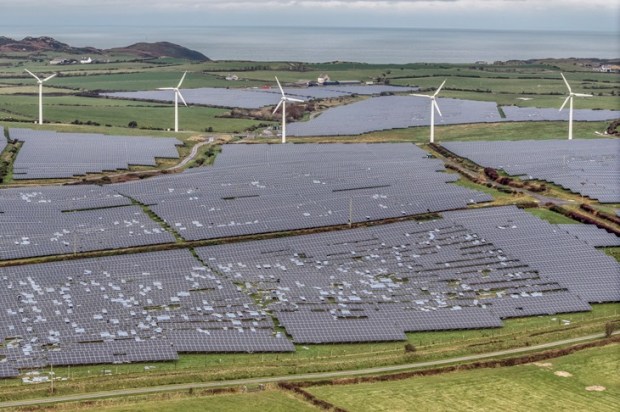
Last week, the 193-member UN General Assembly backed economy-crushing climate measures that seek to replace hydrocarbons with the fairy dust of wind and solar.
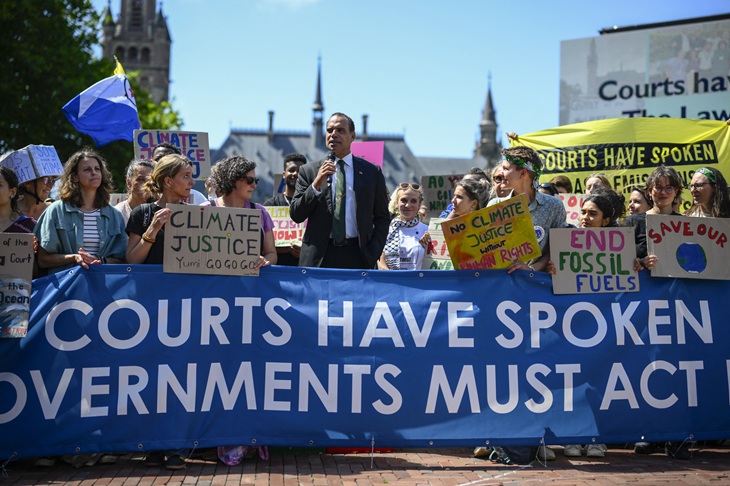
Endorsing the ‘legally binding’ 2015 Paris Agreement, representatives of nations at the UN approved an International Court of Justice (ICJ) ruling that countries failing to protect the planet from climate change may be in violation of international law. The ICJ President described supposed human-induced climate change as ‘an existential problem of planetary proportions that imperils all forms of life and the very health of our planet’.
A corollary of the Paris Agreement is the phase-out of coal, oil, and gas for energy, fertiliser and industrial uses. The UN Secretary-General, António Guterres, declared that the path to climate justice ‘runs through a rapid, just, and equitable transition away from fossil fuels towards renewable energy’ and that renewables have proved to be the cheapest and most secure form of energy.
Australia, the EU, and the UK are among many nations that continue to endorse this fantasy of international delegates either hermetically sealed off from reality or voting to win favours from dominant nations and funding institutions.
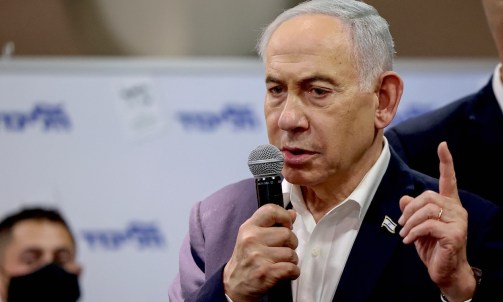
But dissenting from the UN endorsement of the ICJ ruling was an unlikely eight-nation group, including the US and Israel as well as Belarus, Iran, Liberia, Russia, Saudi Arabia, and Yemen.
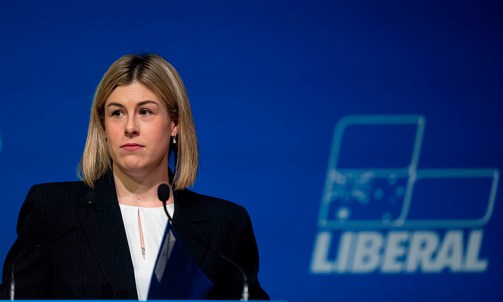
The UN resolution comes at a watershed in Australia’s Net Zero journey. The Liberal Party was strongly for action under Turnbull (2009), against it under Abbott (2010-15), and for it under Turnbull, Morrison, Dutton, and Ley (2015-26).
The current Liberal and National Party leaders, Angus Taylor and Matt Canavan, are on board with the dissenters from the UN near-consensus position. In his Budget response, Taylor said, ‘We’ll abolish Labor’s crippling Net Zero carbon taxes wherever we find them.’ But he singled out only the Safeguard Mechanism, which accounts for about one billion dollars a year, and the vastly unpopular transmission lines that the so-called ‘energy transition’ needs. For his part, Matt Canavan is unconvincingly defending the Coalition’s failure to commit to rejecting the Paris Agreement by claiming it is a mere scrap of paper.
Doubtless, this reflects a desire to keep people inside the tent, especially given the well-funded Teals’ enduring presence and even their consideration of establishing themselves as an official political party. While there are no remaining Parliamentary supporters of Malcolm Turnbull’s leadership, many Liberals, including Shadow Treasurer Tim Wilson and NSW and Victorian state leaders Kellie Sloane and Jess Wilson, remain wedded to the ‘energy transition’.
But opinion polls show a seismic shift underway, with One Nation’s plain-speaking displacing the Coalition parties’ prevarication. On the climate agenda, Senator Malcolm Roberts has identified more than two dozen agencies for defenestration. Though he does not quantify the cost savings this would bring, the various programs have budgets amounting to tens of billions of dollars.
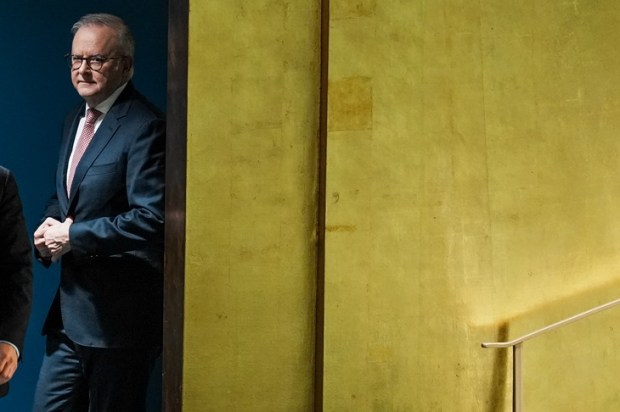
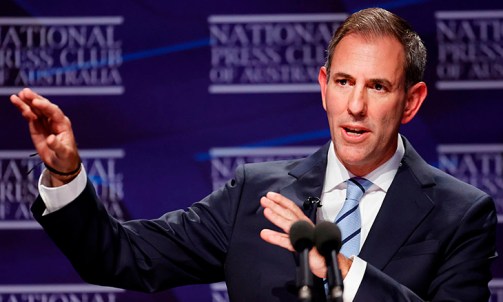
Not only is One Nation seizing the support of Coalition voters, but the party is also starting to erode the conservative elements within Labor’s base, which are now scarcely represented as a result of former student activists taking control of the party under Anthony Albanese (judged by Bob Hawke to be ‘not very bright’). The student militants within the Labor leadership include Treasurer Jim Chalmers, who is displaying his inner Jim Cairns by trying to recreate capitalism as a system of high taxes, escalating regulation, and income growth driven by a fat public sector. Together, they and other ageing professional agitators, including Bowen, Wong, Burke, Gallagher, and Plibersek, are pushing what I believe is the new Marxist agenda. This builds on taxing incomes and regulating business with an agenda of environmentalism, contempt for the nation, high immigration from areas that don’t share Western culture, and replacing scientific notions of gender with the caprice of sexual orientation.
Not only is Labor suffering from policies that weaken the economy and the ‘social cohesion’ that the party ostensibly champions, but the hypocrisy of Labor in power is also recognised in excessive ministerial travel spending and in their pulling up the drawbridge to prevent others from acquiring property portfolios like those that they themselves have accumulated.
For ALP politicians, the prospects are bleak. Even before the disastrous budget and further expense scandals, Redbridge Group/Accent data gave the party a bare majority. As the year progresses, that will seem optimistic. And Labor MPs, unlike their Coalition counterparts, have no alternative party to join. Waiting in the wings is Prime Minister Rudd’s former economics adviser, Andrew Charlton, perhaps ready to pick up the debris, like a latter-day Bill Hayden seeking to rescue the doomed Whitlam government in 1975.
The Liberal and National leadership have yet to fully grasp the fact that the national mood has changed abruptly, and half-hearted attempts to be Labor or Green Lite are backfiring. Their leadership retains a loyalty to parties with old and hollowed-out memberships established to fight issues that are less easily defined in today’s more nuanced issues
Many hoped that Tony Abbott’s coronation as President of the Liberal Party might, instead, be an endorsement of his presidency of a phoenix amalgamating the like-minded among the Liberals, Nationals and other parties under a new broad tent that would be dominated by One Nation, the party with the largest mass support. But political egos do not readily accept secondary roles, especially when they are subordinate to those they formerly regarded as upstarts. The right can, however, take some comfort in that Australia’s system of preferential voting brings fewer penalties for a lack of unity than in first-past-the-post systems.