The results of the Farrer byelection are going to be difficult to swallow for the Liberal faithful.
Farrer, described as the jewel in the Liberal Party crown and safest of safe blue ribbon seats, was vanquished with all the vigour of a revolution. The orange wave, dismissed by many commentators loyal to the Coalition, knocked them flat.
Although the count continues, Farrer’s latest results show David Farley of One Nation holding a commanding lead over everyone, including the independent.
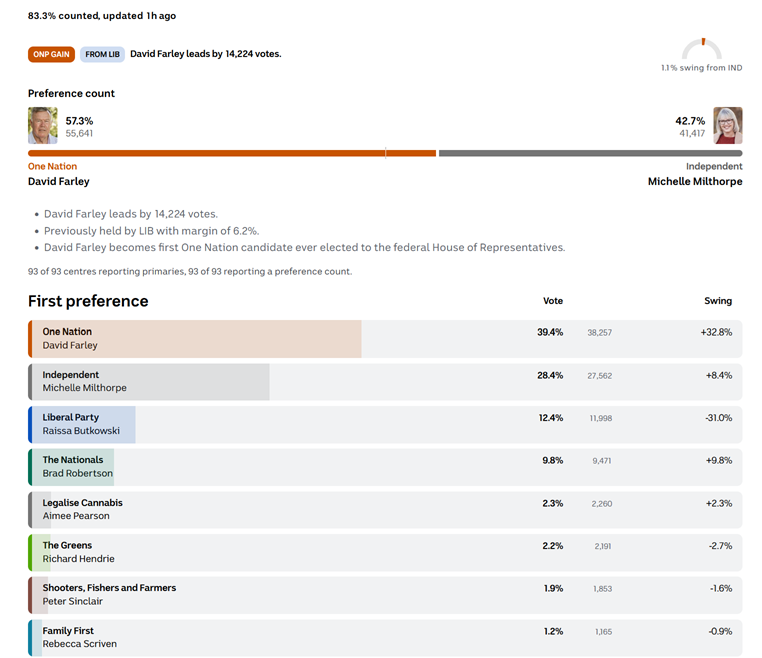
From the ABC
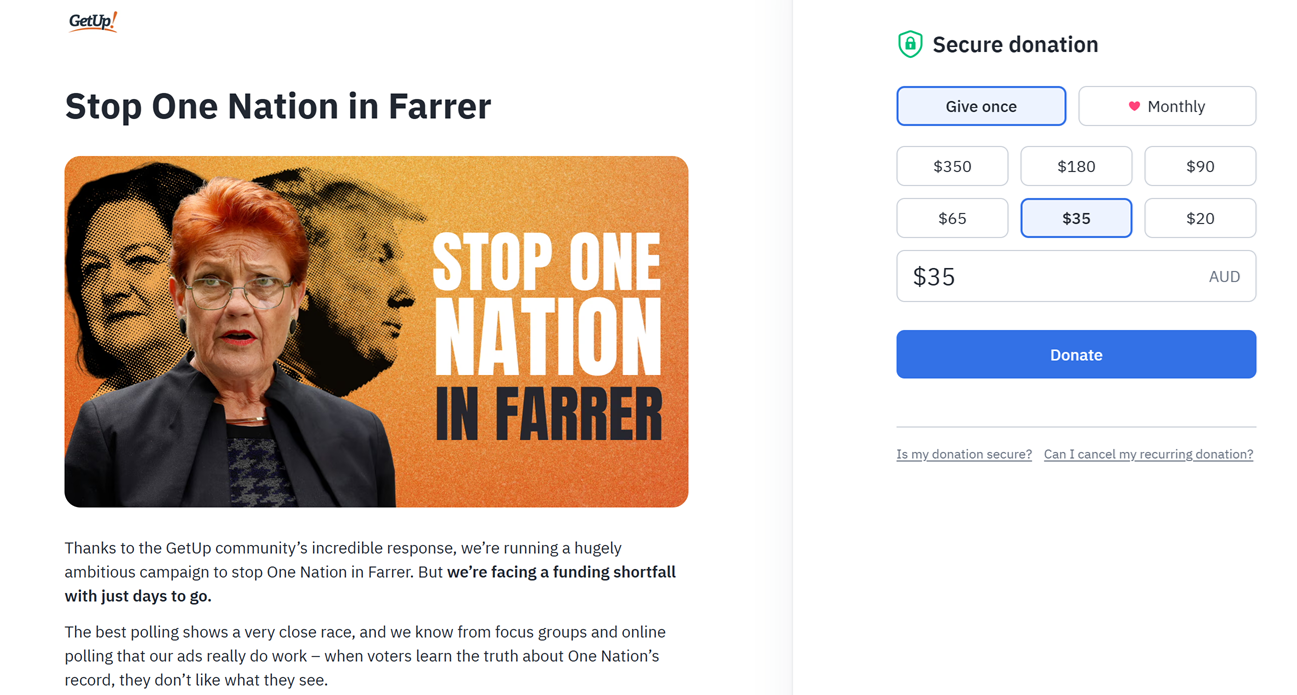
So much for activist group GetUp! and their dedicated anti-One Nation war chest, eh?
Their website promised: We can stop One Nation in Farrer. But only if we can match them to the finish line.
This is the opposite of a grassroots, regional campaign and it was rejected by the people of Farrer.
Analysts have not finished inspecting the result, but it seems likely that One Nation took votes off what was the Labor bloc, including those that were expected to flow to the independent. If true, it means One Nation is beginning to look more like Reform UK which tramples over old party lines.
Indeed, the sheer amount of money spent trying to stop One Nation only makes their victory more extraordinary.
Does the demise of two climate-inclined independents in a row signal the beginning of the end for the ideologically-aligned Teal movement? Maybe. But that is not the story of Farrer.
At some point during their bewildered coverage, the ABC managed to acknowledge the historic nature of the One Nation victory. The Coalition have held Farrer for 80 years. It is deeply conservative. If you wished to take the pulse of conservatism, this is where you would do it.
And what did the cameras find?
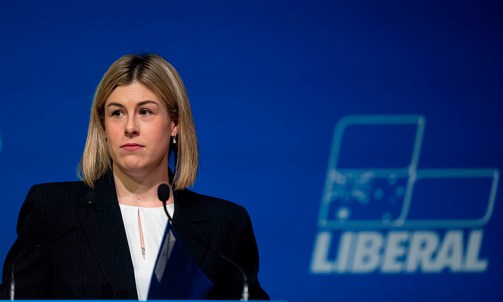
A near empty room, adorned with more blue decorations than people, and a stage professionally fitted with expensive-looking campaign banners. The Liberal Party setup was by-the-book, sleek, and cold.
Fair play to their candidate, Raissa Butkowski, who gave a dignified if unmemorable farewell. She had the unenviable job of standing in front of the orange wave after it gained height from the Bondi terror attack, return of ISIS Brides, Middle Eastern Fuel Crisis, and terrifying Budget rumours.
On paper, both her and Farley approached the election as relative unknowns, but the left’s all-consuming obsession with ‘stopping One Nation’ ensured that Farley was in every newspaper, on every screen, and on every social media feed for the duration of the campaign. The panic of One Nation’s adversaries turned Farley into a champion of regional Australia while the Liberals were set aside and forgotten.
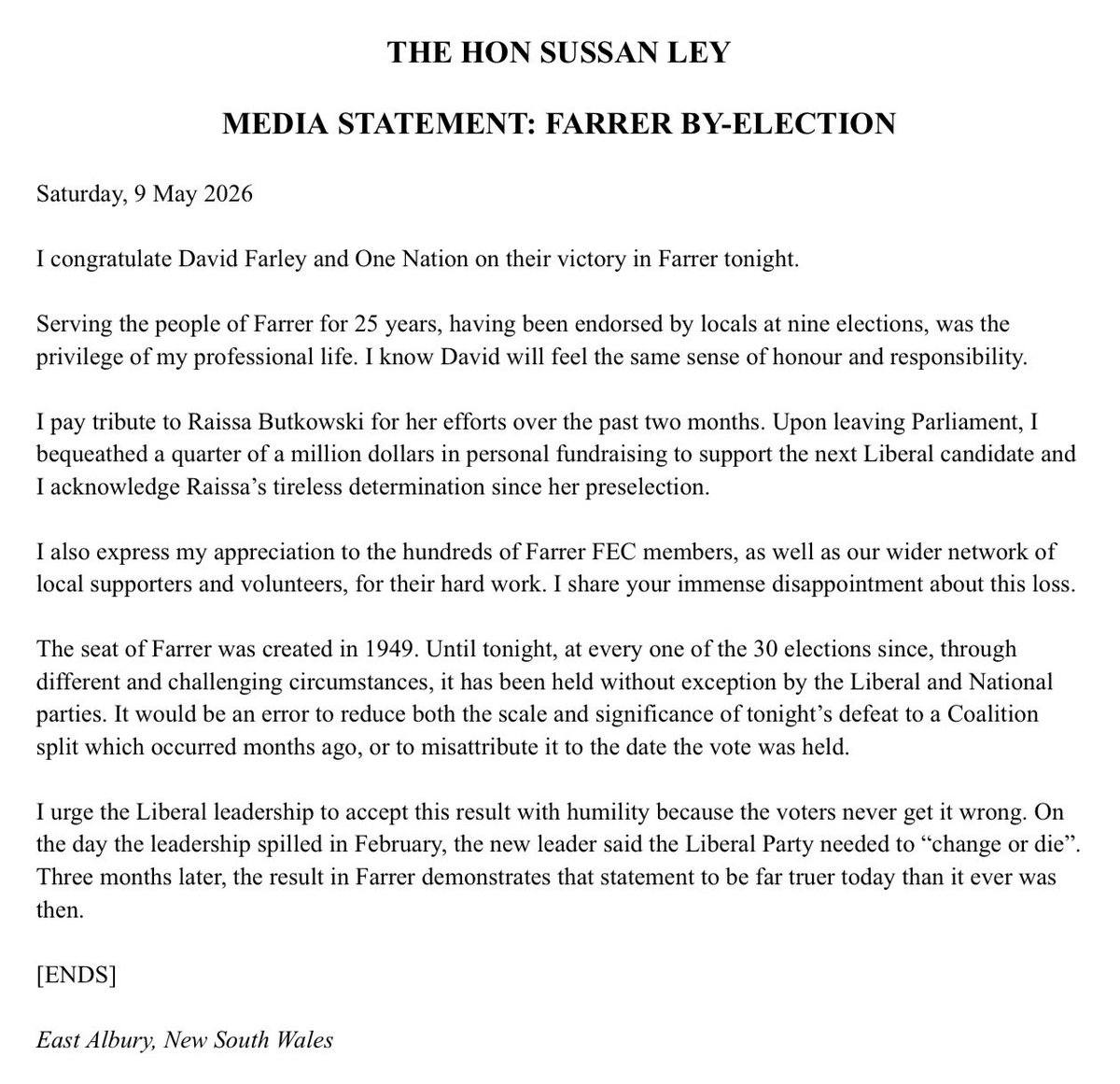
The legacy of Sussan Ley did not help, while her public statement following the results has been described, rather generously, as being a bit passive-aggressive.
Ms Ley urges the Liberals to ‘accept this result with humility’ and that the party needs to ‘change or die’. What are these changes, and why weren’t they made under her leadership? We may never know.
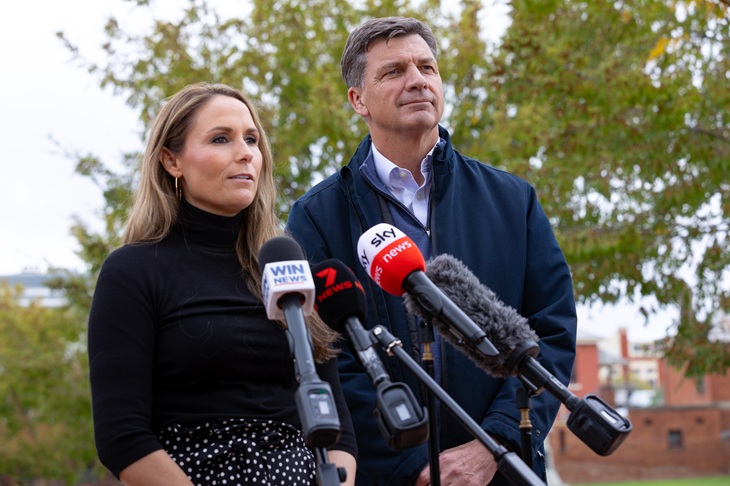
It was left to current Liberal Leader, Angus Taylor, to face the sullen room, and more importantly, the cameras. Conservatives around the nation were watching to see if the party had any life left in it after the thrashing.
Taylor was serious, for sure. He made it clear that he had heard the complaints of his natural voters. But whether the party is capable of organic and extensive changes remains to be seen.
Too many within its structure are privileged, comfortable, and isolated from the consequences of decades of bad policies. How many days do those sitting in positions of power spend on trains and buses in the city? How many walk home at night? How many choose between their aircon and a cup of coffee? How many have cancelled their private health insurance or moved their children into a state school? How many have quit their generational farm, finally broken by a looming wind farm or sunk by operational costs? How many will be eternal renters in tiny boxes, living in constant fear that the next government tax hike will leave them on the street? How many have been turned away from banks and left standing in a queue behind dozens of foreign workers? How many understand what it is to be last in the eyes of the government?
One Nation is full of people living this every day. Gina Rinehart might have gifted One Nation a plane, but the people advising, working the offices, volunteering, and running as candidates are all battlers. They don’t need focus groups. They are the focus group.
With generational staffers at the helm of the Liberals and the ranks of power populated by a narrow circle of well-connected individuals, it is hard to see how they can find traction over the widening divide of class hardship. And look, this structure used to be desirable in the Howard years. Politics revelled in its elitism. But that is a trapping of wider prosperity. A prosperity squandered.
Angus Taylor said the Liberals had a ‘mountain to climb’ at the election. Which is odd, because Farrer is a Liberal safe seat and barely any energy was spent by the Left against them. It was more like they had slipped off that mountain while Farley was pursued by a pack of rabid wolves to the summit.
‘We have to take away some hard lessons from this,’ Taylor added. ‘For too long we have been a party of convenience, not conviction, and that must change.’
At least that’s true. He even acknowledged that, at times, the Liberal Party had been part of the problem. One wonders if the moderate factions understand the gravity of what Taylor is telling them.
Taylor also talked about the need to work closely with the Nationals. Their ‘after party’ was much cheerier than the Liberal room, although to be fair, they were taking a punt at the seat rather than suffering a national humiliation.
Taylor finished by expressing the need to once again form themselves into something resembling a party of government … but shouldn’t that be, a party of the people? That is the lesson.