I. When Words Fail, Policy Follows
Clear words produce clear thoughts. Clear thoughts produce coherent policy. When language decays, so does judgment. Nowhere is this more evident than in Western diplomacy toward the Middle East, where a desultory lexicon – repeated reflexively, rarely examined – has become a substitute for understanding. The result is not merely confusion but structural failure: policies built on words that no longer correspond to reality, if they ever did.
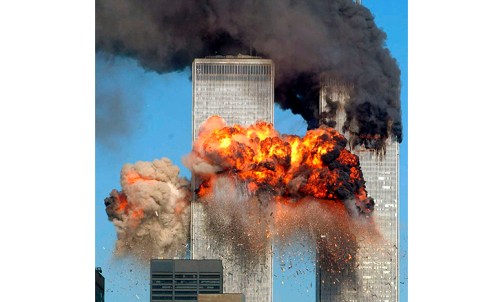
October 7 shattered many illusions. It should have shattered the language as well. Yet in the aftermath of the most brutal mass murder of Jews since the Holocaust – marked by the systematic slaughter of civilians, rape, torture, immurement of families in safe rooms, and the abduction of more than 250 hostages – the familiar vocabulary reasserted itself almost immediately.
‘Ceasefire.’ ‘Status quo.’ ‘Two-state solution.’ ‘Settlements.’ ‘West Bank.’ ‘Refugees.’
These terms were deployed as if nothing fundamental had changed, as if the conceptual architecture of Middle East diplomacy had not collapsed overnight.
This is not an accident, it is a habit, and habits of language shape habits of thought. The central failure of Western engagement with the Israeli-Palestinian conflict is not a lack of goodwill or resources, but a refusal to interrogate the words through which the conflict is understood. Language that once described has hardened into a shibboleth – terms whose repetition signals moral alignment rather than analytical clarity. To question them is treated as heresy; to defend them, as wisdom. However, language does not merely describe reality, it organises it. When the words are wrong, the policies that follow are worse.
Consider the persistent assumption – now being repackaged yet again – that reconstruction, investment, or real estate development can pacify Gaza without first confronting the ideology that governs it. This belief rests on a profoundly Western projection: that human behaviour is primarily motivated by material incentives, that prosperity moderates extremism, and that economic integration precedes moral transformation. The evidence suggests otherwise.
Gaza has received tens of billions of dollars in international aid over two decades. Instead of ports, power stations, desalination plants, or food self-sufficiency, that capital was diverted into a vast subterranean military infrastructure – hundreds of miles of reinforced tunnels, command centres beneath hospitals, weapons depots embedded in civilian neighbourhoods. This was not corruption. It was strategy. It reflected priorities chosen deliberately, not resources denied accidentally.
Yet Western diplomacy continues to speak as if the problem is underdevelopment rather than ideology, deprivation rather than devotion, despair rather than doctrine. To imagine that Gaza can be transformed by architectural renderings and financial incentives – without dismantling the belief system that sanctifies annihilation – is to mistake surface for substance. It is to dress gangrene with silk bandages.
This linguistic failure is compounded by moral asymmetry. Israel is the only functioning liberal democracy in the Middle East: a state governed by law, pluralism, independent courts, free media, and electoral accountability. By contrast, every neighbouring Arab polity is either a monarchy, a military dictatorship, or an Islamist autocracy. Yet diplomatic language routinely treats Israel as the primary obstacle to peace, while excusing or euphemising the pathologies of its adversaries.
Words make this inversion possible. When Israeli communities are labelled ‘settlements,’ the term carries a colonial insinuation that erases Jewish history and legal context. When the territory is called the ‘West Bank,’ the name itself reflects a Jordanian claim that ceased to exist in 1967 but persists rhetorically as if time froze. When Arab residents of Gaza – born in Gaza, living in Gaza, governed in Gaza – are described as ‘refugees,’ the word is emptied of meaning and repurposed to sustain a permanent grievance economy. These terms do not clarify; they immure thought.
Most telling is the continued invocation of the ‘two-state solution’ as a diplomatic talisman, long after it has lost both political legitimacy and popular support. After October 7, the Israeli public – across ideological lines – has overwhelmingly rejected the creation of a contiguous ‘Palestinian’ state governed by the same political culture that produced Hamas. To continue using the term as if it remains viable is not optimism; it is denial.
The question, then, is not whether peace is desirable, it is whether peace can be discussed honestly without first repairing the language that has obscured reality for decades? This essay argues that it cannot.
What is needed is not another plan, conference, or acronymic initiative, but a renewal of diplomatic speech itself – a lexicon grounded in facts rather than inherited assumptions, clarity rather than comfort, and strategic sobriety rather than moral posturing. Before architecture comes language. Before reconstruction comes reckoning. The words must change, or nothing else will.
II. ‘The West Bank’: A Name Without a Referent
Language becomes dangerous when it survives the reality that produced it, and ‘West Bank’ is one such term – a geographical ghost that continues to structure diplomacy long after its original meaning expired. It is spoken with confidence, written into communiqués, and invoked as if it were a neutral descriptor. It is none of these things.
The term West Bank did not arise organically from history, culture, or law. It was coined after 1948 to describe territory annexed by Jordan following its occupation of land west of the Jordan River. The name made sense only in relation to Jordan’s sovereignty east of that river. When Jordan renounced its claim in 1988, the term lost its referent. What remained was a linguistic husk – retained not for accuracy, but for convenience. And yet, decades later, Western diplomacy continues to speak as if Jordan still matters to the geography, as if Israel were a temporary interloper on land whose identity is somehow self-evident. It is not.
Israel does not occupy the ‘West Bank’ in the sense that term implies. Israel administers territories historically known as Judea and Samaria – regions whose names predate modern diplomacy by millennia, and from which the very word Jew is derived. Judea is not a political slogan. It is a civilisational fact. This is not an argument about sentiment; it is an argument about precision.
When diplomats insist on using obsolete nomenclature, they are not being cautious; they are being desultory – careless with consequence. Words that no longer map onto reality become tools of obfuscation. They allow policymakers to speak without thinking, to repeat inherited formulas rather than confront altered conditions.
More troubling still is that the term West Bank carries an implicit moral framing. It suggests that Israel’s presence is external, temporary, and suspect – while avoiding any discussion of how the land came to be legally unassigned after the dissolution of the British Mandate, or how Jordan’s prior occupation was never internationally recognised. The name itself quietly prejudges the dispute.
This is how language immures thought. Once the term is accepted, everything that follows is constrained by it. Israeli towns become ‘settlements’ by default. Jewish residents become intrusions. Historical continuity disappears behind a cartographic abstraction invented less than a century ago.
It is worth asking why this term persists. The answer is not ignorance alone. It persists because it performs ideological work. It allows diplomats to avoid naming Judea and Samaria, because to do so would force an acknowledgment of Jewish historical rootedness – something the current lexicon is designed to suppress.
Words become shibboleths in this way: signals of belonging within a diplomatic culture that prizes conformity over accuracy. To say ‘West Bank’ is to demonstrate one’s membership in the consensus. To question it is to invite suspicion, even when the question is purely factual, however, diplomacy that cannot tolerate factual inquiry is not diplomacy – it is ritual.
If peace is ever to be more than ceremonial, the lexicon must be revised. Not to favour one side, but to reflect reality as it exists rather than as it is nostalgically remembered. A language that refuses to evolve alongside events becomes an obstacle to understanding – and eventually, to resolution.
Precise words may not guarantee peace, but imprecise words guarantee confusion, and confusion, in this region, is never benign.
III. The Refugee Fiction: How UNRWA Froze History in Place
Few concepts in modern diplomacy are as morally freighted – and as intellectually indefensible – as the idea of the eternal refugee. It is presented as compassion; it is, in fact, a trap. In every other context on earth, refugee status is temporary. It describes a condition of displacement meant to be resolved through resettlement, integration, or repatriation. The goal is normalisation – restoring people to civic life, not embalming them in grievance.
Only one population in the world is treated differently. Under the unique regime created for Palestinians, refugee status is not only permanent but hereditary – passed down through generations like an inherited wound. A child born in Gaza, whose parents were born in Gaza, whose grandparents were born in Gaza, is still described as a ‘refugee,’ even though Gaza is the only home he has ever known. This is not humanitarianism; it is institutionalised incongruity.
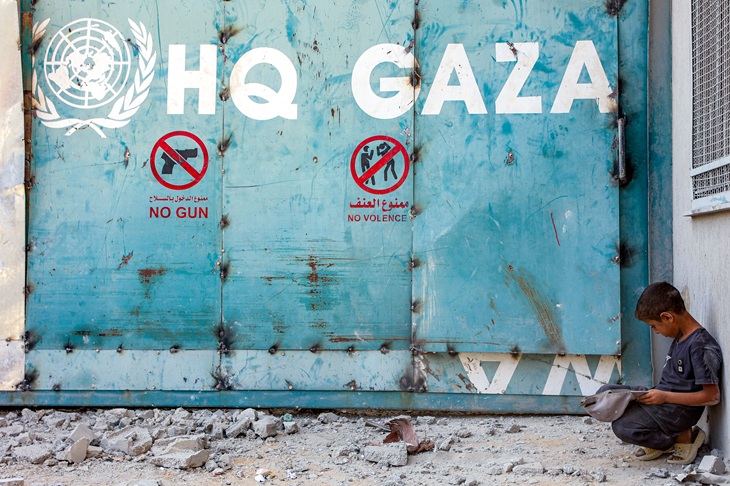
The United Nations Relief and Works Agency (UNRWA) did not merely administer aid; it codified a political myth. By redefining ‘refugee status’ as a permanent identity rather than a temporary condition, it transformed humanitarian language into an ideological weapon. The result has been the immurement of millions of people inside a suspended moral state – neither citizens of a state nor refugees seeking resolution, but wards of an international system that profits from their stasis.
One must ask the obvious question that diplomacy carefully avoids: How can a person be a refugee from the place in which he lives? Gaza is not a diaspora. It is not exile. It is origin. And yet the language insists otherwise, because the term ‘refugee’ performs political work. It sustains the so-called ‘right of return,’ a phrase that has itself become one of the most pernicious shibboleths in modern diplomacy.
Israel’s Law of Return was created to address a specific historical reality: the forced expulsion, dispersal, and extermination of Jews over two millennia. It is a right anchored in restoration – return to a homeland from which a people had been repeatedly expelled.
The Palestinian ‘right of return,’ by contrast, is not about return at all. It is about negation. Its explicit purpose, stated openly by its advocates, is demographic destruction – the dissolution of Israel as a Jewish state through population inundation. The same words are used, but the meanings are not merely different; they are oppositional. To pretend otherwise is not naïveté, it is bad faith.
After October 7, this linguistic fraud can no longer be ignored. UNRWA itself has been exposed not as a neutral humanitarian body but as an institution deeply compromised by ideological alignment and operational entanglement with Hamas. Schools that teach martyrdom, facilities used for weapons storage, employees implicated in terror – these are not anomalies. They are symptoms of a system designed not to resolve conflict, but to preserve it. And still, diplomats speak of ‘refugees’ as if the term were sacrosanct.
This is where language ceases to describe reality and begins to enforce it. By insisting on refugeehood where none exists, the international community has ensured that no political solution can ever emerge. A population taught that its identity depends on perpetual grievance will never be prepared for compromise, coexistence, or civic responsibility. One cannot build peace on a lie.
A sagacious diplomacy would begin by retiring the fiction altogether – by acknowledging that Gaza’s problem is not displacement but governance; not homelessness but ideological capture; not poverty alone, but the deliberate subordination of civilian welfare to jihadist priorities.
Silk bandages do not cure gangrene, and euphemisms do not heal civilisational wounds. So long as the language insists on eternal victimhood, the reality will remain eternally violent.
Section IV: ‘West Bank,’ Judea and Samaria – When Geography Becomes a Shibboleth
Few terms better illustrate the problem of inherited diplomatic language than ‘the West Bank.’ The phrase is repeated reflexively by journalists, diplomats, and policymakers who rarely pause to consider what the term actually denotes – or whether it denotes anything coherent at all.
‘West Bank’ is not an ancient name. It is not a neutral geographic descriptor. It is a political artefact, coined between 1949 and 1967 to describe the territory west of the Jordan River while it was occupied and annexed by the Hashemite Kingdom of Jordan. The name made sense only within that specific historical arrangement: land on the west bank of Jordan’s river. Once Jordan formally renounced its territorial claims in 1988, the term should have followed them into obsolescence. It did not.
Instead, the phrase survived as a diplomatic shibboleth – an incantation that signals ideological alignment rather than analytic clarity. Its continued use quietly embeds a series of assumptions: that the territory is not Israeli; that its status is colonial rather than disputed; that Jewish historical claims are irrelevant; and that sovereignty is presumed to belong elsewhere, even if no lawful sovereign exists.
Israel, by contrast, refers to the same territory as Judea and Samaria. That terminology is not rhetorical flourish. It reflects historical continuity. These names appear throughout biblical, Roman, and early modern sources. Judea is not a metaphor. It is the root from which the word Jew itself derives. To describe Jewish presence in Judea as ‘settlement’ while describing Arab presence as ‘indigenous’ is not analysis; it is narrative laundering.
Language shapes cognition. When journalists speak of ‘settlements,’ they evoke colonial outposts imposed on foreign soil. When Israelis speak of communities, they describe civilian towns built on territory whose final status was explicitly left unresolved under the Oslo Accords. One term presumes illegitimacy. The other acknowledges legal ambiguity. The choice is rarely accidental.
This linguistic asymmetry has policy consequences. Western governments condemn ‘settlement expansion’ while remaining curiously silent about systematic Palestinian violations of Oslo commitments, including incitement, terror financing, and the explicit rejection of negotiated final-status arrangements. Words do not merely describe reality. They immure thought within approved boundaries.
The persistence of ‘West Bank’ illustrates how desultory diplomatic habits harden into orthodoxy. Officials repeat inherited terminology not because it clarifies, but because abandoning it would require confronting uncomfortable facts: the absence of Palestinian sovereignty, the rejection of partition by Palestinian leadership, and the erosion of Israeli public support for a two-state framework after October 7.
A lexicon that cannot absorb new realities becomes an obstacle rather than a tool. Precision is not pedantry. Precision is strategy. Clear words produce clear thought. Clear thought precedes effective policy. Where language collapses, policy follows.
Section V: Refugees, UNRWA, and the Permanence of Linguistic Fraud
No diplomatic term better exposes the moral and conceptual bankruptcy of modern Middle East discourse than the word ‘refugee.’ It is a term that, in every other global context, denotes impermanence, resettlement, and eventual absorption. In the Palestinian case alone, it has been inverted to mean heredity, stasis, and perpetual grievance.
The global refugee regime, overseen by the United Nations High Commissioner for Refugees (UNHCR), operates under a clear principle: refugee status is temporary and dissolves once an individual is resettled, naturalised, or integrated into a new society. That principle applies to tens of millions of displaced persons worldwide – from Syrians in Europe to Ukrainians across the continent. It applies to everyone except Palestinians.
Palestinians fall under a separate and anomalous institution: the United Nations Relief and Works Agency (UNRWA). Created in 1949 as a short-term humanitarian body, UNRWA has instead evolved into a permanent bureaucracy whose continued existence depends on the indefinite preservation of refugee status across generations. Under UNRWA’s definition, a refugee is not someone displaced by war, but anyone descended from someone displaced – regardless of current residence, citizenship, or material condition.
This linguistic distortion has no precedent. A person born in Gaza, raised in Gaza, and living their entire life in Gaza is still labelled a refugee from Gaza. The absurdity is rarely acknowledged, let alone interrogated. Refugeehood, in this context, has been transformed from a condition into an identity.
Language performs the fraud. To call a person a refugee implies dispossession and exile. To call millions of residents of a self-governing territory refugees from the territory they inhabit is to sever words from meaning. That severance is not accidental. It serves a political function: the preservation of grievance as an organising principle.
The concept of the ‘right of return’ completes the inversion. Israel’s Law of Return was created to address a specific historical reality: the forced exile of Jews from their homeland by imperial conquest, followed by centuries of statelessness, persecution, and expulsion across multiple continents. It is a restorative principle grounded in historical rupture.
The Palestinian ‘right of return’ is something else entirely. It is not restorative but eliminative. It does not seek return to a sovereign Palestinian state, but demographic inundation of Israel itself. Its purpose is not coexistence but erasure. That distinction is almost never made explicit in diplomatic discourse, despite being openly acknowledged by Palestinian leadership.
The reuse of the same phrase – right of return – to describe two fundamentally incompatible concepts is not semantic coincidence. It is linguistic capture. The same word is deployed to achieve opposite ends, creating confusion that benefits the party least interested in resolution.
UNRWA’s continued operation after October 7 raises unavoidable questions. Educational materials produced under its auspices have glorified violence. Facilities have been repeatedly implicated in terror activity. Its refugee framework incentivises radicalisation by offering no horizon beyond grievance. Yet diplomatic language continues to treat UNRWA as a neutral humanitarian actor rather than as a political institution with structural consequences.
A sagacious policy framework would begin by acknowledging that permanent refugeehood is not humanitarianism. It is immurement. It traps generations in an identity defined by loss, resentment, and negation. No society can be built on such foundations. The refusal to reform the language surrounding refugees ensures the perpetuation of the conflict itself. Peace requires closure. Closure requires resolution. Resolution requires words that describe reality rather than suspend it in amber.
This linguistic fraud has endured not because it is persuasive, but because confronting it would require Western institutions to admit decades of complicity in sustaining an unrecoverable fiction.
Section VI: The Two-State Solution as a Diplomatic Relic
The phrase ‘two-state solution’ has endured long past its analytical usefulness. It persists not because it describes a viable political outcome, but because it provides diplomatic cover for institutions unwilling to confront changed realities. What was once a framework has become a shibboleth – repeated reflexively, insulated from evidence, and immune to falsification.
For decades, the two-state solution functioned as a conceptual placeholder rather than an executable plan. It allowed diplomats to gesture toward resolution without defining borders, governance structures, security arrangements, or ideological reconciliation. Ambiguity was not a flaw; it was the point. As long as the phrase remained undefined, it could be invoked endlessly without accountability.
October 7 shattered that equilibrium. The attacks were not merely acts of terror; they were a referendum on coexistence. They demonstrated, with horrifying clarity, that the dominant political culture in Gaza does not regard a Palestinian state alongside Israel as a goal. It regards Israel’s existence itself as the problem to be solved.
Public opinion in Israel shifted decisively in response. That shift was not ideological hardening but empirical reckoning. A population that had withdrawn from Gaza, dismantled settlements, and tolerated years of rocket fire in the hope of separation was confronted with proof that territorial concession had produced not moderation, but militarised nihilism.
Diplomatic language, however, remained frozen. Western officials continued to invoke the two-state solution as though nothing fundamental had changed. The repetition became ritualistic. Reality was subordinated to vocabulary. A concept that cannot survive contact with facts becomes something else entirely. It becomes a linguistic artefact – maintained for symbolic comfort rather than strategic guidance. At that point, insisting on its relevance is not prudence; it is denial.
The insistence on the two-state framework also obscures a critical asymmetry. Israel is a functioning state with defined institutions, borders, currency, military command, and civil society. No parallel Palestinian state apparatus exists that could plausibly assume sovereign responsibilities without immediate collapse or capture by armed factions. Treating the two entities as symmetrical parties awaiting diplomatic alignment misrepresents the problem.
Language again performs the deception. The phrase ‘peace process’ implies forward motion. The phrase ‘two states’ implies inevitability. Neither implication is warranted. The Oslo Accords themselves never guaranteed Palestinian statehood. They established conditional autonomy predicated on security cooperation, demilitarisation, and the renunciation of violence. Those conditions were not merely unmet; they were systematically violated. Continued invocation of Oslo-derived language without reference to its breached commitments is another form of lexical malpractice.
At some point, vocabulary must be updated or discarded. A term that survives solely because no one wishes to propose an alternative has ceased to function as analysis. It has become a verbal refuge for intellectual inertia. This refusal to acknowledge the collapse of the two-state solution as a consensus position within Israel also distorts democratic reality. Policy debates do not occur in a vacuum. When an electorate rejects a framework, external actors insisting upon it are no longer facilitating peace; they are attempting to override political legitimacy.
This is not an argument for annexation, expulsion, or maximalism. It is an argument for honesty. A diplomatic lexicon that cannot accommodate rejection, failure, or exhaustion is not a tool of peace. It is a mechanism of delay. Clear words do not guarantee clear outcomes. Obscure words, however, guarantee confusion. When a framework no longer corresponds to the strategic environment, continuing to invoke it produces paralysis rather than progress.
The two-state solution now occupies the same category as other discarded diplomatic constructs – useful in their moment, instructive in retrospect, but dangerous when treated as timeless truths. The next step requires not replacement slogans, but a willingness to describe the terrain as it exists rather than as it once did.
Section VII: ‘Settlements’ or Communities – How Language Prejudges Legality
Few words in the Middle East lexicon do more covert work than ‘settlement.’ It presents itself as descriptive, even neutral, while carrying an entire moral verdict inside the term. A ‘settlement’ suggests colonial intrusion, foreign implantation, and illegitimacy by definition. The listener is guided toward judgment before any facts are examined. That is precisely why the word persists.
In most global contexts, people living in towns, villages, and cities are described as residents of communities. Housing developments are neighborhoods. Municipalities are governed localities. Only in Israel does the construction of civilian life automatically acquire a pejorative label that presumes criminality.
This is not accidental. The term ‘settlement’ migrated into Middle East diplomacy through European historical analogy, not regional reality. It imports the moral memory of Algeria, India, Rhodesia, and other imperial theatres where a distant metropole implanted its population among a subjugated indigenous society. Israel does not fit that model, historically, legally, or demographically.
Judea and Samaria are not overseas colonies. They are the geographic and historical core of Jewish civilisation. The very name ‘Jew’ derives from Judea. Jerusalem, Hebron, Shiloh, Beit El – these are not abstractions retrofitted after modern nationalism. They are the sites around which Jewish identity formed millennia before the appearance of Arab nationalism, Ottoman administration, or British mandate.
Diplomatic language effaces this continuity by design. Referring to Jewish communities as ‘settlements’ renders Jewish presence provisional and alien. The term immures Jewish history behind a legal fiction that treats the land as a blank slate prior to 1967.
Legal reality tells a different story. Under the Oslo Accords, the territories were divided into Areas A, B, and C, with Area C – where the majority of Jewish communities are located – remaining under full Israeli civil and security control pending final-status negotiations. Construction in those areas is not illegal under Oslo. It is governed.
That distinction matters. A settlement implies lawlessness. A community implies administration. The difference is not semantic; it determines how policy is debated and how legitimacy is assigned. The persistence of the settlement label also conceals a double standard. Arab construction in the same territories is routinely described as ‘housing,’ ‘villages,’ or ‘development,’ even when built illegally under existing agreements. Jewish construction, even when authorised, is framed as provocation.
Language again performs the distortion. Neutrality is simulated while bias is embedded. The colonial analogy collapses further when examined structurally. Colonial powers exploit territory for the benefit of a distant centre. Israeli communities are not extractive outposts. They are residential populations whose economic, familial, and civic lives are integrated into the same national framework as Tel Aviv or Haifa. No imperial capital siphons resources from Judea and Samaria. No foreign crown directs policy.
The misuse of ‘settlement’ also forecloses alternative political arrangements before they are considered. If Jewish presence is defined as illegitimate by terminology alone, then coexistence models involving shared administration, local autonomy, or cantonisation become morally inaccessible regardless of their feasibility. Words harden options. When vocabulary criminalises existence, negotiation becomes theatre.
This linguistic practice has consequences beyond rhetoric. International legal forums, nongovernmental organisations, and media outlets cite one another in a self-reinforcing loop, transforming contested terminology into assumed fact. The result is a diplomatic echo chamber in which assertions gain authority through repetition rather than validation. At that point, language ceases to clarify. It enforces.
A sagacious diplomatic framework would begin by distinguishing description from adjudication. Communities exist. Their legal status is disputed. Those two statements can coexist without collapsing into propaganda. Calling them settlements collapses the distinction deliberately.
Clarity of language does not solve disputes; it allows them to be argued honestly. Obscure language disguises disagreement while pretending to resolve it. The question is not whether Jewish communities should exist. The question is whether diplomacy is prepared to speak about them without preloading the verdict. Until that happens, policy will continue to orbit a false premise, and negotiations will remain desultory exercises in managed misunderstanding.
Section VIII: The ‘Right of Return’ – When a Term Is Hollowed Out and Repurposed
No phrase in modern diplomacy better illustrates the corruption of language than ‘the right of return.’ It sounds humane, legal, and morally grounded. It is none of those things as currently deployed.
Originally, the right of return referred to a very specific historical injustice: the forced removal and exile of a people from its homeland. That concept animated Zionism and ultimately became codified in Israeli law. Israel’s Law of Return recognises the right of Jews – dispersed through conquest, expulsion, and persecution – to return to their ancestral land. It is rooted in continuity, not displacement. The return is to a place of origin, not to a territory newly invented for political leverage.
The Palestinian usage of the term is categorically different. Here, ‘return’ does not mean returning to Gaza or to the towns and villages where people currently live. It refers instead to a claimed right – asserted not only by those who left in 1948 but by all of their descendants in perpetuity – to enter Israel proper and thereby erase it demographically. This is not a right of return; in actuality, it is a right of replacement.
No other refugee population in the world enjoys an inherited, multi-generational refugee status. No other conflict preserves displacement as an identity rather than resolving it. A Syrian refugee resettled in Germany is no longer a refugee. A Greek expelled from Turkey in 1923 did not pass refugee status to grandchildren. Even the vast population movements after the second world war – millions of Germans, Poles, Hindus, Muslims – were settled, absorbed, and integrated.
Only Palestinians are maintained as eternal refugees. This is not an accident. It is a policy choice embedded in language and institutionalised through the United Nations Relief and Works Agency (UNRWA), an organisation unique in global refugee management. UNRWA does not resettle. It does not dissolve refugee status through citizenship. It perpetuates it. The word ‘return’ is the shibboleth through which this permanence is justified.
The moral inversion is striking. Jews who were expelled from Arab lands – nearly a million people – were absorbed by Israel without international agencies, without inherited refugee status, and without a demand to reverse history. Their displacement is rarely mentioned. Their return is never demanded.
Yet Palestinians born in Gaza, living in Gaza, governed in Gaza, are described as refugees from places they have never seen. Language again does the work. Refugeehood becomes ontological rather than situational. Once the term is accepted uncritically, policy options collapse. Any resolution that does not include Israel’s demographic dissolution is framed as immoral. Negotiation becomes impossible because the demand is existential.
The tragedy is that this linguistic sleight of hand harms Palestinians as much as Israelis. It immures generations in a suspended identity defined by grievance rather than citizenship. It substitutes symbolic claims for concrete futures. It teaches children that the purpose of life is reversal rather than construction.
A serious diplomatic lexicon would abandon the counterfeit usage of ‘right of return’ and replace it with accurate terms: resettlement, compensation, integration, local autonomy. These are the mechanisms that ended every other refugee crisis in the twentieth century. Retaining a term that promises an impossible reversal is not compassion. It is cruelty dressed in moral language.
The endurance of this phrase also exposes a deeper pattern. When identical words are used to mean opposite things – return versus replacement, refugee versus resident, occupation versus dispute – language no longer mediates reality. It manufactures it. Diplomacy built on such terms cannot succeed because it cannot even describe the problem it claims to solve.
Section IX: The Two-State Solution – When a Formula Becomes a Ritual
No phrase better captures the desultory state of contemporary Middle East diplomacy than ‘the two-state solution.’ It is invoked reflexively, repeated ceremonially, and affirmed automatically – often without any serious examination of whether it remains viable, desired, or even intelligible after October 7.
The phrase once described a concrete proposal: two national movements partitioning a contested land into two sovereign entities, each exercising control over territory, borders, security, and governance. That vision depended on several assumptions – mutual recognition, enforceable borders, a monopoly on force, and leadership capable of restraining internal spoilers. Those assumptions no longer exist.
Yet the phrase persists, less as policy than as ritual incantation. It signals moral seriousness without demanding analytical rigour. It allows diplomats to appear engaged while avoiding the harder question: What happens when one side rejects the premises entirely and the other no longer believes the arrangement is survivable?
After October 7, Israeli public opinion shifted decisively. The massacre did not merely harden attitudes; it clarified a reality long obscured by diplomatic euphemism. A contiguous Palestinian state bordering Israel is now widely perceived – not ideologically but operationally – as an unacceptable security risk. This is not a matter of ideology or maximalism. It is a judgment grounded in lived experience: Gaza was not ‘occupied’ in 2023, yet it became a launchpad for mass murder. The diplomatic lexicon has not absorbed this fact.
Instead, the two-state formula is repeated as though public consent were irrelevant. Language once again substitutes for consent. The phrase remains intact even as the conditions that gave it meaning have collapsed. This persistence is not neutral. It imposes a moral framing in which Israeli security concerns are treated as temporary deviations from an assumed endpoint. It casts Israeli resistance as obstruction rather than reassessment. It freezes policy in an outdated map while the terrain has changed.
There is also a deeper conceptual flaw. The two-state solution presumes a Western model of sovereignty: centralised authority, territorial continuity, and national institutions capable of enforcing law. That model has not emerged organically in Palestinian society, where political legitimacy remains fragmented, clan-based, factional, and often subordinate to ideological movements rather than civic structures. This is not a moral judgment; it is an anthropological and political observation.
Alternative frameworks – such as localised cantons, municipal autonomy, or confederated governance – are dismissed not because they have been tested and failed, but because they violate the inherited grammar of diplomacy. They sound unfamiliar. They do not fit the shibboleths.
Moshe Kedar’s canton model, for example, does not promise a neat map. It acknowledges tribal structures, local authority, and non-contiguous governance. It treats Palestinian society as it exists rather than as diplomats wish it to be. Whether one agrees with it or not, its exclusion from serious discussion reveals the problem: language polices imagination. When policy vocabulary hardens into orthodoxy, alternatives become unspeakable.
The result is paralysis. Diplomacy repeats itself while reality advances. The phrase ‘two-state solution’ remains on the table even as one of the states it presumes no longer commands its territory, cannot control its armed groups, and has forfeited credibility through repeated violations of its own commitments.
To continue invoking the formula without reassessment is not optimism. It is abdication. A serious diplomatic lexicon would replace ritual phrases with diagnostic ones. It would ask whether sovereignty is the appropriate unit of resolution at all. It would distinguish between governance and ideology, territory and legitimacy, aspiration and feasibility. Clarity does not foreclose peace; however, it is the precondition for any peace worth naming.
Section X: Why Prosperity Cannot Pacify Fanaticism
The recurring belief that economic development can pacify ideological fanaticism is among the most persistent – and damaging – illusions in modern conflict resolution. It rests on a projection error: the assumption that all societies prioritise material welfare in the same way liberal Western societies do. That assumption has repeatedly failed in Gaza, yet it continues to guide proposals that ignore both history and ideology.
The logic is familiar. Improve living conditions. Create jobs. Build infrastructure. Raise standards of living. Extremism, it is assumed, will wither in the presence of opportunity. This model works where grievance is material and where political violence is instrumental. It collapses when violence is theological, existential, or civilisational.
Gaza is not poor because it lacks money. It is poor because resources were deliberately diverted away from civilian life and toward war. Over the past two decades, billions of dollars in aid entered Gaza through international donors, humanitarian agencies, and regional patrons. That money could have funded a port, power generation, water desalination, industrial zones, and housing. None of those became priorities.
Instead, Hamas invested in a subterranean military city: hundreds of kilometres of reinforced tunnels, weapons factories, command centres beneath hospitals and schools, and logistics networks designed not for governance but for annihilation. This was not mismanagement. It was intent.
A movement that prioritises martyrdom over prosperity cannot be bribed into moderation. Hamas’s own charter makes this explicit. Its objective is not coexistence, development, or national uplift. Its objective is eradication. The destruction of Israel is not a bargaining position; it is a theological mandate. Development-first proposals fail because they misread motivation. They treat jihadist movements as frustrated municipal councils rather than as ideologically driven actors whose worldview subordinates this life to the next. In such a framework, sacrifice is not a cost. It is a virtue.
The error is not merely analytical; it is strategic. When policymakers assume that material incentives will restrain ideological actors, they build policies that reward intransigence. Funds flow regardless of behaviour. Reconstruction is promised regardless of compliance. Ceasefires become opportunities for rearmament rather than de-escalation.
Israel itself fell prey to this illusion. Economic concessions, work permits, and Qatari cash transfers were interpreted as stabilising mechanisms. The assumption was that Hamas would avoid large-scale war to protect revenue streams. That assumption proved catastrophic. The lesson is not that development is unimportant. It is that development cannot precede ideological defeat. Prosperity does not neutralise fanaticism; fanaticism repurposes prosperity.
History offers precedent. After the second world war, the Allies did not begin by rebuilding Germany’s economy while leaving Nazism intact. They dismantled the ideology first. De-Nazification was not an afterthought. It was the prerequisite. Civic education, media reform, legal accountability, and cultural reorientation preceded full economic integration.
A serious post-conflict strategy for Gaza would require the same sequence. Ideological disarmament must come before reconstruction. Educational systems must be reformed. Media must cease incitement. Armed factions must be dismantled. External patrons who finance radicalisation must be confronted. To reverse that order is to confuse cause and effect.
This is where language again misleads policy. Terms like ‘reconstruction,’ ‘revitalisation,’ and ‘economic horizon’ suggest neutrality. They obscure the fact that rebuilding without transformation entrenches the very forces that caused the devastation.
The metaphor is not rhetorical excess. It is diagnostic precision. When the underlying condition is ideological rot, cosmetic treatment accelerates collapse. Dressing the surface while leaving the infection intact does not heal; it conceals.
Diplomacy that refuses to name this reality does not err on the side of compassion. It enables recurrence. The question is not whether Gaza deserves a future? The real question is whether that future is built on illusion or on truth?
Section XI. The P-Word That Describes Two Completely Different Worlds
No example better illustrates the danger of corrupted diplomatic language than the word Palestine itself. In contemporary Western discourse, Palestine is treated as a neutral geographic descriptor or a shorthand for a putative future state existing alongside Israel. In Arab political usage, however, the word carries a radically different meaning. Palestine does not signify a bounded territory meant to coexist with Israel. It signifies the replacement of Israel.
This is not a semantic quibble. It is a foundational contradiction. When Israeli officials, diplomats, or Western policymakers speak of Palestine, they typically refer to discrete areas such as Gaza or portions of Judea and Samaria that might be administered by a local governing authority. The term is used instrumentally, often cautiously, and usually tethered to concepts like autonomy, self-governance, or demilitarisation.
When Arab political movements and Islamist organisations use the same word, they mean something else entirely. Palestine denotes the totality of the land between the river and the sea. Israel does not appear in this conception as a neighbouring state. It appears as a historical error to be erased. Two parties using the same word while referring to mutually exclusive realities cannot arrive at consensus. Diplomacy conducted under such conditions is not negotiation; it is structured misunderstanding.
This linguistic asymmetry has had catastrophic consequences. Western policymakers, assuming shared definitions, have repeatedly pursued frameworks premised on coexistence while engaging actors whose stated objective is replacement. The result has been a cycle of initiatives that collapse not because of poor execution, but because they were built on incompatible premises from the outset.
The persistence of the term Palestine in its current diplomatic usage perpetuates this confusion. It allows Western actors to speak as though they are advancing compromise while enabling rejectionist movements to pursue maximalist goals under the cover of ambiguity. The same word provides moral reassurance to one side and strategic camouflage to the other.
After October 7, this ambiguity is no longer tenable. A political term that means self-rule alongside Israel to one audience and Israel’s elimination to another does not facilitate peace. It guarantees friction. Language that obscures irreconcilable aims does not moderate conflict; it delays recognition of it. Clarity here is not ideological; it is diagnostic.
If a concept cannot be defined in a way that both parties recognise as binding, it cannot serve as the foundation for diplomacy. Precision is not an obstacle to peace. It is the precondition for any serious attempt at it. This is why the question of language is not peripheral. It is central. Words shape assumptions, assumptions shape policy, and policy built on false equivalence produces predictable failure. When a single word masks two opposing visions of reality, diplomacy becomes theatre rather than strategy.
No amount of negotiation can reconcile incompatible meanings. No architecture can stand on undefined ground. Until the language itself is clarified – until terms like Palestine are stripped of their strategic ambiguity – efforts at resolution will continue to founder on misunderstandings that are not accidental, but structural.
This is not merely a dispute over borders or governance. It is a demonstration of how corrupted language has become a substitute for strategy. When identical words encode incompatible meanings, diplomacy ceases to function as problem-solving and becomes an exercise in managed illusion. The failure is not one of goodwill or intent, but of epistemology: policymakers believe they are negotiating over shared concepts when, in fact, they are speaking past irreconcilable visions. Until language itself is subjected to scrutiny – until words are made to describe reality rather than conceal it – no framework, no conference, and no reconstruction plan can succeed. The problem is not a lack of peace proposals. It is the persistence of a lexicon that prevents reality from being named at all.
This is the final lesson of the lexicon problem. When words cease to describe reality, they begin to replace it. That substitution has governed Middle East diplomacy for decades. The cost is now unmistakable.
Conclusion: Clarity as Strategy
This essay has argued a simple proposition that remains strangely controversial: language is not a cosmetic layer applied after policy is formed. Language is policy. Words frame assumptions, constrain options, and determine which facts are allowed to matter. When diplomatic speech becomes desultory, reality itself becomes immured behind euphemism.
The lexicon governing the Israeli–Palestinian conflict did not decay accidentally. Terms were selected, normalised, and institutionalised because they served interests. ‘West Bank’ detached territory from history. ‘Settlements’ recast indigenous return as colonial intrusion. ‘Refugee’ was stretched beyond recognition to preserve grievance indefinitely. ‘Ceasefire’ became a pause that rewarded force regeneration. ‘Two-state solution’ hardened into a shibboleth, immune to evidence and insulated from consequence.
These words did not clarify. They anesthetised. They allowed policymakers to speak without thinking and act without accounting. October 7 exposed the cost of that indulgence. The massacre did not emerge from misunderstanding. It emerged from an ideological ecosystem that was financed, excused, and linguistically protected for decades. A lexicon that refuses to name ideology cannot defeat it. A vocabulary designed to avoid offence cannot confront fanaticism. Strategic clarity begins where moral evasion ends.
The impulse to rebuild Gaza without first dismantling the belief system that destroyed it reflects the same projection error that has plagued Western engagement for generations. It assumes that prosperity moderates actors who define virtue through sacrifice. It assumes rational incentives where theology governs action. It assumes shared premises where none exist. Such assumptions do not fail quietly. They fail catastrophically.
A serious diplomatic reset would begin with naming things accurately. Judea and Samaria are not abstractions. Hamas is not a social movement. Eternal refugeehood is not humanitarianism. Development divorced from deradicalisation is not peace. These are not rhetorical disputes. They are strategic distinctions.
Clarity threatens bureaucratic comfort. It disrupts donor ecosystems. It challenges institutions that have built careers on managing conflict rather than resolving it. Resistance to a new lexicon should therefore be expected. Obfuscation has beneficiaries. Still, history shows that durable peace emerges only after illusions are abandoned. Germany did not rejoin civilisation because it received aid alone. Japan did not transform because its ideology was accommodated. Defeat of ideas preceded reconstruction of societies. No exception exists.
Clear words produce clear thoughts. Clear thoughts produce coherent policy. Coherent policy produces results. The inverse is equally true.
The choice facing diplomats and policymakers is not between empathy and realism; it is between truth and ritual – between clear thinking rooted in reality and the incantatory repetition of ideas that once sounded reasonable and no longer are. Language will not end wars, however, it will determine whether wars are understood well enough to end. Until the lexicon changes, outcomes will not.
Aaron J. Shuster is a writer, essayist, and cinematist whose work focuses on moral philosophy, political language, and the strategic consequences of cultural misunderstanding.