A strange literary coincidence occurred in Paris exactly 40 years ago, on 14 April, 1986.
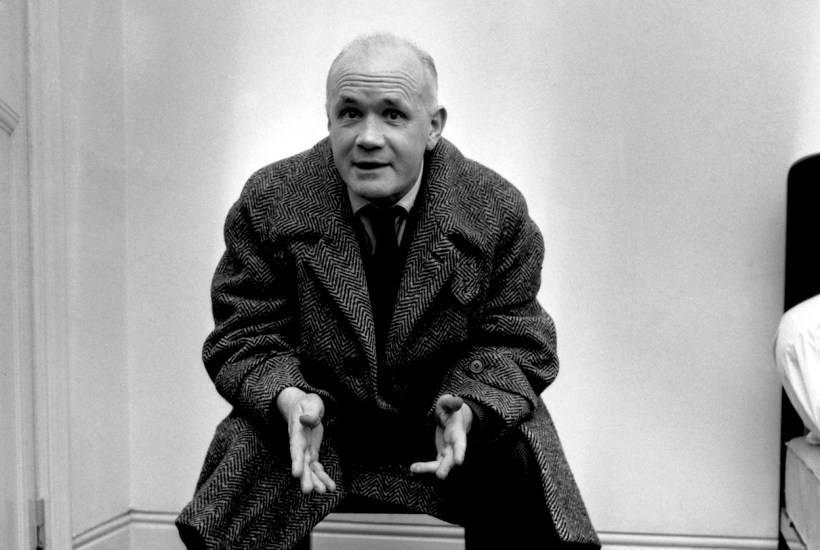
In the small hours of the morning, Jean Genet, enfant terrible of French literature, tripped on a step leading to the toilet in his tiny Left Bank hotel room. He fell forward and fatally smashed his head on the tile floor. Several hours later, feminist icon Simone de Beauvoir expired in a Paris hospital only a few blocks away.
Two French literary legends were dead. They had died within hours of each other in the same district of Paris.
Jean Genet and Simone de Beauvoir were bonded by more than the dramatic unity of their final act. They had been close friends for more than four decades. Their connection was Jean-Paul Sartre. In the 1940s, Sartre had discovered Genet’s early work, written in a prison where he was banged up on multiple theft convictions. Sartre proclaimed Genet’s genius to the world. He also successfully petitioned, along with Jean Cocteau, to secure a pardon for Genet and have him released from jail.
Jean Genet was a perfect literary fetish for the Sartre-Beauvoir couple. His novels and plays about the underworld of male prostitutes, pimps, transvestites and con artists resonated with their revolt against bourgeois morality. In 1947, Sartre’s book about another poète maudit, Charles Baudelaire, was dedicated to Jean Genet. Beauvoir, meanwhile, was working on an ambitious essay about the Marquis de Sade, who like Genet wrote from his prison cell. When Genet published The Thief’s Journal in 1949, its dedication page read ‘à Sartre, au Castor’ – using Beauvoir’s affectionate nickname (French for beaver, whose spelling resembled Beauvoir).
Sartre’s obsession with Genet produced a psychological portrait, Saint Genet, Actor and Martyr, published in 1952. It was the final instalment in a Sartre-Beauvoir trilogy (Sade, Baudelaire, Genet) about great literary revolts against established morality. Sartre’s tome canonised Genet into a literary legend who inspired an entire generation of writers and artists. One of them was David Bowie. The title of Bowie’s song ‘The Jean Genie’ was a wordplay allusion to Jean Genet.
Beauvoir’s friendship with Genet was enduring but wary. Inclined towards lesbian passions, she was not especially interested in gay men and often used pejorative words such as ‘tantouze’ (poof) and ‘pédé’ (faggot) to describe Genet. Besides Sartre, with whom Beauvoir had only a brief sexual relationship (he was notoriously cold in bed), her interest in men favoured hyper-masculine men like her American lover Nelson Algren (whose novel A Walk on the Wild Side inspired Lou Reed’s song of the same title). Beauvoir came close to marrying Algren, declaring herself his ‘wife’ in passionate love letters, and he gave her a ‘wedding’ ring that she kept all her life.
Beauvoir and Genet remained friendly despite temperamental differences. In the early 1950s when she bought her first automobile, a Simca Aronde, it was Genet who helped her find it. They also embraced the same revolutionary causes in the post-war decades. Beauvoir and Sartre were pro-Soviet and pro-Castro. Genet supported the Palestinian cause and the Black Panthers in the United States.
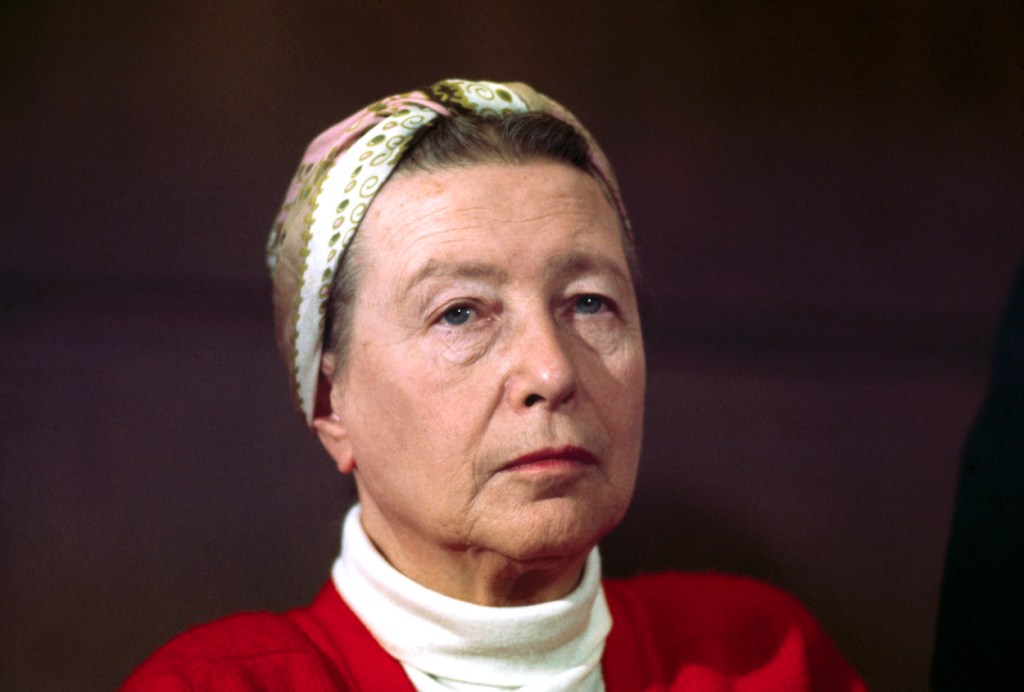 Simone De Beauvoir, 1968 (Getty Images)
Beauvoir’s final years in the 1980s were fraught with anger and anguish. Sartre had died at the beginning of the decade following years of visibly deteriorating health (wall eyed, virtually blind, catastrophic hypertension, decades of drug and alcohol abuse). Beauvoir had already been cut off from Sartre due to bitter disputes with his heir and literary executor, Arlette Elkaim (his former lover, then adopted daughter). Following Sartre’s death, Beauvoir defiantly published his letters to her against Elkaim’s explicit wishes. Beauvoir was also giving extended interviews to biographers on whom she could count to write the official hagiography – and keep clear of the dark zones in her private life, including sexual exploitation of her underage female pupils in the 1930s.
Now well into her seventies, Beauvoir’s health was seriously declining. Her chronic alcoholism (she drank Scotch) had jaundiced her skin, and her distended stomach impaired her movements. She still fussed about her appearance, though, wearing her trademark headband and red lipstick and nail polish.
‘His death does not separate us. My death will not bring us together again.’
In March 1986, Beauvoir complained of stomach pains. Admitted to Hôpital Cochin a few blocks from her Montparnasse apartment, the prognosis was not good. Doctors diagnosed severe cirrhotic damage. Beauvoir would never leave the hospital. On 14 April, at age 78, she died of a pulmonary edema.
Nearby on the Left Bank that day, Jean Genet’s body was lying cold in room 205 at Jack’s Hotel. Age 75, he had been suffering from throat cancer. His body wasn’t discovered until the following day. This created some confusion about the date of his death, sometimes given as 15 April. He was buried in the Spanish cemetery in Larache, Morocco.
In Paris, a throng of 5,000 admirers accompanied Simone de Beauvoir’s coffin to her final resting place in Montparnasse cemetery, only a stone’s throw from where she lived. After Sartre’s death, Beauvoir had observed: ‘His death does not separate us. My death will not bring us together again.’ She was nonetheless buried with Sartre. She also went to the grave wearing her lover Nelson Algren’s ring.