While much of the world remains transfixed by Ukraine, Gaza, and the endless convulsions of American politics, one of the worst humanitarian catastrophes of the 21st Century continues to unfold in Sudan with astonishingly little sustained international attention.
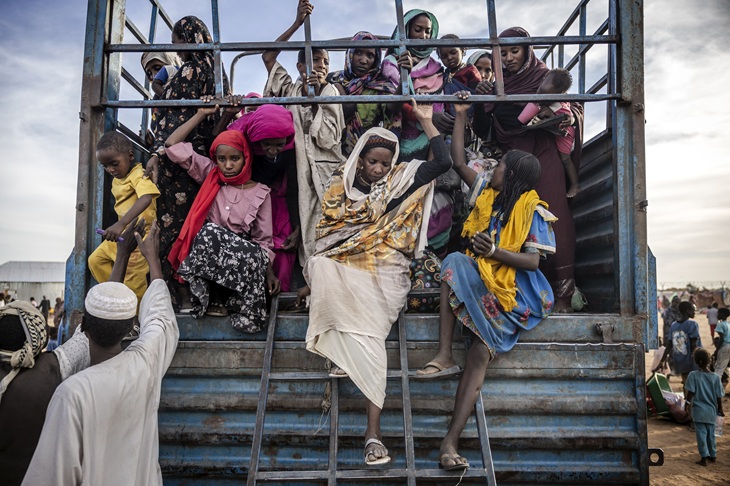
Since civil war erupted in April 2023 between the Sudanese Armed Forces (SAF) and the Rapid Support Forces (RSF), millions of Sudanese civilians have been displaced, entire cities devastated, and atrocities committed on a scale difficult to comprehend.
Many foreign actors have been accused of complicity in the atrocities; indeed, on the May 27 this year, the UAE were accused by Human Rights Watch of recruiting Columbian mercenaries to be transported into the region to support the RSF.
The conflict has led to 12.9 million people being displaced and over 150,000 killed. The slaughter has been such that the piles of bodies can be seen by satellite imaging. Gender-based violence is also rife, with the UN Population Fund (UNPFA) stating that between the years of ‘2024 and 2025, the number of individuals at risk of gender-based violence nearly doubled … from 6.7 million in 2024 to 12.1 million in 2025’.
Yet among the most horrifying dimensions of the conflict is the widespread sexual violence perpetrated against children. The figures alone are grotesque. UNICEF reported in 2025 that more than 221 cases of child rape had been formally verified since 2024, warning that the true figure was likely dramatically higher due to fear, stigma, social collapse and the near impossibility of reporting crimes during war. Some victims were infants. Four recorded victims were only one year old. The author estimates these numbers to be at least a tenth of the true scale due to studies showing that up to 90 per cent of sexual violence goes unreported.
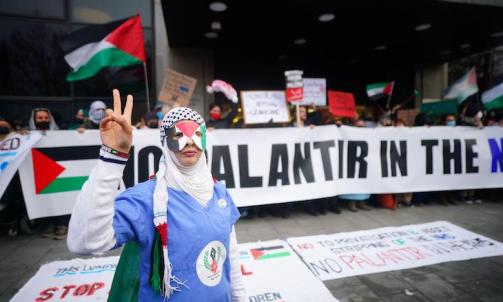
And still no outrage from Western activists who remain pathologically obsessed with a make-believe ‘genocide’ in Gaza.
Human rights organisations including Amnesty International, Human Rights Watch, and the Office of the United Nations High Commissioner for Human Rights have documented allegations of gang rape, sexual slavery, forced marriage, and systematic sexual abuse, particularly in areas under RSF control. Survivors have described young girls abducted and repeatedly raped over months by fighters. In one documented case, children were forced to watch the rape of their mother inside their family home. In another, girls as young as eleven were reportedly seized and held as sexual slaves.
The brutality is not random.
Sexual violence in Sudan increasingly appears to function as a weapon of terror, humiliation, and ethnic domination. In Darfur especially, reports suggest sexual violence has accompanied ethnically targeted attacks against non-Arab communities, reviving memories of the Janjaweed atrocities that first shocked the world two decades ago. Videos have also shown women aligned with the RSF encouraging the male fighters to breed out other ethnic groups through rape after capturing female prisoners.
Where are the university encampments and mass street protests from bleeding heart lefties? No Jews, no news I guess, or maybe there’s an element of anti-African racism?
The RSF itself emerged from the Janjaweed militias once mobilised by the regime of Omar al-Bashir, the former Sudanese President during the Darfur conflict. What was once treated by much of the international community as a regional crisis has now metastasised into a nationwide catastrophe. Healthcare systems have disintegrated. Police and judicial systems barely function across large parts of the country. In this vacuum, children become extraordinarily vulnerable.
Many displaced girls now reside in informal shelters, overcrowded camps, or strangers’ homes where exploitation flourishes. Aid agencies report repeated cases of men demanding sex from children in exchange for food, shelter, or protection. In one particularly horrifying incident reported by UNICEF, a five-year-old girl and her baby brother were lured away by a man claiming he would reunite them with their mother before he raped the child at gunpoint. The civil war has effectively created ideal conditions for predatory violence.
The tragedy is not merely humanitarian. It is also profoundly legal. Sudan acceded to the International Covenant on Civil and Political Rights in 1986. That treaty imposes binding obligations upon states to protect fundamental human rights, including during times of conflict and national emergency. Three provisions are especially relevant.
Article 7 prohibits torture and cruel, inhuman, or degrading treatment. International human rights bodies have repeatedly recognised that rape and sexual violence – particularly against children – can constitute torture under international law. The acts reported throughout Sudan clearly fall within this prohibition.
Article 17 protects individuals against unlawful interference with privacy, family, and dignity. The systematic rape of children in homes, shelters, and detention facilities represents not only physical violence but also the destruction of family integrity and personal autonomy. Looking to views adopted by the Human Rights Council (HRC) elsewhere, we can provide further evidence for an interpretation of Article 17 to apply to cases of child sexual abuse. In one previous example from a different country, the HRC stated that the victim’s rape constituted an ‘arbitrary interference with her privacy and her sexual autonomy as it forced her to enter into sexual intercourse against her will as a girl; all the more so because due to her rape she endured stigmatisation and marginalisation’.
Article 24 provides that every child has the right to special measures of protection required by their status as a minor. In practice, the Sudanese state has catastrophically failed to provide even the most minimal protections. However, the author would also argue that the international community has also failed here due to their dearth of interventions.
In fact, the international community also seems to be failing Sudan by way of unbalanced resolutions and sanctions passed. The United Nations (UN), during the period of the current civil war in Sudan, has passed three times as many sanctions and resolutions against Israel than it has Sudan. Additionally, enforcement mechanisms remain weak, fragmented, and paralysed by geopolitics. We have seen no such intervention as was seen during the Rwandan genocide; as poor a response as even that was from the UN, at least it was something. The UN Security Council remains divided. Regional organisations possess limited coercive capacity. International criminal accountability progresses at glacial speed. Meanwhile, children continue to suffer.
There are uncomfortable political reasons for this silence.
Regarding Western governments, Sudan lacks the geopolitical centrality of Ukraine. And to the Woke-Left hypocrites claiming to care about human rights, there are no mass campus demonstrations demanding urgent intervention in Sudan. No fashionable slogans for the champagne socialists to clout farm with on social media. The victims are largely poor African civilians trapped inside an extraordinarily complex conflict with no simple morality play due to atrocities committed by both the RSF and SAF. Yet the scale of suffering arguably rivals – and in some respects exceeds – conflicts receiving vastly greater international attention.
There is also an uncomfortable truth about international law itself. Modern human rights frameworks possess extensive declaratory power but often weak enforcement power. International institutions can document atrocities, condemn abuses, and issue recommendations. But without political will from powerful states, accountability frequently becomes aspirational. However, given the current state of the UN, one can argue if they should have more power. For example, look at the farcical situation in April this year where numerous democracies including Australia, joined in nominating Iran to a UN body addressing women’s rights and terrorism (see UN Watch’s article on ‘Top 10 Worst UN Moments of 2025’ for more examples). This is not merely a Sudanese problem. It reflects a broader crisis within the post-war international legal order.
The architects of modern international human rights law hoped legal norms would constrain barbarism. Yet in practice, armed groups, authoritarian regimes, and collapsing states often operate with near impunity unless strategic interests compel intervention. Further, those same architects of modern international human rights law appeared to hold a view that peace and prosperity would correct certain problematic cultures such as those rooted in Islamism. This has turned out to be utterly untrue, with no ordoliberalism or Marshal plan-esque ideas able to entice cultish religious fanatics to discard 7th Century barbarism.
The children of Sudan now embody this multi-faceted failure. One of the most disturbing features of the conflict is how rapidly atrocities become normalised through repetition. Reports of mass rape, sexual slavery, and murdered civilians emerge so frequently that global audiences become desensitised. Statistics replace human beings. But behind every number is a child whose life has been permanently altered. A girl abducted from her family. A boy traumatised after witnessing rape (or even enduring it as a third of the victims are boys). A toddler assaulted during the collapse of civil order. Entire communities shattered by violence and stigma.
The long-term consequences will likely haunt Sudan for generations. Sexual violence against children destroys more than bodies. It destroys trust, family structures, social cohesion, and future stability. Survivors often suffer lifelong psychological trauma, ostracism, and poverty. In deeply conservative societies, rape victims may face rejection from their own communities, which the perpetrators know.
These harms do not simply disappear when wars formally end. The international community’s response to Sudan raises difficult questions about consistency, moral seriousness, and the limits of contemporary humanitarianism. If human rights are genuinely universal, then global concern cannot remain contingent upon media trends, ideological convenience, or geopolitical fashion. Sudan’s children should not need to become strategically useful before the world notices their suffering. Nor should international law exist merely as a vocabulary for speeches while atrocities continue unchecked.
For now, the war grinds on. The institutions meant to protect civilians remain fragile or absent. Aid organisations struggle to operate safely. And across Sudan, countless crimes likely remain unreported, unseen, and unpunished. The world may eventually remember Sudan. History often catches up long after the killing ends. But for many of its children, justice delayed will also mean childhood permanently destroyed.
The author would like to thank those in the Sudanese diaspora for their meaningful and numerous contributions to this article. They wished to remain anonymous but the author believes they should be given some sort of recognition. My heart bleeds for you.
And for those Western activists who have swallowed Hamas propaganda wholesale, I implore you to have a good look in the mirror and a deep reflection about what you actually care about. Your hypocrisy is louder than your silence here.
Dr. Christopher Haggarty-Weir. Managing Director of Obsidian Ventures & Capital, and graduate-entry law student at the Queensland University of Technology.