Pesach is the greatest piece of educational theatre ever created.
Across the world, on the same night, Jewish families gather around a table and perform the same ritual that has bound us together for centuries. We eat matzah, taste bitterness, recline as free people, and drink as those who remember both suffering and redemption. We speak words that have travelled with us through exile, persecution and survival.
But the most important moment of the evening is not what we do, it is what we ask.
Mah Nishtanah.
Why is this night different?
The Seder is built on a radical idea: that the survival of the Jewish people depends not on institutions or politics, but on a conversation between generations. Children ask, parents answer, elders explain.
A story is not remembered. It is transferred, from voice to voice, from parent to child, across time. The Torah does not simply command us to remember the Exodus, it commands us to teach it.
‘And you shall tell your child on that day…’
For thousands of years, that instruction has been the engine of Jewish continuity. Empires rose and fell. Jews were expelled, persecuted, massacred and scattered. Yet the story endured because each generation sat down with the next and said ‘this is who we are’.
Pesach is not simply the story of liberation from Egypt. It is the blueprint for Jewish survival and this year, that blueprint feels more urgent than ever.
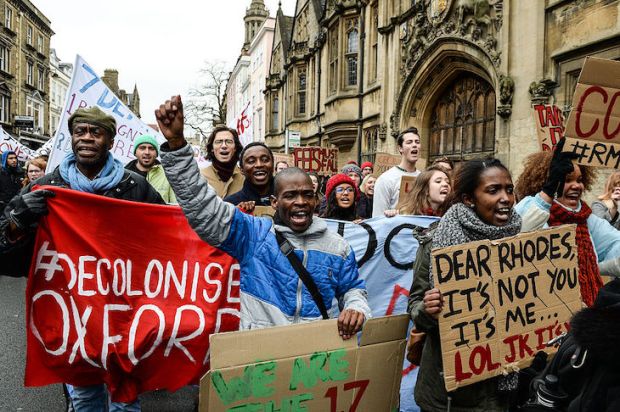
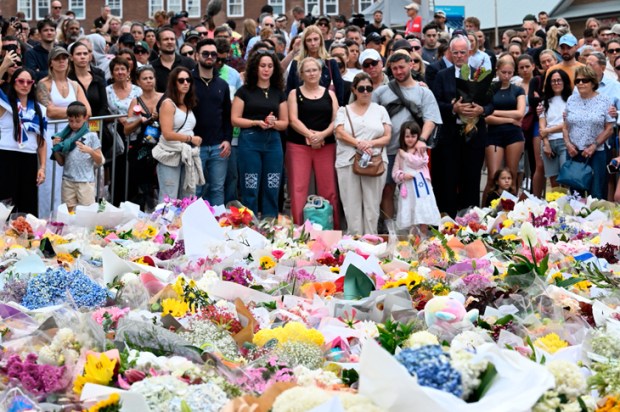
Since October 7, 2023, Jews across the world have been forced to confront something deeply unsettling. Not only the horror of that day itself, but the reaction that followed. The speed with which Jewish suffering was minimised, the ease with which ancient hatreds resurfaced, the disturbing willingness, in too many places, to celebrate Jewish pain rather than condemn it.
It revealed something many of us had been reluctant, fearful even, to accept.
For decades, much of our energy has been spent trying to explain ourselves to the outside world. Explaining Zionism, Israel, Jewish history. Explaining why Jewish safety matters.
Explaining. Apologising. Diluting. Shrinking.
But October 7 and its aftermath exposed the limits of that strategy. Because no amount of messaging will persuade those who are determined not to hear.
The future of Jewish life will not be secured by convincing the world. It will be secured by inspiring our children.
Someone understood this thousands of years ago and encoded it into the Seder itself. The Seder does not instruct us to stand on street corners and defend our story to strangers. It instructs us to sit with our children and make sure they understand it.
The Haggadah describes four children, the wise one, the questioning one, the simple one, and the one who does not yet know how to ask.
Each child asks a question. Each child deserves an answer.
In that framework lies one of Judaism’s most profound truths, we do not fear the questions of the next generation. We welcome them, engage with them and most of all, we answer them honestly.
Failure to do so is a failure to take responsibility for the education of our children, because unanswered questions do not remain unanswered for long. Someone else will always fill the silence.
Today, our children are encountering those questions everywhere, in classrooms, on university campuses, online, and among their peers. They are hearing distorted versions of Jewish history, seeing Zionism misrepresented, witnessing a world that too often treats Jewish identity as something suspect rather than something to celebrate.
So the responsibility falls squarely on us. A responsibility not simply to defend Judaism, but to teach it. Not simply to respond to attacks, but to instil pride.
Not simply to react, but to lead.
We must speak to our children about Israel not apologetically, but confidently, as the modern expression of a three-thousand-year-old connection between a people and their homeland. We must explain that Zionism is not extremism; it is the belief that the Jewish people deserve the same right to safety and self-determination as every other nation.
We must show them that Jewish strength and Jewish humanity are not contradictions, they are inseparable.
Pesach reminds us that the Exodus did not begin with power, but with belief. A group of enslaved people first had to believe that freedom was possible before they could walk toward it. That belief is what we must pass forward now.
Our children are watching us more closely than we realise. They see whether we stand tall or shrink back. They hear whether we speak with clarity or hesitation. It is from those signals that they decide who they will become.
Pesach offers us the perfect moment to reset that conversation. As we sit at a table surrounded by generations, surrounded by questions asked with curiosity, being given the opportunity to answer with pride.
But don’t be mistaken and treat this as a unique occasion, because the Seder was never meant to be a once-a-year exercise. It is meant to model something much bigger, an ongoing dialogue between parents and children about identity, history and responsibility.
Jewish continuity has never depended on silence, it has depended on confidence. Our ancestors whispered this story when they had no choice. They passed it down in ghettos, in camps, on battlefields, in exile, in hiding. We have the privilege of saying it out loud and we must not betray that inheritance by failing to do so.
So this Pesach, when our children ask their questions, we must answer them with clarity and pride. We must explain who we are, where we come from, and why the story of the Jewish people continues. We must give them something stronger than fear, we must give them belief.
Belief in their identity, in their history and in the enduring justice of Jewish self-determination.
The most important audience for the Jewish story was never the world outside. It has always been the child sitting across the table.
If we inspire them, if we educate them, empower them, and show them what it means to stand proudly as Jews and as Zionists, then the promise of Pesach will continue to live, not just in ritual, but in the generations that follow.
At the end of the Seder, we say the same words Jews have said for centuries:
Next year in Jerusalem.
For much of our history, those words were a dream. Today, they are also a responsibility. A reminder that Jewish history moves forward when Jews believe in their future. A reminder of what we have regained and what the cost of losing it would be.
So when our children ask why this night is different, we must answer with pride.
Because the future of the Jewish people will be decided by how we answer.