Author’s Note: For my doctoral thesis, I was supposed to design an open‑source, long‑term rapid response mechanism at an Australian university for precisely the kind of systemic crisis the nation now faces. Instead, I quit in disgust after one semester. I subsequently managed to complete my emerging risk mitigation model at a Malaysian institution.
Paradox of Panic
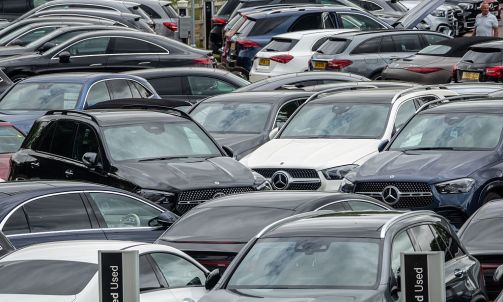
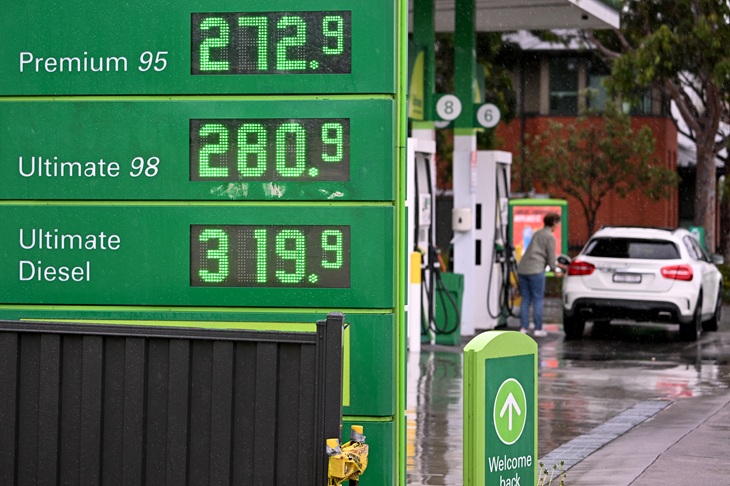
In March 2026, as the Middle East war entered its second month, a striking paradox emerged. Iran, a nation at the very centre of the conflict – its oil infrastructure under bombardment, its naval forces engaged in a selective blockade of the Strait of Hormuz – reported no panic buying, no queues at fuel stations, and no public hoarding. Half a world away, Australia, a nation geographically remote from the fighting, with government assurances of adequate fuel reserves, saw hundreds of service stations run dry, long queues snaking around city blocks, and citizens filling jerry cans for storage. Many supermarkets appeared empty.
What explains this divergence? The answer lies not in material conditions but in something deeper, specifically the nature of the societies themselves. Iran, despite being under direct attack, demonstrated civilisational cohesion that can only be forged on the anvils of identity and existential threats. Australia, despite its safety and abundance, revealed itself as a low-trust society, where atomised individuals, acting rationally in their own interest, produced collective chaos. Call it the paradox of panic.
Australia: Panic in a Safe Harbour
On March 28, 2026, the Australian government confirmed that national petrol and diesel reserves stood at 38 and 30 days, respectively. Two refineries were operating at full capacity. Officials repeatedly assured the public that there was no national shortage. Yet panic buying spread rapidly. Over 600 service stations had run out of at least one type of fuel by March 26. The National Roads and Motorists’ Association (NRMA) explicitly attributed the shortages not to supply failure, but to ‘people changing their buying habits’.
Australians may be hard‑pressed to find a more ridiculous excuse, since corporations are known to swiftly adapt to ‘buying habits’ if they have all the basic ingredients, components or services in place.
There is one further irony here. Australia has arguably the highest concentration of foresight experts per capita in the world, but from what I have observed first‑hand, even a stoner smoking some pretty potent stuff would be more grounded than the quasi‑religious pipe dreamers.
When you have irrational people at the helm of society, expect a low‑trust environment. Australia is responding the way India is responding right now – with long queues and hoarding, and frequent brawls at fuel stations despite New Delhi’s repeated assurances that it had close to two months of petrol and diesel reserves.
In fact, I had long pencilled India and Australia as two of the worst‑hit major economies in the turbulent period leading up to 2030.
Iran: Stability in the War Zone
Iran has stated that it has ‘no floating crude or surplus available’ for international markets, meaning its oil was already fully allocated. Its nuclear facilities were struck by Israeli airstrikes. The Strait of Hormuz, its economic lifeline, is a war zone. Yet Iranian citizens did not rush to stockpile fuel. There were no queues at pumps, no fights, and no photographs of empty stations circulating globally.
The reasons are partly structural. Fuel in Iran is heavily subsidised, with the price kept artificially low and stable, removing the ‘price spike’ motivation for hoarding. The state maintains centralised control over distribution, with the capacity to impose rationing on demand. Critics will note that Iranian citizens operate within a framework where individual agency in crisis is limited. They wait for state allocation rather than compete with neighbours. This is how economic and governance ‘experts’ explain away the Iranian response. But isn’t individual agency always restrained under wartime conditions?
Now, there are indeed long queues in Iranian cities, towns, and even hamlets. But they are not a mad dash for fuel and food but for something else. Ad hoc booths are being set up for women donating gold jewellery for the national effort. Families are pooling resources while communities are organising mutual aid networks. These are not behaviours that can be reduced to state coercion. They reflect a society where identity is not merely individual but collective; where the boundaries of the self extend to family, community, and nation. It does not require constant government reassurance because the social fabric itself provides stability. Iranians do not hoard fuel not only because the state controls distribution, but because the very idea of hoarding while others suffer would violate the unspoken codes of their society. This is what a civilisational response, marked by a sense of shared identity and destiny, looks like.
Australia’s Eroding Social Fabric
I foresaw Australia’s rapid decline nearly a decade ago. It was on a glide path to totalitarianism, replete with panoptic surveillance, strict rationing, and sine die suspension of individual liberties. Now, economic inequality, fragmented media, and a deep conviction that ‘the system is rigged’ have gutted the collective trust that once made ‘fair dinkum’ mean something.
The draconian government response to the Covid crisis was perhaps the last straw. It woke people up to the subtle buildup of state power concentration. In this regard, much of the world sees Australia not as a nanny state but as a free‑range gulag in the making. It is increasingly seen as a place where freedom is nominally present but practically constrained, and where citizens have learned to trust neither the state nor one another.
As a result, Australia draws opportunistic migration instead of the finest minds. Iran, despite 47 years of sanctions and a corrupt government, has done the reverse: it keeps its talent and calls its diaspora home. How else could it survive the combined assault of Israel, the United States, and most of the Gulf Arab states and Nato?
The Outcome?
Many Australian pundits are calling for regime change in Iran. Instead, calls for regime change may likely be directed at Canberra.
It is deeply ironic that Australia, once a global champion of greening and recycling, now lacks even enough fuel for its garbage disposal vehicles. Any apparatchik with two functioning brain cells should have apportioned sufficient reserves to maintain sanitation. But they didn’t. So, what happens when the garbage piles up? You will see a surge in rodents, pests, and infectious diseases.
Ultimately, the real question is not which stench wins – garbage or government – but whether anyone left in Australia can still smell the difference.
Dr Mathew Maavak is a retired transdisciplinary consultant who writes on technology, power, global risks and future systems. He is also the author of the dystopian techno-thriller ‘The Electric Reckoning’.