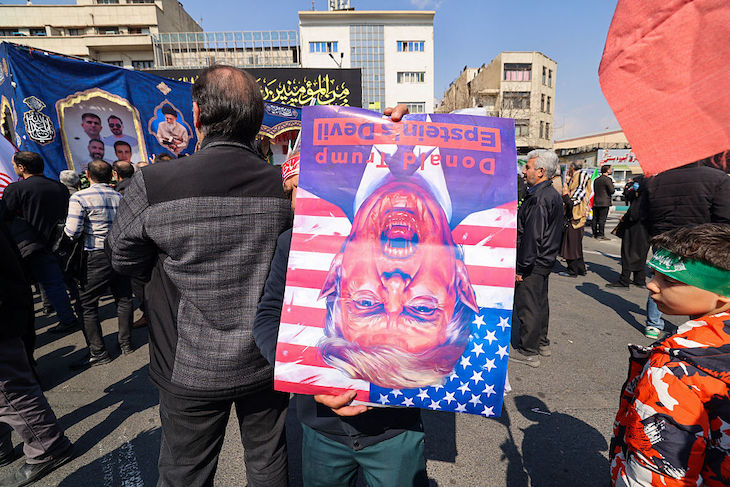
As the war approaches the end of its third week, US and Israeli strikes inside Iran continue to intensify and repeated missile launches toward Israel continue to send the civilian population into shelters constantly. President Donald Trump said he had instructed Israel to stop targeting Iranian oil and gas facilities, a request Prime Minister Benjamin Netanyahu confirmed Israel would honour going forward. This came as a hit was identified at Israel’s oil refineries in Haifa, with Iranian media describing the strike as retaliation for earlier attacks on the South Pars gas field. It is not clear whether the disagreement between Israel and the US in this matter is genuine, or part of the theatre of war designed to permit some independence of action between the two nations.
In the early hours of Friday, the Israeli military began a new wave of strikes in Tehran
In the early hours of Friday, the Israeli military began a new wave of strikes in Tehran. Explosions were reported across the capital, including at least 20 strikes in western districts and around ten in the east. Targets included underground infrastructure, ammunition depots, and facilities linked to missile and intelligence activity. Reports also described the use of bunker-penetrating munitions against sites near Parchin associated with nuclear infrastructure, as well as a strike on a building in Karaj described as a likely assassination attempt.
Israeli forces reported striking more than 130 Iranian targets in a single day. Across the broader campaign, Israeli and American forces have carried out more than 16,000 strikes on Iranian targets in less than three weeks, Israel being responsible for around 8,500 strikes using roughly 12,000 munitions and the US for around 7,800.
Iran launched multiple waves of missiles toward Israel. The Israeli military confirmed repeated detections, with air defence systems activated and alerts issued across central and northern regions, including Jerusalem, the Jordan Valley and surrounding areas. Residents were instructed to enter protected spaces as sirens sounded.
At a Pentagon press conference, US Secretary of Defence Pete Hegseth said American forces had struck more than 7,000 targets. He stated that Iran’s air defences had been neutralised, that hundreds of defence industrial sites had been hit, and that ballistic missile and drone attacks against US forces had fallen by about 90 per cent. He also said more than 120 Iranian naval vessels had been damaged or sunk.
Chairman of the Joint Chiefs of Staff Dan Caine said US forces were using 5,000-pound bunker-penetrating munitions against underground storage sites and continuing strikes against naval assets, mine depots and drone launch locations. He said operations were extending deeper into Iranian territory and included aircraft and helicopter deployments targeting maritime threats in the Strait of Hormuz.
Iran also launched attacks across the Gulf over the past 24 hours. Activity was reported against US-linked targets in Kuwait and Abu Dhabi, with sirens and drone activity recorded in Kuwait. Explosions were reported in Bahrain and Saudi Arabia. Bahrain has announced the interception of 139 missiles and 238 drones since the beginning of the Iranian attacks. President Trump threatened that the US would “massively blow up the entirety of the South Pars Gas Field at an amount of strength and power that Iran has never seen or witnessed before” if Iran strikes Qatar again
The impact in Qatar has been substantial. Energy Minister Saad bin Sherida Al-Kaabi said three affected facilities account for about $20 billion (£15 billion) in annual revenue, with reconstruction costs estimated at $26 billion (£20 billion). Two of Qatar’s 14 liquefied natural gas trains and one of its two gas-to-liquids plants were damaged. Exports have fallen: LNG by 17 per cent, condensate by about 24 per cent and liquefied petroleum gas by 13 per cent. He said Qatar may declare force majeure on long-term contracts for up to five years.
Benjamin Netanyahu said the campaign would continue without a fixed timeline
Egypt’s president Abdel Fattah al-Sisi visited the United Arab Emirates and Qatar, describing Iran’s attacks as “sinful and unjustified” and stating that Gulf security is tied to Egypt’s national security. In the UAE, authorities announced the arrest of a network described as funded and directed by Hezbollah and Iran, operating under commercial cover to infiltrate the economy.
The United States has also taken action against Iranian cyber operations. The Justice Department seized four websites linked to Iran’s intelligence service, which officials said were used for hacking campaigns, publishing stolen data and issuing threats, including bounties targeting journalists and dissidents.
In Israel, Prime Minister Benjamin Netanyahu said the campaign would continue without a fixed timeline. He reiterated the war’s three objectives: eliminating Iran’s nuclear programme, eliminating its ballistic missile capability and creating conditions for internal change in Iran. He said operations were now focused on Iran’s remaining capabilities and the industries supporting them.
Clashes were also reported in Jerusalem on the morning of Eid al-Fitr, as thousands attempting to reach Al-Aqsa Mosque were blocked by police near entrances to the Old City, leading to confrontations and arrests.
In Yemen, Houthi leader Abdul-Malek al-Houthi declared support for Iran and said his forces were ready to act militarily if required, adding that all options remain under consideration.