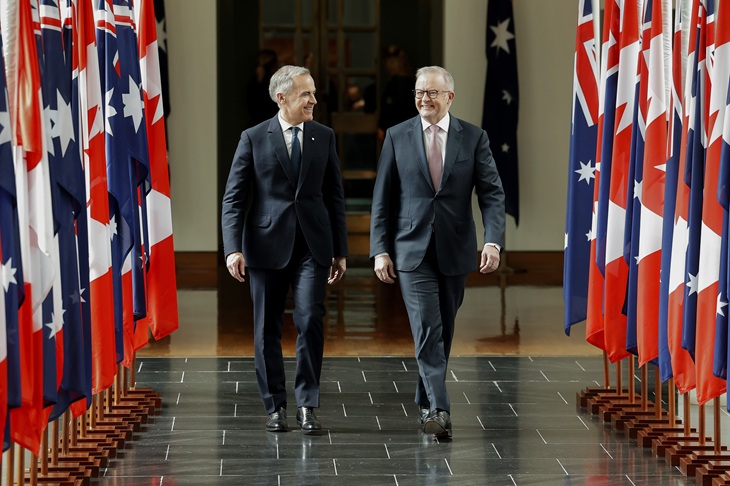
When Canadian Prime Minister Mark Carney stood before both Houses of the Australian Parliament last week and declared that middle powers hold ‘rare convening power’, he was not merely delivering a diplomatic platitude. He was, whether he fully intended it or not, describing the underlying structure of what could become the most consequential Anglosphere realignment since the second world war.
The strategic architecture is already there.
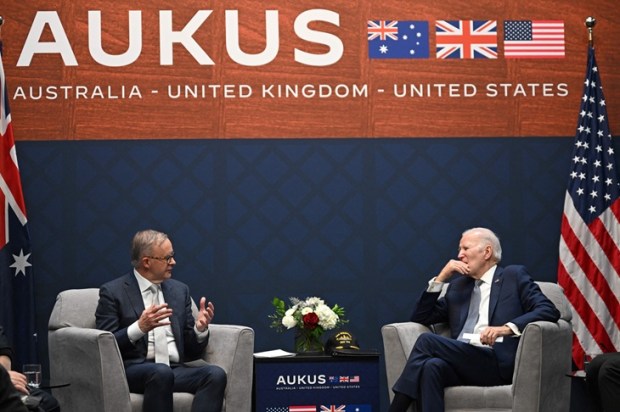
Aukus provides the hard security chassis. Canzuk offers the economic, diplomatic, and mobility superstructure. The question is no longer whether these two frameworks should converge, but why on earth they have not already been bolted together.
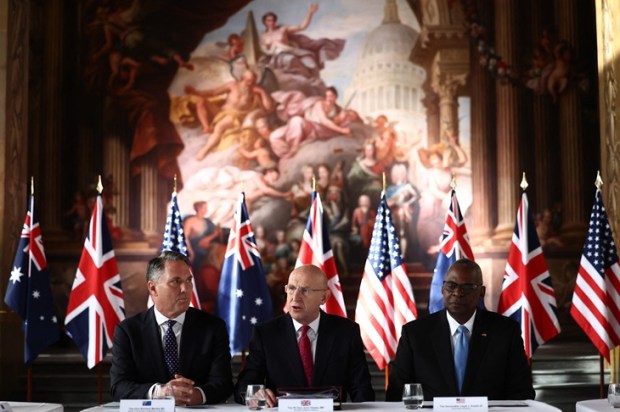
The timing could not be more propitious. The Geelong Treaty, signed last July between Australia and the United Kingdom, commits both nations to 50 years of defence-industrial cooperation under Aukus Pillar I. HMS Anson, an Astute-class nuclear-powered submarine, arrived at HMAS Stirling near Perth in February for a historic maintenance period – the first tangible operational fruit of the Aukus submarine pathway.
Meanwhile, Carney’s ten-day diplomatic tour through India, Australia, and Japan has laid down the economic and political foundations for exactly the kind of middle-power coalition that a combined Canzuk-Aukus framework would formalise.
The complementarity between the two frameworks is striking.
Aukus delivers hard power: nuclear-powered submarines, quantum technologies, AI-enabled defence systems, hypersonic weapons, and directed-energy capabilities. But hard power without economic depth is brittle. Canzuk supplies the missing dimension – trade diversification, skilled labour mobility, critical minerals coordination, and a diplomatic network that spans every major ocean and time zone. Together they form something greater than the sum of their parts: a full-spectrum alliance that can deter adversaries, withstand economic coercion, and provide mutual resilience when the global order fractures.
And fracture it has. The Trump administration’s tariff escalation against Canada – with effective rates now at the highest level in over a century – and its simultaneous review of whether Aukus aligns with ‘America First’ priorities have laid bare an uncomfortable truth. The United States remains indispensable to Western security, but it is no longer a predictable partner. Middle powers that depend entirely on Washington’s goodwill are exposed. A combined Canzuk-Aukus framework does not replace the American alliance – it reinforces it by ensuring that the Anglosphere democracies can maintain strategic coherence even when Washington turns inward or transactional.
The Geelong Treaty already embodies this logic. As the Australian Strategic Policy Institute has argued, the treaty moves the alliance beyond a hub-and-spoke model vulnerable to paralysis at the centre, towards a networked structure that can function despite potential turbulence in Washington. It creates an ‘Aukus Defence Innovation Area’ – a high-trust regulatory environment for certified entities across the partnership nations. Extending this to include Canadian defence-industrial capacity, particularly in critical minerals processing and shipbuilding, would multiply the strategic dividend exponentially.
But strategic architecture requires fiscal commitment, and here the United Kingdom faces an uncomfortable domestic reckoning. As the Telegraph reported this week, the Starmer government’s £18 billion annual rise in welfare spending could fund 15 new warships or quadruple the size of the British Army. That single statistic crystallises the tension at the heart of Britain’s Aukus obligations. The Geelong Treaty commits the UK to building up to twelve SSN-Aukus submarines, with major industrial expansion at BAE Systems in Barrow and Rolls-Royce in Derby. These are generational investments that demand sustained fiscal prioritisation. A Canzuk-Aukus framework would help share the industrial burden across four nations, but it cannot substitute for each member state making hard choices about where its money goes. If London signs 50-year defence treaties while directing its fiscal headroom towards transfer payments, the credibility gap will eventually become a capability gap – and the entire architecture will be weakened.
Carney grasps the strategic opportunity instinctively. At the Lowy Institute in Sydney, he noted that the combined GDP of Europe, Australia, Canada, Japan, and South Korea exceeds that of the United States, and that these nations collectively manage three times China’s trade volume. His push to link the Comprehensive and Progressive Agreement for Trans-Pacific Partnership with the European Union – creating a trading bloc of 1.5 billion people – is precisely the kind of economic architecture that makes a Canzuk-Aukus convergence not just desirable but structurally inevitable.
Australia and Canada together possess the largest mineral reserves held by democratic nations. In an era of accelerating decoupling from Chinese supply chains, this is an asset of extraordinary and growing strategic value.
The polling data confirms the political feasibility. A February 2026 survey by Canzuk International found 68 per cent support in Australia, 72 per cent in Canada, 75 per cent in New Zealand, and 70 per cent in the United Kingdom for a multilateral free trade and mobility agreement. These are not marginal numbers. They represent a democratic mandate waiting to be exercised.
Australia sits at the fulcrum of this convergence. We are the only nation that is simultaneously a core member of both Aukus and the proposed Canzuk framework. We are a Five Eyes partner, a CPTPP member, a G20 economy, and the host of the Geelong Treaty’s industrial base. The Australia-UK Defence Industry Dialogue, revived just weeks ago, is exploring cooperation on advanced capabilities including directed-energy weapons, software-enabled planning systems, and resilient supply chains in critical minerals and munitions. The UK has been invited to observe MQ-28A Ghost Bat testing at Woomera this year. These are not merely bilateral defence initiatives – they are the building blocks of a networked alliance system that could extend naturally to include Canadian and New Zealand capabilities.
The institutional scaffolding is more advanced than most commentators acknowledge. The four Canzuk nations share King Charles III as head of state, Westminster parliamentary systems, common law traditions, and deeply interoperable intelligence services through Five Eyes. The ABCANZ Armies program – encompassing all four Canzuk nations plus the United States – already facilitates military interoperability across the Anglosphere. Workforce mobility initiatives are being pursued to facilitate movement of skilled defence personnel between Australia and the United Kingdom, including reciprocal recognition of security clearances. Add Canada and New Zealand to this framework and you have a defence-industrial ecosystem that spans the Atlantic, the Pacific, and the Indian Ocean – with Arctic reach thrown in for good measure.
New Zealand, often treated as the quiet partner, brings its own distinctive value. Its Pillar II potential under Aukus – advanced cyber capabilities, undersea sensing, and Antarctic logistics – complements the submarine focus of Pillar I. And its extraordinary 75 per cent public support for Canzuk suggests a population ready for deeper integration than its cautious political class has yet been willing to deliver.
There are, of course, objections. Some argue that Canzuk is a nostalgic project – an attempt to reassemble the old British Empire under a new acronym. This criticism fundamentally misreads the strategic landscape. Canzuk-Aukus is not backward-looking; it is a forward-looking response to the fracturing of the American-led liberal order. The four nations are not drawn together by sentiment but by structural necessity: shared legal systems that enable seamless regulatory alignment, shared intelligence infrastructure that is already the most integrated in the world, and shared exposure to a multipolar disorder in which no single great power can be relied upon to guarantee their security or prosperity.
Others worry about provoking China. But Beijing already regards Aukus as hostile encirclement; adding economic and mobility dimensions through Canzuk does not meaningfully alter that perception. What it does alter is the resilience of the Western position. Supply chains in critical minerals, rare earths, and advanced manufacturing that currently depend on Chinese inputs can be progressively diversified through intra-Canzuk trade. This is not decoupling for its own sake – it is prudent risk management for nations that have allowed dangerous dependencies to accumulate.
For Australia, the strategic calculus is unambiguous. We face a world in which our principal security guarantor is increasingly unpredictable, our largest trading partner is increasingly coercive, and the Middle East – where Operation Epic Fury has escalated the Israel-Iran conflict to a new and dangerous intensity – threatens energy markets and shipping routes on which our prosperity depends. In this environment, a combined Canzuk-Aukus framework is not a luxury. It is essential insurance for a nation exposed to every major geopolitical risk simultaneously.
Japan, too, is watching closely. There has been persistent speculation that Tokyo will join Aukus Pillar II, and the Conservative Friends of Canzuk have noted that Japan would welcome multi-layered security cooperation in the Indo-Pacific alongside a formalised Canzuk-Aukus structure. Carney’s inclusion of Japan on his current ten-day tour is no coincidence. A Canzuk-Aukus core with Japanese partnership at the periphery would constitute a democratic security and economic network of genuinely global reach.
The pieces are on the board. The Geelong Treaty provides the defence-industrial anchor. Carney’s middle-power diplomacy provides the political momentum. The CPTPP-EU linkage provides the trade architecture. Public opinion in all four nations provides the democratic legitimacy. What is lacking is political will at the leadership level to formally declare what is already happening organically: that Canzuk and Aukus are not competing visions but complementary pillars of a single strategic framework.
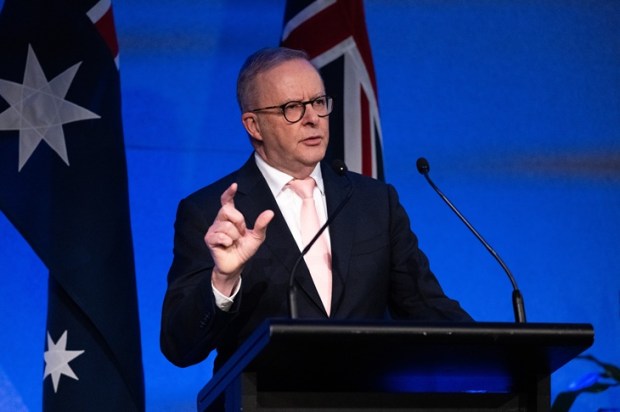
Prime Minister Albanese should seize the moment. Invite the leaders of Canada, New Zealand, and the United Kingdom to a summit – perhaps in Geelong, where the treaty that started this convergence was signed – and formally launch a Canzuk-Aukus integrated framework.
The world is not waiting for us to get our act together. The alliances are already converging on the ground, in the shipyards, in the mineral fields, and in the polling booths. All that remains is for the leaders to catch up with the logic of their own creation.