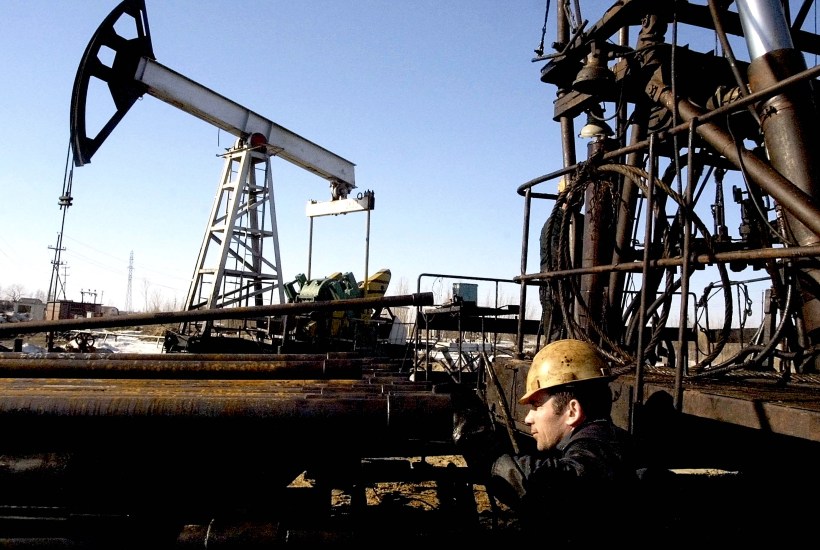
Donald Trump on Thursday allowed India to import more Russian oil. India recently did a deal with the US that reduced tariffs in exchange for it buying less crude from Moscow. That deal now seems to be on pause. The move might be seen as a version of the Trump tariff acronym ‘Taco’ (Trump Always Chickens Out), but really it is an acknowledgement of several uncomfortable truths. Scott Bessent, the US treasury secretary, has said that he’s considering lifting sanctions on other Russian oil.
Trump knows that increased demand for Russian oil will create a windfall for Russia’s deeply stressed war budget and complicate already difficult peace talks. The Indian license comes only weeks after a fresh round of negotiations in Geneva between the US and Russia to end the war in Ukraine. While the Trump administration’s year-long efforts to end Russia’s war on Ukraine can best be described as halting, a surge in revenue to the Russian treasury will hardly encourage Moscow to return to the negotiating table.
The outlook for the Russian economy remains consistently grim, but short of extremis. This boost in global energy prices will come as a tonic to the Russian Ministry of Finance, the Russian Central Bank, and most importantly for Putin, the Ministry of Defence. Prolonged instability in the supply of energy from the Middle East suddenly makes Russian energy – a highly stigmatised cargo at the best of times – look pretty good by comparison.
Recall that the US’s approach to sanctioning Russian oil, an unusual and highly engineered price cap arrangement struck under the administration of former US President Joe Biden, was a nod to the complexity and connectivity of energy markets. It reflected the US’s desire to strangle Russia’s key source of income for the war on Ukraine without sending energy markets spiralling skyward.
We might even see a return to talks between Putin and China’s Xi Jinping over the commissioning of a second natural gas pipeline between their two countries. Talks last year over the proposed Power of Siberia 2 conduit bogged down amid sharp differences over the price of the gas it would carry. The spike in energy prices also appears to have provided Putin with fresh swagger. This week, he threatened to cut supplies of Russian gas and LNG to Europe earlier than a planned 2027 EU shutdown of purchases.
Trump knows that the spike in oil and LNG prices following the US-Israeli attacks on Iran will also undermine his promise to make America less expensive again. By a widely accepted standard, every 10 per cent increase in the price of a barrel of oil eventually translates to a $0.25 increase in the price of a gallon of petrol in the US.
Immediately prior to the attacks on Iran, benchmark Brent crude was at slightly higher than $72 a barrel. Friday, Brent broke the $90 barrier, an increase of more than 26 per cent. US petrol prices Friday rose by 11 per cent. The spike in LNG prices is even more pronounced, and upward pressure remains on both. Trump’s India move, in the form of a 30-day license, is designed to take some of the heat out of the market for crude. Damages to production facilities in the region inflicted by Iran make that task increasingly difficult. Further measures the White House has mentioned to tame energy markets include military escorts through the Strait of Hormuz.
The genuine origins of Trump’s move lie much closer to home
In suggesting that option, the White House showed that it grasps the vulnerability of one of the world’s most critical transit choke points. American military doctrine, in fact, has long labelled the closure of the strait by Iran as an act of war. The US is, however, now dealing with two threats. First, Iran has vowed to sink any western vessel attempting to navigate the narrow channel. Second, the insurance market is withdrawing coverage of ships on their way into or out of the same waters.
While the India license is good news for India and Russia, the genuine origins of Trump’s move lie much closer to home, with the mid-term elections this November. US Democrats will use affordability and the cost of living as one of their heaviest hammers on Republicans during the campaign; the price of a gallon of petrol at the pump is one of America’s most painful metrics. Allowing India to buy more Russian oil without risking the fragile tariff deal reached between Trump and Indian Prime Minister Narendra Modi injects a small amount of slack into energy markets.
It’s interesting to note that Trump gave India permission to buy more Russian oil; China just went ahead and did it. In the past month, China’s imports of Russian crude have reached record volumes. India now says it will buy whatever it needs from available sources to suit its national energy demand.