Nero fiddled while Rome burned. For two thousand years that has been the last word on rulers who amuse themselves while the city goes up. Ours have found something worse. They are not fiddling while the West burns. They are kneeling beside the fire, apologising for the smoke.
George Orwell saw it coming. Writing Nineteen Eighty-Four in 1948, he did not imagine the West overrun by foreign armies. He imagined it hollowed out from within by a ruling creed he called Ingsoc, English Socialism, whose first business was rewriting the past. A people taught to despise their own history will hand over the rest without a fight.
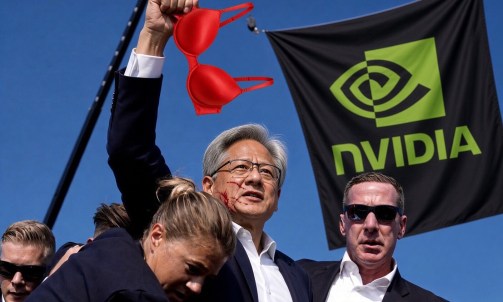
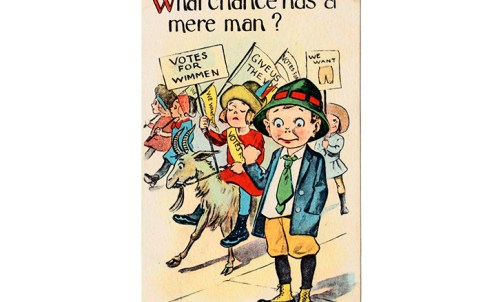
For 40 years we proved him wrong. We toughed out the Cold War. We argued bitterly over Vietnam, and some of the protesters had a point. We resisted the loudest calls to pull up the drawbridge and took in millions who wanted what we had. And we set women free. The pill arrived in Australia in 1961, the Commonwealth stopped sacking women for marrying in 1966, equal pay followed, the bra-burning of legend made the front pages, and within a generation women had filled the universities, the professions, and the workforce.
Neither Beijing nor the Brotherhood can match that, and neither wants to. We were the good guys, and in 1989 we were rewarded for it. The Berlin Wall came down, and Francis Fukuyama told us history had ended: liberal democracy had won the argument for good.
Since then, we have buried ourselves in the rubble. Having won, we decided we should never have been in the fight, and we have spent 35 years saying sorry for the mess.
What made the West dominant was four things held together: a law that applied to everyone; a culture confident enough to say what it was; markets that free and open and competition was protected; and pride, the naturally aspirated kind, in family, community, and nation. Every one of them is being dismantled, not by our enemies but by the people entrusted with keeping them. Our enemies now occupy the vacant space.
The law
The Rule of Law means the law bites whoever breaks it. In Britain it stopped biting. Baroness Casey found that, for more than a decade, the British state did not record the ethnicity of grooming gang offenders. Councils, police, and social services looked away and policed the internet. Meanwhile, girls in town after town were sacrificed to the principle of cultural harmony (or worse), which is no principle at all.
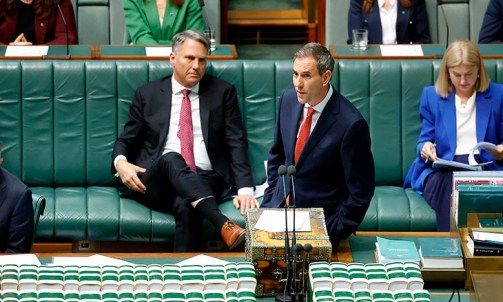
Here, groups that want a caliphate, and openly say so, sat on ASIO’s radar for years. The law moved only after 15 people were shot dead at a Hanukkah celebration on Bondi Beach. The Prime Minister refused a Royal Commission until the public forced one on him. The government did expel Iran’s ambassador, but a society that once enforced its laws before the funeral now does so after it, and calls that resolve.
The culture
A confident culture names what threatens it. Last year, the French Interior Ministry published a report on how the Muslim Brotherhood has been building patiently in France through schools, associations, sporting clubs, and town halls.
The French call it entrisme: you do not storm the institution, you join it and wait.
The academy called the report moral panic. Olivier Roy, the expert most quoted on the subject, said it told us nothing new. He was right about that much. Everybody knew. That was the scandal. Leonard Cohen wrote its anthem years ago, and called it Everybody Knows.
Confidence has been replaced by contrition, and the method is ancient. For the better part of two thousand years, the Church ran Europe on original sin. You were born guilty, only the priesthood could tell you how guilty, and absolution came through confession, penance and, for those who could afford it, indulgences. It is the most effective instrument of control ever devised because it makes the subject police himself.
The secular left spent a century mocking it, then rebuilt it brick for brick. The sin is now colonialism, privilege, or carbon. The priesthood sits in the university, the HR department and the ABC. Confession is the public apology, and the indulgences are traded as silence.
Watch it work. Emmanuel Macron, campaigning in Algiers, called France’s colonisation a crime against humanity (2017). Keir Starmer warned that Britain risked becoming an island of strangers, and when his backbench called that racist, he said he deeply regretted it. Not the policy. Not the girls. The sentence. A ruling class that believes its inheritance is the original sin cannot defend it, because every defence looks like a repeat of the crime.
There is a second change nobody is permitted to mention. Liberation was a triumph, but it weaponised the Feminist movement, itself taken over by radicals, and changed the temperament of our institutions, by effect if not by design. The West was built on adversarial virtues: contest, rules applied without fear, risk as the price of progress.
Our universities, newsrooms, boardrooms, and public services now run on consensus, safety, and the management of feelings. Harm came to include words, and safety came to mean never being offended. A council that fears an accusation of racism more than the rape of a child is hideous. It has made emotional comfort its first duty. Starmer was fluent in them but the institution that cannot bear conflict cannot defend anything, least of all itself.
None of this was forced on us. Antonio Gramsci, writing from one of Mussolini’s prisons, worked out that the way to take a Western society was not to storm its barricades but to win its culture, one institution at a time. His heirs took the advice. The Brotherhood and Beijing are walking through doors we propped open, past guards who kowtow as they go by.
The market
The West grew rich because property was private, capital went where its owners chose, and the referee did not play. We have abandoned all three.
We sold strategic assets to a state that does not believe in free markets. The Port of Darwin went to a Chinese company on a 99-year lease; now that both parties want it back, the owner is seeking arbitration under the free trade agreement and Beijing’s ambassador is warning about trade. Chinese state-owned State Grid holds large stakes in the grids of Victoria and South Australia. We used to know the difference between a customer and a creditor.
At home, the referee has taken the field. Australians hold $2.7 trillion in compulsory Super. Half of every industry fund board is nominated by unions.
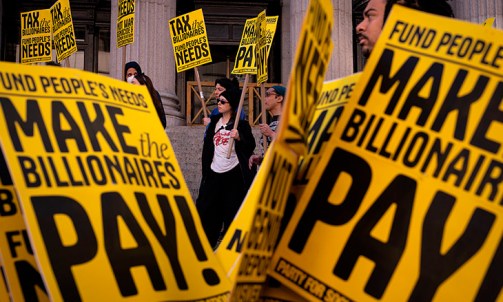
ASIC polices the ways members leave and the industry funds’ own campaigns go largely unremarked. When a competitor builds a better retirement product, the rules are changed rather than the product matched. Climate reporting is mandated, the Future Fund has been told where to invest, and nuclear power stays banned by law. A market in which the referee picks the teams and the minister picks the investments is not a market. It is entryism undermining our basic concepts around markets, it is I’m afraid to repeat myself, the Fatal Conceit.
The pride
The deepest loss is the one no statistic captures: an ordinary, unforced pride in a family you would defend, a community you would turn up for, and a nation you would not apologise for. Think of the British families who trusted their daughters to the state. Think of the Jewish families who went to Australia’s most famous beach to celebrate a festival of light. Think of the Chinese Australians whose relatives in China, Human Rights Watch found, were visited by police over what they had said here. They are not Beijing’s agents but its hostages, and a nation that will not protect its citizens from a foreign police force has to ask what citizenship is for.
Why does it keep happening? Because for the official who names the problem the cost is immediate and personal, while for the one who looks away it falls on somebody else’s daughter, years later and out of sight. And because money talks.
Getting up from downward dog position
None of this needs a revolution. It needs us to get off our knees. Enforce the law equally, and before the funeral. Name what threatens us and count it. Keep foreign state capital out of critical infrastructure, and keep competition strong and markets free of interference.
Finally, how about we teach the next generation that pride in family, community, and nation is not a sin to be confessed but the thing that built the place they live in.
Nero fiddled while Rome burned, but he did it standing up, and the tune was his own. Our leaders are on their knees, playing Leonard Cohen’s First We Take Manhattan on repeat, marinating in congenital guilt, and apologising for the smoke.