When presented with yet another second world war doorstopper by Max Hastings, a reader should be forgiven for wondering what on earth the author can possibly add, given the many titles on the conflict already to his name. The question has, of course, also occurred to Hastings himself, and his answer is refreshingly honest. Plunder, he acknowledges, is essentially a mopping up operation, a chance to scoop up some tasty morsels missed the first time around: memories, insights and incidents that have nagged away at him since Armageddon, his account of the last months of fighting in western Europe, published more than 20 years ago.
The result is a kaleidoscopic book which oscillates from the vast, strategic canvas to individual acts of treachery and heroism. One moment we’re embroiled in the Allied storming of mined bridges spanning the Rhine; the next we’re tracking attempts by Obergruppenführer Karl Wolff, head of the SS in Italy, to negotiate a surrender to western forces rather than the dreaded Russians. A minutely detailed telling of the assassination in Aachen of a mayor by the Werewolves, the Nazi underground movement, is juxtaposed with a searing account of how German-occupied Holland was essentially left to starve as Winston Churchill and Franklin Roosevelt focused their gaze on total Nazi defeat.
Hastings pulls no punches in his assessments of the key military players. He knows them too well by now to be forgiving. In his view, US General George Patton wasan egomaniac with more than a passing resemblance to Donald Trump. The operation Patton ordered at Hammelburg, to save a son-in-law held prisoner by the Germans, proved a costly fiasco and Patton’s reputation only emerged unscathed because he ‘lied, lied and lied again’. ‘Many great commanders have been unpleasant human beings, yet Patton stood in a class of his own,’ says Hastings. Honoured as one of America’s greatest soldiers on his death, he was in fact ‘one of his country’s least admirable human beings’.
As for black-bereted Monty (Field-Marshal Sir Bernard Montgomery), revered by the British public as a charismatic maverick, he emerges as a petty narcissist, fixated on high-profile ‘wins’ that played well at home but were of little strategic value. ‘A small man in spirit as well as stature,’ concludes Hastings.
One of the most searing chapters focuses on the ‘liberation’ of Belsen, situated on the Allies’ path into Germany’s heart. Pocketbooks handed to British and American soldiers made no mention of concentration camps. Fixated on the larger objective of winning the war, the Allies were at a loss as to how to handle the walking cadavers inside Belsen’s gates. It took time to get them beds, clean water and typhus vaccines, and in the meantime they dropped like flies. Shockingly, some 2,000 prisoners died in the first days of liberation because they were given food unsuitable for starving people, while 7,000 expired in the first week.
Hastings is a natural storyteller, but it’s hard to see how any author could go far wrong, given the quality of his source material. The journalists who covered the second world war, who included the likes of Alan Moorehead and Richard Dimbleby, were as good as it gets. And theirs is not the only prose that sings. I was repeatedly struck by the vividness of the phrases penned by officers, infantrymen and civilians who sent letters home, kept diaries, or survived to record their memoirs. Boy, those men could write.
Occasionally Hastings comes across as a bit of a class teacher, emphasising points his pupils long ago accepted as a given. Who still needs to be told that the Nazi credo was evil, or the men who dreamed up the Final Solution were war criminals? There is also the odd longueur when he lingers overlong on his archive material. While the experiences of Douglas Barker, a British prisoner of war who bonded with his farmer employer in rural Poland and Tilli Wolff-Mönckeberg, an aristocrat who lived through the capture of Hamburg, lend texture to the narrative, we could probably have done with a bit less of both.
But these passages only feel like padding because the rest of the material is so strong. Time and again one is startled by a statistic, a mere line, that brings home the staggering cost of this global conflict. For example, I found myself mulling over the fact that Allied inaction meant that some 20,000 people died of starvation in German-occupied Holland; that British, American and Canadian infantrymen faced a daily one-in-seven chance of wounding or death; and that around half a million civilians died in parts of Germany overrun by Soviet troops.
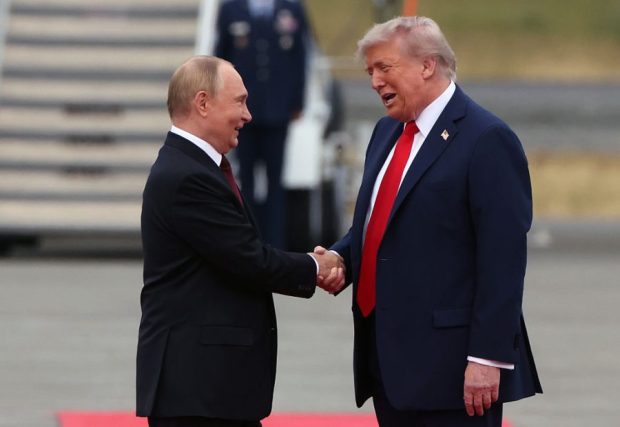
Such numbers force readers to reassess their response to today’s wars, which can seem almost petty by comparison. They also highlight the foolhardiness of a current generation of leaders flirting so carelessly with a repeat. As Hastings writes in his introduction, ‘war is indeed hell’, and the likes of Putin, Trump and leaders in the Middle East – men who never personally experienced a truly global conflagration – desperately need to recognise that reality.
Got something to add? Join the discussion and comment below.
You might disagree with half of it, but you’ll enjoy reading all of it. Try your first month for free, then just $2 a week for the remainder of your first year.