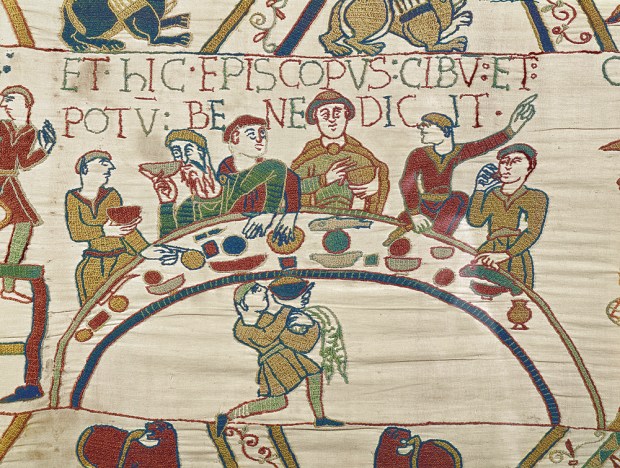
History, as the aphorism frequently attributed to Winston Churchill would have it, is written by the victors. This certainly holds true of the Bayeux Tapestry. However, there are of course exceptions – one of the most glaring examples being the Spanish Civil War of 1936-39. If British audiences know anything about the conflict at all, they will have likely come to it via supporters of the defeated Republicans, such as George Orwell or Ernest Hemingway, or having seen Ken Loach’s ‘story from the Spanish revolution’, Land and Freedom. As the German historian Reinhart Koelleck has pointed out: ‘While the victors impose their view of the past in the short term, it is the defeated who advance historical knowledge because they are forced to ask why they lost.’ Or, as the philosopher Miguel de Unamuno dismissively informed General Millán-Astray, the brutal commander of the Spanish Legion during the war: ‘Venceréis, pero no convenceréis’ (‘You will win, but you won’t convince’).
The point is amply illustrated in Jo Labanyi’s wide-ranging cultural history of the conflict, timed to mark 90 years since its outbreak. The author, a professor emerita of Spanish and Portuguese at New York University, outlines in detail the mass of cultural production to have come out of the war and its aftermath. The book ostensibly covers the outputs of both sides, but it is the work produced by the Republicans and their supporters that predominates, not least because there was more of it.
Labanyi begins with a helpful discussion of the background to the conflict and the numerous ‘friction points’ in 1930s Spain. This includes an overview of the cultural production of the Spanish Republic from its inception in April 1931 to its demise in 1939 (or earlier, depending where in Spain you lived). As she explains, the new democratic government had lofty ambitions: ‘The Republic’s cultural programme aimed to instil a non-elitist notion of culture as the incorporation of aesthetic appreciation into daily life.’ However, this was a hopelessly utopian aspiration given that 36 per cent of Spanish men and 64 per cent of women were illiterate.
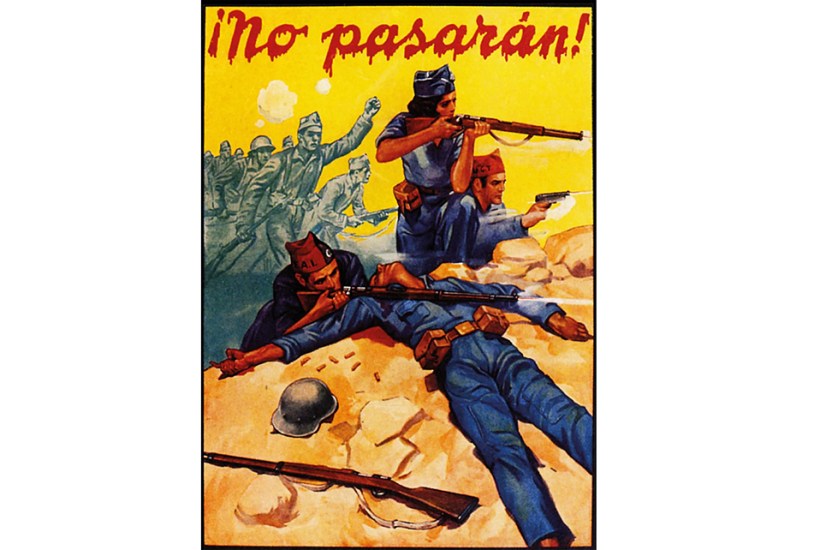
The key second section of the book examines the wealth of output generated during the war itself, from radio broadcasts and journalism to novels, poetry, dance and theatre. Perhaps of interest to most readers is the discussion of the use of art and photography, for ‘this was a war of images’. The recent invention of fast, lightweight cameras made Spain ‘the first war to be covered extensively by film crews and photojournalists’. While Robert Capa’s celebrated picture of a falling soldier and Picasso’s depiction of the bombing of Guernica have become the defining images of the war in Spain (if not war itself), Labanyi points out that at the time it was the dramatic posters that were pivotal, not least because they could be understood quickly and easily by those with limited literacy.
The book’s final part covers the aftermath of the war, when Franco’s regime set about its myth-making with a vengeance. As an example of Francoist culture, Labanyi posits the film Raza, based on a screenplay by the Caudillo himself. It is every bit as bad as you might imagine: kitsch, hammy and full of clumsy fascist propaganda. While later works during the dictatorship gradually acknowledged the nuances and complexities of the conflict, it is the Catalan Joan Salas’s Incerta glòria (Uncertain Glory) that the author puts forward as ‘the most powerful novel written in Spain about the Spanish civil war’.
She then turns to Spain’s ‘memory wars’, the arguments over interpretations of the past that have raged ever since the country’s transition to democracy. Labanyi argues that ‘the impossibility of bringing perpetrators to trial in Spain has meant that literature, films and cultural media have taken on the task of bringing Francoist crimes to light’. Here documentaries have played an important role, such as the powerful The Silence of Others (2018), produced by Pedro Almodóvar.
Well-written and exhaustive in detail, What Have you Done for Victory? is undoubtedly a valuable addition to the literature. As the author argues in her conclusion, the subject is still relevant today:
The cultural production of, and on, the Spanish war – especially that produced within the war itself – deserves attention not only because of the major political role it played but because of its artistic brilliance …[which] has earned it lasting admiration.
This would have made a satisfying conclusion to the study, but Labanyi chooses to finish with a sobering dash of reality. Despite the inspiring and inventive cultural productions, the Spanish Republic was still defeated. The bleak truth is that ‘what wins wars is not culture but guns’.
Got something to add? Join the discussion and comment below.
You might disagree with half of it, but you’ll enjoy reading all of it. Try your first month for free, then just $2 a week for the remainder of your first year.