It sounds absurd that I should even ask. Yet the Albanese government’s latest move is so broad, so unnecessary and so open to abuse that the question is no longer far-fetched.
The Department of Climate Change, Energy, the Environment and Water is forming a cross-agency group to counter climate and energy ‘misinformation’. The Climate Change Authority has also published a paper arguing for coordinated government messaging, monitoring of public debate, rapid responses, and material for the media, and selected ‘trusted messengers’.
Let us call this what it is: a desperate attempt to control a debate the government is losing.
Australians are increasingly questioning the cost, reliability, and consequences of Labor’s energy policies. Rather than answer them properly, the government is spending taxpayers’ money building machinery that could allow inconvenient arguments to be labelled misinformation before the public has even heard them.
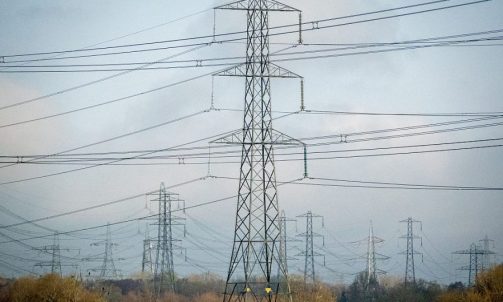
An official government label can ruin a reputation, frighten off an employer, shut experts out of the debate, and make journalists hesitate before pursuing a story. A regional community opposing a transmission line or energy project may find itself dismissed as part of a misinformation campaign, even when its concerns are genuine and supported by evidence.
The Climate Change Authority says common misinformation narratives now concern the cost of living, energy prices and reliability, jobs, regional impacts, biodiversity, and whether Australia’s actions make any difference.
What exactly are Australians still permitted to question?
Australians have every right to ask whether the billions being spent will make any meaningful difference to the global climate.
The government cannot dismiss legitimate questions as ‘misinformation’ merely because they expose gaps in its case.
The Authority’s definition of misinformation uses the term as an umbrella covering accidental falsehoods, deliberate disinformation and ‘malinformation’ (information that is true but allegedly used with an intention to mislead). Therefore, information can be factually correct and still fall within this government-endorsed category because somebody in authority believes the person presenting it has the wrong motive.
And there are many questions unanswered: Who will judge information? What standard will they use? Will the accused have a right to see the evidence or correct the record? Who belongs to the cross-agency group? What will it cost? What will be monitored, recorded or shared? Who selects the ‘trusted messengers’, and why should Australians trust them?
For a government that has failed to give taxpayers the information they need to judge its energy program, this is rich.
Australians don’t know the entire transition cost, including transmission, storage, firming, grid upgrades, land, financing, subsidies and compensation. How long will it actually take, allowing for planning disputes, shortages of skilled labour and strained supply chains? How many permanent jobs will be created, and how many will disappear?
There’s no information on what will happen to steel, aluminium, food processing, mining, agriculture, and small manufacturers already struggling with high energy costs. Will Australian industry become more competitive, or will more production and jobs move overseas? How much additional electricity will be needed for data centres, advanced manufacturing and electrification, and where will reliable power come from?
We hear confident promises, but taxpayers have never been shown the complete, independently tested picture. Now the government wants to decide whether those demanding it are spreading misinformation.
Government has no money of its own. Every subsidy, grant, consultant, advertising campaign, task force, and public-service salary is paid for by Australians. Before using our money to monitor criticism, the government should use its resources to tell us what its policies will cost and what they will deliver.
In December 1917, The Daily Telegraph published a cartoon of Prime Minister Billy Hughes beside the ‘War Precaution Machine’. When the machine stopped producing new rules, Hughes asked what was wrong. The engineer replied that it had worked so hard it was in danger of overheating.
The War Precautions Act gave the government power to censor newspapers, restrict speech and control political activity. Australia today is not wartime Australia. But governments have always been tempted to describe criticism as dangerous and then create machinery to contain it.
There is also a serious question about the role of the Climate Change Authority. It was created to research climate policy and advise government. It was not created to supervise what Australians say about government policy.
Australians also have every right to ask why nuclear energy is excluded before being properly considered. They may question the impact of wind, solar, batteries, and thousands of kilometres of transmission on farms, forests, coastlines and regional towns. They may ask why power bills have not fallen as promised.
None of this should require government permission.
If a claim is false, publish the evidence and correct it. If their modelling is sound, release the assumptions. If the transition is affordable, show us the whole bill. If it will create prosperity, identify the industries and permanent jobs; let independent experts test it.
A government confident in its policies does not need a unit to protect them from questions.
So, should I fear writing this article?
I should certainly fear a government that would rather spend taxpayers’ money deciding which criticism is acceptable than give taxpayers the facts needed to judge its performance.
The government works for us. It does not get to decide which of us may question it.