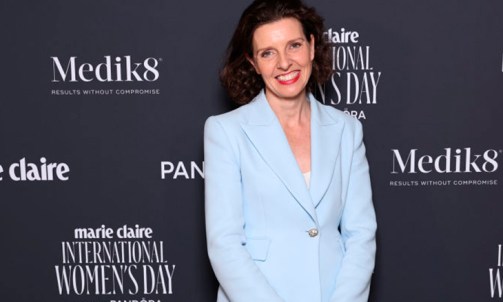
I should declare a bias. I have always been a little wary of Louise Clegg’s view of the world, partly because she is married to the Leader of the Opposition, and a columnist in that position is always going to be read with one eyebrow raised.
I opened her piece in The Spectator Australia, Teal deal is dead, expecting to disagree. I didn’t. It is well argued and the evidence holds up, and I would rather say so plainly than let a prejudice get in the way of a good argument.
Her argument is that the Teals were left-wing populism with better stationery, and that, four years on, there is very little to show for them. I agree, and on this occasion, she has hit the nail on the head.
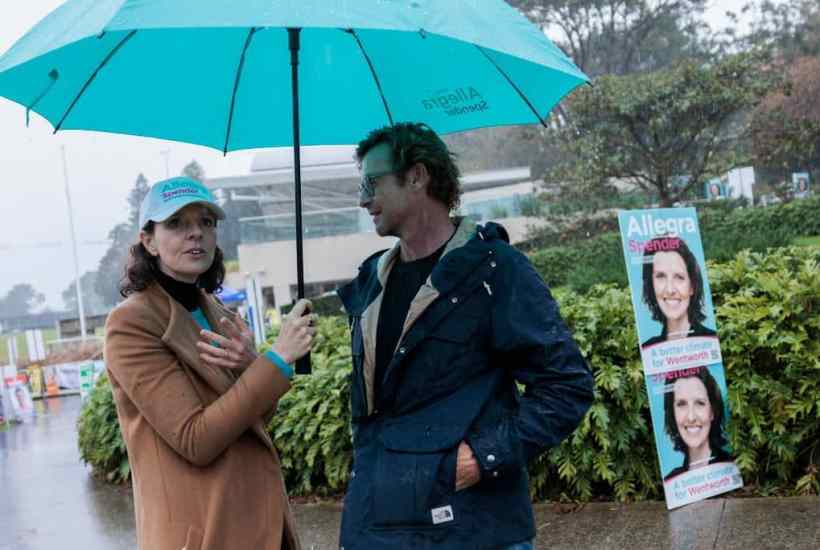
The exhibit is Allegra Spender’s tax paper. Spender proposed cutting the capital gains discount from 50 to 30 per cent, with a minimum tax on investment income to match. Then Labor’s budget moved in broadly the same direction, and she suddenly discovered shares, start-ups, and the need for more consultation, and declined to back the bill. A few days later she told the Coalition that a slogan isn’t a plan. She is right about that. It is the sentence that should have been printed on every Teal corflute in 2022.
Clegg reads this as the politics of abstraction meeting contact with reality, and as far as it goes that is correct. I want to take it one step further, because I think the Teals are more than a failed experiment. They are a case study in something I have been arguing for some time: that the proletariat won, and then became the aristocracy.
Consider where the Teals actually live. Wentworth, Kooyong, Mackellar, North Sydney, Goldstein, and Curtin are among the most valuable and most carefully protected residential land in the country. The lord of the manor kept the commons closed with a hedge and a title. The modern equivalent is a zoning instrument, and we call it amenity. Climate, integrity, and a larger state are very cheap political positions when your house has done the saving for you. They are status goods, affordable only by people with nothing material at risk.
That is not a sneer, just a description, and it explains the Spender episode better than hypocrisy does. Her concern for investors arrived at precisely the moment the proposal reached the assets of the people who elected her.
Clegg invokes Hayek, and rightly. His point, made in 1945 in ‘The Use of Knowledge in Society’, was that the knowledge needed to run an economy is scattered among millions of people, most of it local and much of it unspoken, and no planner can collect it in one place. Prices are how it travels. More than 40 years later he named the opposite habit the fatal conceit, the belief that a clever few can design what the many have to live with. The Teals were never close to the coalface, and the Spender episode is that conceit in miniature.
I will confess to some pride at finding him in her column. As far as I can tell, nobody in Australian public life had mentioned Hayek in about 50 years until I started going on about him, so I can only assume someone is reading me.
Here is the warning. The collapse of the Teal proposition is not the same thing as a Coalition revival. Goldstein has returned, and Clegg is right that others may follow, especially while economic management sits at the top of the voter’s mind. But the people drifting back are the old and comfortable cohort, who were always borrowed rather than lost. The growing cohort is younger, renting, often locked out of ownership, and not shopping for an ideology at all. Bernard Salt’s demographic work makes the point plainly: that group is restocked every year, and it is only now reaching the age at which the arithmetic becomes personal.
What this group wants is not a philosophy. It forms its politics one person at a time, as a negative, and gives its vote to whoever can repeat the grievance back to it. Clegg has spent much of this year writing about One Nation, so she knows where that cohort has been going. The Teals promised a gentler politics and delivered Labor with a conscience. The younger voter has noticed and has not concluded that the answer is a Liberal in a good suit.
Clegg’s prescription is sound: back-to-basics economic management, national security, and reliable affordable energy. But as a list it is a set of headings, and voters under 40 have read plenty of headings. The content has to be supply-side, and it is not glamorous. Output per hour has barely moved in two decades, and the gap has been covered with credit and revaluation. Energy has to work when the wind stops. Zoning has to be treated as a property right rather than a favour handed out by council. Stamp duty should give way to land tax. Regional cities need to be built, not defended.
Adam Smith settled the principle in 1776. The progressive state is cheerful for the labouring poor, the stationary state is dull, and the declining state is miserable. A party that wants the leafy seats and the young renters in the same coalition has to be the party of the progressive state, because that is the only offer that suits both.
Every one of those measures costs somebody a comfort, and this is where it becomes uncomfortable for our own side. The people who benefit from scarcity are not confined to Teal seats. Plenty of them vote Liberal and own a heritage overlay of their own. A Coalition that goes to the next election promising growth without disturbing anyone’s hedge has simply offered the Teal deal in a blue frock.
Clegg wrote in July that conservatives should cost their policies. The same test applies to the Coalition’s energy announcement, and to everything that follows it. If we are going to say that someone else’s slogan isn’t a plan, ours had better survive the same question, with numbers attached, and a tolerance for the people it will inconvenience.
So, Louise, you have finally hit the nail on the head. The Teals have been dispatched on the page. Now we have to get fair dinkum about winning the argument in the street, which means giving the next generation a country worth buying into. The front bench has been given the diagnosis.