
Even the weather has been playing along with the bizarre 1976 tribute act in which we seem to be trapped. We have had a mid-term change of Labour Prime Minister, a Chancellor called Healey, a government presiding over low growth and lingering inflation. We are back to punitive levels of taxation. Wealthy individuals, like hedge fund billionaire Chris Rokos this week, are fleeing. The unions are flexing their muscles, and on top of that we have had a prolonged heatwave and drought which, just as 50 years ago, burst with downpours over the August bank holiday weekend.
Wealthy individuals, like hedge fund billionaire Chris Rokos this week, are fleeing
Older readers may recall what came next. Markets, which had been rebelling against the government’s economic policy all through 1976, finally had had enough. On 28 September, Denis Healey (no relation of John), turned back at Heathrow, cancelling a trip to a meeting of finance ministers in Hong Kong, and went to tell the Labour party conference that he was going to visit the IMF instead, to beg for an emergency loan. The IMF handed over $3.9 billion (£2.9 billion), but on the condition that Healey drive through £2.5 billion worth of public spending cuts, which he duly did in an emergency budget on 15 December.
History never quite repeats itself, of course. The 1976 crisis was sparked by a collapse in sterling rather than bond prices, although government debt was a large part of the problem. There is another significant difference, too. In 1976, for the all Labour government’s economic incompetence, at least we had a Prime Minister who had come to the realisation that the answer to everything was not more public spending. James Callaghan declared Keynesianism dead with the words: “We used to think that you could spend your way out of a recession and increase employment by cutting taxes and boosting government spending.”
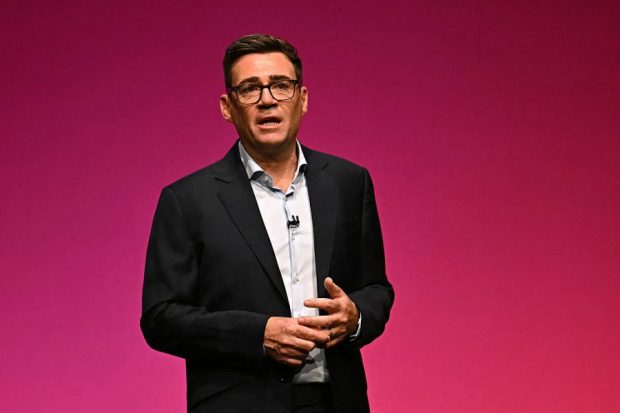
How different from Andy Burnham, who seems to think that only public spending can grow the economy. He and the rest of the anti-austerity lobby are forever making the assertion ‘we can’t possibly cut public spending because that will take money out of the economy and so suppress economic growth’. Yet, strangely, you never hear them make the case ‘we mustn’t raise taxes because that would take money out of households’ pockets, causing them to spend less and so suppress economic growth’.
I say to the anti-austerity lobby: austerity was officially declared to be over by Philip Hammond in his 2018 Budget. Even when we did have ‘austerity’ it never shrank the state to a smaller percentage of the economy than it had been in the mid 2000s. But since 2018 we have had a massive rebound in the size of the state, first under covid, then under Liz Truss’ Energy Price Guarantee, which was going to subsidise everyone’s energy bills, even those of billionaires, followed by Labour’s spending splurge on public sector pay rises and other stuff. If it is true that austerity kills economic growth and anti-austerity promotes it, why isn’t the economy booming like never before?
Labour’s public sector-centred ‘growth’ polices have comprehensively failed, and bond markets are rapidly losing patience with Britain. I don’t think Burnham will ever shake off his foolish remark – made last year, when he was still Mayor of Greater Manchester – that we shouldn’t feel ‘in hock’ to the bond markets. The markets took a different view, and sent yields sharply upward even though, at that point, he was only being talked about as a possible future Prime Minister. The comment will follow him around, wherever he goes and whatever he does during his premiership.
But my worry is not just that he fails to understand the scale of the fiscal crisis into which we are heading; it is that none of the other political parties do, either. The tragedy is that Britain’s debt problems were so nearly sorted out a decade-and-a-half ago when David Cameron published a manifesto which made an absolute priority of closing Gordon Brown’s £160 billion deficit. He even used the word ‘austerity’, without any sense of shame. The UK electorate saw his point and, possibly aided by the sight of tanks on the streets of Athens on UK general election day, voted for a problem which George Osborne described as one fifth tax rises, four fifths spending cuts. The Lib Dems – the other part of what was soon to become the coalition – were very much on board.
But where is the same urgency now? Kemi Badenoch’s Conservatives say they want to cut the deficit by £23 billion. Last year it was £130 billion. Reform UK have proposed £80 billion worth of cuts to welfare spending, but almost immediately negated much of that with proposed tax cuts. Is there anyone out there with ambitions to cut the government to size, so that it actually lives within its means?
The alternative, I suppose, is that the job is left to the IMF instead. If we get into the situation we were in half a century ago and Chancellor Healey has to go cap in hand to the IMF we will have outsiders managing our fiscal policy, telling us by how much we need to slash spending, leaving the Chancellor as a titular finance minister with limited power as to where the axe falls. I don’t want to get that far. In my new book, Britain is Bust: the coming sovereign debt crisis and what it will mean for you, I have laid out the sort of cuts which would be necessary to bring the public finances back into balance. Spoiler alert: it involves rather more than cutting a few things you don’t like, be it asylum hotels, Personal Independence Payments or whatever. It requires wholesale cuts across the board. We will know when a political party is serious about regaining control of the public finances, because it will abolish the triple lock, and to hell with the bolshie pensioners who would complain bitterly. But we are not there yet. I await the day with keen anticipation.