The leader of the National Party, Matt Canavan, argues one of the reasons boys are attracted to toxic material on the internet is because they are ‘sick and tired of getting lectures about how bad men are at school’. Other reasons put forward by Canavan include the feminisation of the curriculum and the lack of male teachers, especially in primary school.
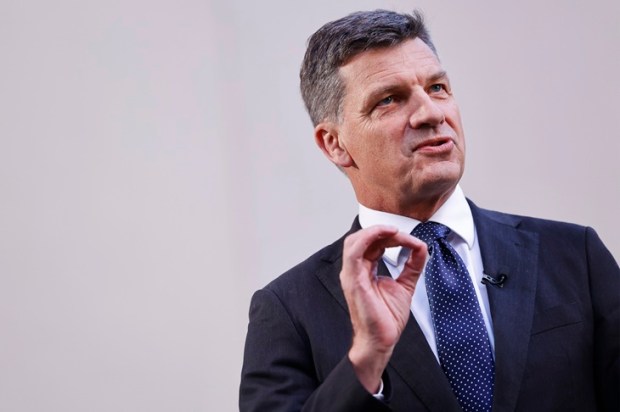
The leader of the Liberal Party, Angus Taylor, after stating consent should be taught in schools, also argues the school curriculum is far from balanced: ‘The idea that we have a balanced curriculum being run at the moment, that there are not agendas being run by some teachers, I think is wrong.’
In response to both political leaders criticising the biased nature of what is happening in schools the President of the Australian Education Union (AEU), Correna Haythorpe, argues both are guilty of either a ‘malevolent mischaracterisation of Australia’s education system for political gain, or a display of complete ignorance of how the teaching profession operates’.
While Matt Canavan and Angus Taylor could have been more nuanced in what they said, anyone who has followed the development of the school curriculum over the last 40 years would understand they are correct and what is taught in schools has been radically changed to favour girls.
Evidence that feminist educators believe the curriculum unfairly advantages boys includes the National Action Plan for the Education of Girls 1993-97 and the 1997 Gender Equity: A Framework for Australian Schools.
Published in 1993 the Action Plan for the Education of Girls is described as representing a ‘key developmental phrase in national policy setting processes which commenced in 1986 to improve educational outcomes for girls’.
Under the heading ‘Reforming the curriculum’ the argument is put the existing curriculum is gender-biased and that it needs ‘a fundamental reworking’. The authors go as a far as stating curriculum documents, instead of being gender neutral, ‘commonly reflect the fact that almost all areas of study exclude or trivialise women’s contributions, experiences, and knowledge’.
The report goes on to argue the reform process should include the way ‘women’s and girls’ experiences, achievements and contributions (are) excluded from the knowledge that is valued in society’ and ‘the ways through which social and institutional structures act to maintain the dominant position of men in society’.
Published in 1997 the Gender Equity: A Framework for Australian Schools is described by one academic, Susanne Gannon, as the result of ‘the culmination of extensive feminist collaboration and activism around girls’ education’. Once again, the belief is more must be done to favour girls in what is seen as a curriculum, and society more generally, that unfairly favours boys and men.
As noted by Gannon, the Gender Equity document states: ‘Dominant concepts of masculinity and femininity define males and females as opposites by highlighting their differences and assigning them unequal value, status and power.’ The authors of Gender Equity go on to argue:
It is this painful process of developing and proving masculinity, at the expense of femininity, which partly explains the contradictory phenomenon that while men, as a group, are powerful and dominate the economic, political, social, and personal spheres of life, they often experience fear of losing power. This feeling of powerlessness may increase males’ negative attitudes and behaviour towards females, for example through sexual harassment.
While nodding in the direction of ensuring equity for both girls and boys, it’s my view the Gender Equity: A Framework for Australian Schools was influenced by the growing feminist movement in education to reform what was considered a male-dominated curriculum.
Such were concerns about the educational pendulum moving too far towards a feminist perspective and failing to consider boys’ educational needs the then-Education Minister Brendan Nelson in March 2002 restarted an enquiry into boys’ education.
The Boys Getting It Right report (October 2002) released as a result of the enquiry concludes ‘the current equity framework … does not separately research and identify boys’ needs, and at times it is couched in negative terms, even setting boys’ needs in the context of what still needs to be achieved for girls’.
More specifically, the 2002 report into boys’ education concludes the Gender Equity: A Framework for Australian Schools document published in 1997 is too narrow and recommends it should be ‘recast, focusing on positive values and goals, to provide for distinct but complementary education strategies for boys and girls’.
Page 2 of the report into boys’ education provides a useful summary of some of the explanations as to why boys underperform, disengage from learning and misbehave. The report lists the following reasons:
… the absence of fathers, the lack of male teachers, inappropriate curricula and teaching strategies, the feminisation of curricula and assessment systems, the declining status of men and the prevalence of negative, violent or hyper-masculine stereotypes in the media.
While criticised for suggesting the feminisation of the curriculum is a problem Canavan is correct it his diagnosis. Since the release of the Gender Equity report in 1997 the way different subjects are presented, taught and assessed has been feminised to favour girls.
Over the last 30 to 40 years, teachers have been told to be facilitators and guides by the side instead of being authority figures. Learning has been collaborative, student-centred, and based on an enquiry, process-based approach. Ignored is that boys learn differently to girls and the optimum situation for boys is where the teacher is an authority figure, there is explicit teaching, and a disciplined classroom environment.
The move towards descriptive, diagnostic assessment, instead of summative assessment using letter grades or marks like 4/10, has also favoured girls compared to boys as boys better respond to immediate feedback where there is a clear and concise measure of how well they have performed. Boys also need structure and explicit instructions detailing what needs to be achieved.
The way the compulsory subject of English has fallen victim to the sisterhood illustrates how boys have been disadvantaged. Instead of teaching how to read by using a structured phonics and phonemic awareness approach, where children learn the relationship between sounds and letters and combinations of letters, schools since the early-to-mid 1970s adopted a whole language approach.
The whole language approach, sometimes described as look and guess, is based on the mistaken assumption that learning to read is as natural and spontaneous as learning to speak and its adoption is a key reason why boys have such trouble reading and why girls outperform boys in literacy tests.
The way literature is taught has also been influenced by a feminist perspective. As I detail in Why our schools are failing (2004) the Australian Association for the Teaching of English (AATE) and its state and territory affiliates have consistently argued to rid the subject of what is condemned as oppressive male hegemony.
Issue Number 112 of the national journal English in Australia (1995) is titled ‘Gender and Sexuality’. In one of the papers, titled ‘Boys and Literacy: Exploring the Construction of Hegemonic Masculinities’, the author argues English teachers must critique society’s ‘dominant forms of masculinity’ and ‘initiate students into an active and effective exploration of alternative versions of masculinity’.
A second paper is titled ‘Boys and Literacy: Exploring the Construction of Hegemonic Masculinities and the Formation of Literate Capacities for Boys in the English Classroom’ where the author writes ‘masculinity (is) a monolithic category within the field of psychoanalytic and gender theory, pointing to the need to consider and to elaborate alternative versions and styles of masculinity in attempting to move beyond an oppressive gender bind’.
As a result of embracing critical literacy, a liberating and empowering approach to deconstructing reading made famous by the Brazilian Marxist Paulo Freire, one of the papers in English in Australia No 95 argues the English language is ‘named, defined and dominated by masculinist discourses and institutions’.
In the same paper, the author argues students must be taught to read ‘against the grain’ as traditional approaches impose ‘phallus-dominated heterosexuality and female dependence’. As a result, activists argue plays like Shakespeare’s Romeo and Juliet and fairy stories like Cinderella and Sleeping Beauty are guilty of reinforcing a heteronormative, oppressive, binary view of gender and sexuality, one that privileges boys and men.
A more recent example of the impact of a feminist approach to English, and gender issues more generally, is a paper published in the AATE’s national publication, renamed as the Australian Journal of English Education. The paper titled ‘Representation Matters: Diversity and inclusion in the senior literature curriculum’, published in the January 2026 edition of the journal, reaffirms the importance of critical literacy.
The paper argues literary texts chosen for senior school English ‘are not neutral, truthful, and reliable sources of knowledge, but instead ideological artefacts’. The paper argues, historically speaking, those literary works most valued have ‘centred on a Western, European, predominantly male-centred and rural focused perspective’.
Such is the move to remedy what is seen as male-dominated literature that Mark Lopez in School Sucks, under the heading, ‘Too male or too white: postmodern text selection by politically correct quota’, argues if you are a male or white author you have minimal chances of being on the list of prescribed texts for senior school English courses.
Lopez cites a bulletin released by the body responsible for setting texts for study, the Victorian Curriculum and Assessment Authority (VCAA), that boasts the number of works written by women ‘exceeds the number of works written by men’. Lopez concludes the VCAA is using the text list ‘to wage their own war against the patriarchy’.
In addition to the campaign to reshape the school curriculum to better suit girls, another factor when examining how boys’ education has been adversely impacted is the impact of radical gender and sexuality theories in critiquing and undermining once accepted beliefs about masculinity and what it means to be a boy.
In the Safe Schools program, implemented nationally by ALP and Liberal governments, primary and secondary age children are presented with a cultural-Marxist view of gender and sexuality. The program tells students that Western societies like Australia are heteronormative, homophobic, transphobic, and that gender and sexuality are fluid and limitless and they have the power to self-identify where they belong on the gender spectrum.
At a Marxist conference, one of the academics responsible for Safe Schools admitted the program sold as an antidiscrimination program to help LGBTIQA+ students stated the program is ‘about supporting gender and sexual diversity, not about stopping bullying’.
They went on to say, ‘Marxism offers both the hope and the strategy needed to create a world where human sexuality, gender and how we relate to our bodies can blossom in extraordinary, new and amazing ways that we can only try to imagine today.’
One of the Safe Schools’ resources ‘OMG I’M QUEER’ includes the statement: ‘All people have their own sexuality. Whether that is straight, gay, queer, bisexual, or something completely different; each person’s own sexuality is up to them.’
A second booklet, titled ‘All Of US’ and under the heading ‘Gender Identity’ argues: ‘Everyone has their own gender identity in relation to masculinity and femininity. Some identify with both, and some don’t identify with either, it’s up to the individual to describe what gender identity suits them best.’
In addition to incorrectly condemning Australian society as heteronormative, homophobic and transphobic the Safe Schools program presents a complex, abstract and radical view of gender and sexuality that most students would find impossible to understand and comprehend. Telling primary age children as young as 6 and 7 that boys can be girls and girls can be boys (or anything in between) is unacceptable.
Also concerning is that programs like Safe Schools, in criticising a binary view of gender and sexuality as heteronormative, indoctrinate students with a negative view of what it means to be male. At a time when digital technology and the manosphere conspire to present boys with a dark and often hostile view of masculinity, a better alternative would be to celebrate virtuous masculinity.
Dr Kevin Donnelly is the author of Wake Up To Woke Why Pauline Hanson’s One Nation Party Is So Popular.