Israel’s TV show Fauda has not disappointed with its long-awaited fifth season. Building on its longstanding international following, Fauda’s viewership has reached number one in Lebanon, and it has appeared on the top ten Netflix lists across eight Arab countries. Since the first screening, its appeal across borders and cultures has resulted from its refusal to treat Arab characters one-dimensionally. Instead, Fauda has invested time in their personal lives and backstories. Rejecting simple stereotypes or caricatures, Fauda opted for nuanced, respectful portrayals.
Unfortunately, Season 5 is set in the dark shadow of October 7. The balance and sympathy of earlier seasons yield to a bleak reality in which Israelis feel abandoned by the rest of the world. Fauda’s characters seem to have given up their hopes for peace, not from a lack of desire, but because Hamas’ savagery has made peace impossible.
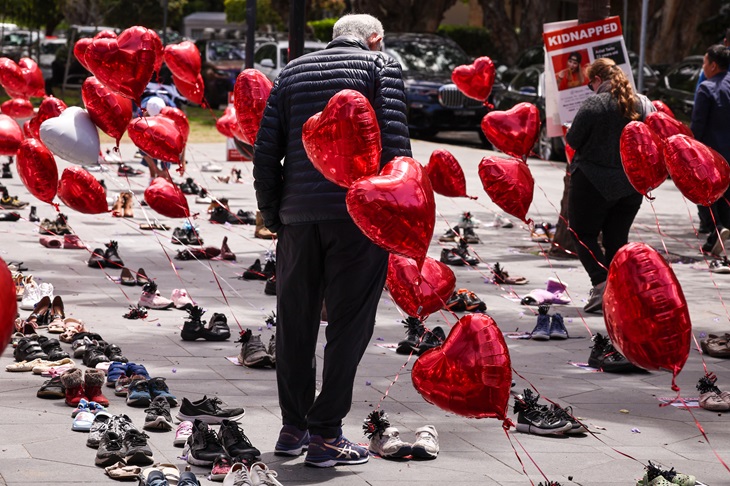
In Season 5, Fauda moves from realistic fiction to a forceful confrontation with the horrific realities of October 7 and its aftermath. It brings viewers face-to-face with the killings, kidnappings, sexual violence, and torture, while at the same time acknowledging the intelligence failures that still haunt Israel. The season confronts viewers with the uncompromising fanaticism of Hamas and highlights the daily reality of antisemitism around the world.
Episodes 7 and 8 are harrowing. Shifting from the fictional main narrative, they immerse viewers into the terror of the first morning of the attacks. Any effort to depict the many victims of October 7 would be impossible on screen. So, Fauda instead makes the trauma more personal, by focusing on the more intimate story of the atrocities committed on the main team’s family and friends. Fauda thus chills the audience with the realisation that the attacks were not just distant news statistics, they were atrocities committed against real people.
These episodes carry a viewer warning because they are difficult to watch, and many viewers have skipped them. However, they should be essential viewing for anyone who doubts the reality of that day or denies Israel’s right to respond. I would suggest that those who remain sceptical after watching these episodes should be confronted with the body-camera footage recorded by Hamas fighters themselves, those for whom the terror was not a tragedy, but a glorious religious duty.
Fauda’s narrative compels viewers to appreciate why Israel responded so forcefully. Given that Hamas publicly declared that it would mount repeat attacks, international calls for immediate restraint seem to ring hollow. Indeed, we should ask: How much violence would any other nation be expected to tolerate before taking proper action?
Fauda forces a rethink of the rhetoric that accuses Israel of genocide. The real genocidal intent is in Hamas’ founding covenant. Article 6 mandates jihad as a sacred obligation and declares that, ‘Israel will exist and will continue to exist until Islam will obliterate it.’
The covenant is explicitly antisemitic, invoking a hadith:
‘The Day of Judgement will not come about until Muslims fight the Jews… when the Jew will hide behind stones and trees. The stones and trees will say, “O Muslims… there is a Jew behind me, come and kill him.”’
Fauda exposes Hamas’ nature as an apocalyptic death cult. In one scene, a righteous Muslim pleads with Hamas fighters to stop, quoting Islamic prohibitions against harming innocents. Yet, just as Hamas ideologues inverted prohibitions against suicide to glorify suicide bombing, these extremists set aside religious law to justify barbarity. Hamas remains an affront to humanity and to Islam itself, manipulating what should be a religion of peace into a cult of savagery.
The international terrorism portrayed in Fauda has also affected Australia. Against the background of the Bali bombings, the Lindt Café siege and the Bondi shootings, this season of Fauda should prompt serious questions about Australian security and political resolve. The Australian government seems gravely disconnected from reality, while intelligence and law enforcement agencies seem to be ill-prepared for emerging threats. Speaking at a Lowy Institute event, former ASIO chief Dennis Richardson lamented that Australia had missed crucial opportunities to combat rising extremism and that a far stronger response was warranted.
In late 2025, Israeli counter-terrorism expert Lt Col (res.) Itay Gil visited Australia and met with political and law enforcement leaders. He warned that Australia was dangerously unprepared for rising extremist threats, prophesying that it was ‘not a matter of if, but when’. Bondi showed that Australian authorities are failing to act decisively on intelligence, adequately train and equip first responders, or address the true root causes of ideologically motivated violence. Instead, as seen with the knee-jerk firearm reforms, public policy too often shifts toward punishing law-abiding citizens rather than confronting the real dangers.
At the same time, Dennis Richardson correctly noted that while extremism must be dealt with firmly, mainstream Muslim communities should not be marginalised. Achieving this balance requires careful nuance, but decades of religious illiteracy caused by our defective education system have left the public unable to distinguish between the peaceful Muslim majority and the radical minority. Without constructive engagement with mainstream Muslim leaders, our national debate will continue to be a chaotic vacillation between the political appeasement on the left and reactive panic on the right.
Fauda offers us vital insight into the hard truths of modern counter-terrorism. It not only opens a window to the conditions faced by Israel, but it challenges Australians to ask fundamental questions about our own national security. Should we be guided by real-world experience and firm resolve, or by political convenience and wishful thinking?
The realities seen in Fauda should also prompt Australians into asking why so many Jewish people are fleeing to Israel because they feel safer there than on the streets of Sydney and Melbourne. With so many people reconsidering their safety in Australia, our leaders must confront their failures honestly and act before it is too late.