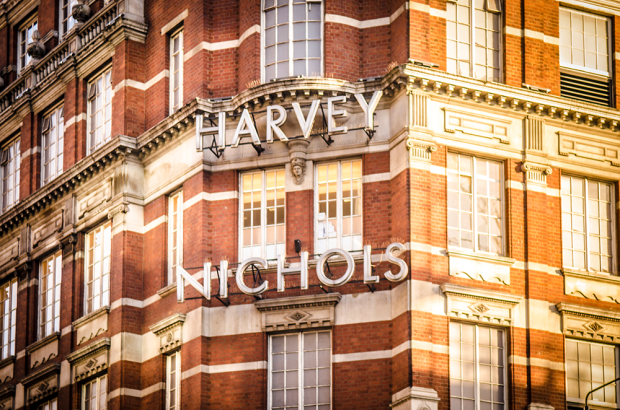
Will Labour’s ‘visitor levy’ generate £52 million of revenue for public spending in York and North Yorkshire, as a House of Commons briefing suggests? Or will it deter holidaymakers from exploring the region I love – and every other English destination where the levy is applied – while piling adversity on a hospitality trade already caned by employment cost hikes and tight consumer wallets?
Modelling by the Tax Policy Associates thinktank offers a central estimate that the proposed tax on overnight stays (at up to 5 per cent, as set by local authorities) could raise £603 million a year for the loss of 5.8 million room-nights and £689 million in overall visitor spending, roughly half from overseas. The trade’s unanimous response is that this Burnhamite device to funnel cash to the regions without raiding HM Treasury will kill jobs, small businesses and new invest-ment in a sector that’s still flying the flag for Britain while the rest of our economy stagnates or declines.
Hotel and guest-house owners deserve a break, not an added burden. That might start with a cut in their VAT rate to 10 per cent, matching France, Spain and Italy. Instead, the current 20 per cent rate will even have to be charged on the new levy itself. Lord (Ben) Houchen, Conservative mayor of Tees Valley, says he won’t exercise his right to apply the levy: ‘You can’t tax your way to growth and we shouldn’t be using devolution as an excuse to take even more of people’s hard-earned money.’
Campsites and houseboats are also caught in the levy net unless locally exempted, by the way – but not park benches. Frankly, it’s a wonder Labour has no plan to tax the middle classes for sleeping in their own beds.
Troubled waters
Six months ago, I revisited the well-tested 20th-century theory that ‘a serious oil price spike is almost always followed by a recession’. Despite changing patterns of energy use, I noted, the link held good after an all-time peak of $147 per barrel in 2008 and missed only by a whisker at $125 after Russia’s attack on Ukraine in 2022.
This year’s March high of $118 was calmed by President Donald Trump’s insistence that his war with Iran would end ‘very soon’ – which it hasn’t. In consequence, the economist Paul Krugman observes that vital shipments through the Strait of Hormuz will ‘remain minimal unless Trump can find a way to smuggle oil out in catering carts’. And the alternative route for Saudi oil via Red Sea ports, to meet 4 per cent of global demand, has been halted by Houthi attacks.
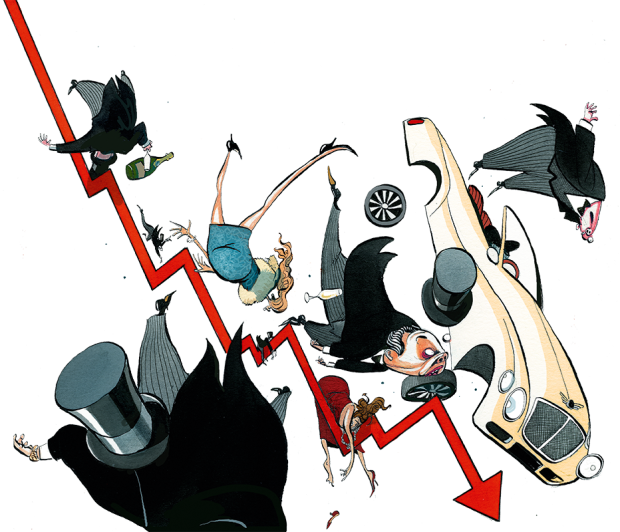
Hence the barrel price blipped close to $110 from $70 in June and Goldman Sachs’s forecast of $120 will look limp if the conflict intensifies. With stocks of heating oil low for winter, plus poor crops pointing to food scarcities, inflation lies ahead – as must higher interest rates to suppress demand, tipping feeble growth towards recession. And there’s no limit to Trump’s capacity to make matters worse.
What to do if this grim scenario plays out? Cancel surtaxed hotel bookings, obviously. Then perhaps contemplate another proven theory favoured by market veterans: for the worst of times, buy gold.
Crypto stash
In the contest to confer largesse on Worcester College, Oxford, where Reform UK backer Ben Delo and I studied a generation apart, he has beaten me so far by £5 million to nil. So I salute him for that. But when he first came into the Spectator orbit in 2018 as a hotshot co-founder of the BitMEX crypto exchange, he made a curious impression. Diagnosed with Asperger’s syndrome as a schoolboy, this gifted mathematician turned fintech wizard seemed ill at ease in talkative company: his PR man stuck close, his father was often alongside and his American co-founder Arthur Hayes – a former derivatives trader in ripped jeans and gold sneakers – was the street-smart frontman.
In its heyday, BitMEX attracted huge trading volumes by offering customers up to 100 times leverage on bitcoin derivative bets: you don’t need details to know that’s a wild frontier of financial risk. As one commentator said, it’s what the Nasdaq stock exchange might look like if it moved to Las Vegas.
This month BitMEX will close down, having suffered a plunge in market share and the reputational hit of US criminal convictions, for which the founders were pardoned by Trump. Their defiant attitude was captured in one of Hayes’s parting X posts: ‘Fuck TradFi [crypto-speak for traditional finance], Fuck the banks, Fuck the man.’
But Delo has moved on. His £36 million gift to Reform (matched by fellow crypto billionaire Christopher Harborne) has set Westminster alight. He funds an autism charity as well as college fellowships and libertarian causes and I’m sure he sincerely wants to make a better world with his BitMEX stash.
Yet still I feel a tad sorry for him, because he fits a modern archetype of the hyper-intelligent outsider drawn into a milieu of sharks and demagogues. Seeing himself all over this week’s media, I wonder if he ever wishes he were somewhere else.
Bad egg
Here’s a dilemma: can I face putting a tactical cross in the box for Zack Polanski in the Holborn and St Pancras by-election? I long for Labour to lose Sir Keir Starmer’s former seat, because the policy gestures designed to save it – sanctions on avocados from West Bank settlements and deferral of a go-ahead for the Jackdaw gas field – are so utterly cynical.
Polanski’s manifesto of punitive taxes and mass nationalisation is barking mad. But no other non-Labour contender has a hope, and the demands of being an MP rather than a gadfly should swiftly expose him as the charlatan he is. But the more I think about the Green party leader, the more I’m attracted by the slogan of the Monster Raving Loony candidate, Barmy Brunch: ‘It’s time to get rid of bad eggs and political hams.’
Got something to add? Join the discussion and comment below.
You might disagree with half of it, but you’ll enjoy reading all of it. Try your first month for free, then just $2 a week for the remainder of your first year.