
I report from FTSE boardrooms and City bars, but I also spend time – mostly in Yorkshire, currently in France – among farmers who often feel ignored by the rest of the business media. This week, with three-quarters of England officially in drought and produce imports afflicted by fierce heat across Europe, agriculture is for once top of the agenda. So what has this freakish summer really done to our fields?
My northern arable correspondent has never seen an earlier harvest, with ‘barley less than average, oilseed rape excellent, wheat OK on heavy clay but very poor on lighter soils. Slight rises in crop prices won’t compensate for yield reductions, we’ve lost the safety net of direct acreage subsidies – and a single spark from a combine or baler can set whole fields alight.’
The truth is that farmers cope with nature’s vicissitudes but are rarely helped by politicians, especially Labour, who would rather not hear NFU president Tom Bradshaw banging the drum for UK food resilience and import reduction. But it’s a glaring long-term problem which is now pointing straight to a food price spike that will derail Andy Burnham’s flashy cost-of-living campaign. He and his Defra Secretary, Dame Angela Eagle, had better get their wellies on.
The easyJet takeover story has changed course in mid-air. One US private equity bidder, Castlelake, has walked away, leaving a clear run for another, Apollo, offering £5.7 billion. EasyJet founder Sir Stelios Haji-Ioannou reportedly likes Apollo’s plan to accelerate the low-cost airline’s shift upmarket – whereas a more typical private-equity plan might load it with debt, gouge it for dividends or break it in pieces.
But I’d advise easyJet’s board to order an advance copy of Money to Burn, William D. Cohan’s history of Apollo due out next month, of which I’ve had early sight. Founded in 1990 from the remains of the fallen investment bank Drexel Burnham, Apollo pursued a strategy of ruthless opportunism that reaped huge rewards for its founders – led by Leon Black, now worth $13 billion but best known for the $158 million he paid Jeffrey Epstein for personal tax advice.
Cohan offers the parable of Apollo’s $1.2 billion acquisition of Noranda Aluminium, a major employer in the small town of New Madrid, Missouri, in 2007. Apollo’s $214 million equity stake (the rest was debt) was swiftly recouped as the firm’s five-year return on investment surpassed 300 per cent – but Noranda subsequently went bust with a hefty pension fund deficit. No doubt there are examples of happier outcomes for Apollo’s investee companies, but let’s just say it’s wise to know a new partner’s past form.
Free lunch
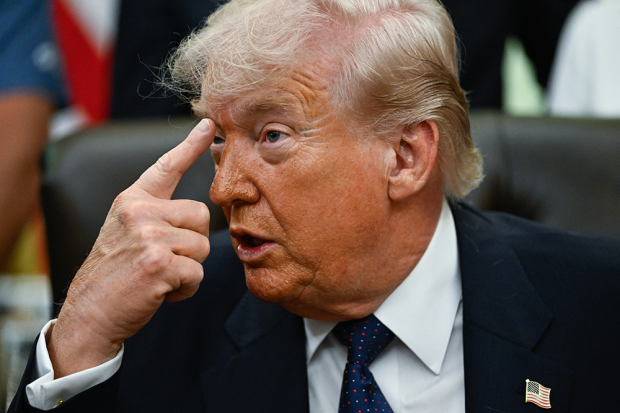
I’m grateful to World Socialist Web Site for the most lucid account I can find of US Treasury Secretary Scott Bessent’s motive in intervening to prop up the sinking yen. In concert with Tokyo’s finance ministry, the US action on 31 July briefly boosted the Japanese currency (which a few years ago stood at 100 to the dollar) from 164 to 155. ‘It was a signal of friendship, Japan’s been very good to us…’ said President Trump, adding a touch of his special diplomacy: ‘…with the exception of course of Pearl Harbor.’
But it seems the relatively small US intervention, executed by selling euros rather than dollars to buy yen, was actually intended to deter other international investors, including the Japanese themselves, from selling US government bonds to raise dollars for the same purpose. That might have had the effect of nudging long-term US interest rates upwards at a time when debt-funded American corporate investment in AI is running at $1.5 trillion per annum. The more expensive that debt becomes, the greater the likelihood of a crash in AI-related US stocks, already a quarter down on average from recent peaks.
Meanwhile, if investors believe what Japan really needs are a higher official interest rate and finer-tuned fiscal policies, the impact of one day’s intervention on the foreign exchanges will rapidly evaporate – as the former hedge fund manager Bessent ought to know. At the time of writing, the yen-dollar rate is already back at 159. And as one non-socialist market-watcher points out, the temporary discount has been little more than ‘a free lunch for traders’.
Marché rising
France’s unemployment rate has reached 8.3 per cent. That’s two-thirds higher than the UK’s if you want to feel smug, though also likely to be based on more accurate records of benefit claimants who are fit for work, our own stats being notoriously fudged. Either way, the trend is grim for Emmanuel Macron, whose goal was to achieve ‘full employment’ (below 5 per cent unemployed) by the end of his presidency next year. And as in Britain, there’s a media riff that progress merely makes prospects worse: beside the jobless figures, there’s news of robot delivery vehicles that will take out another swath of human work.
Even in la France profonde, where no bot has ever been seen, the lack of business confidence to hire and invest in the face of soaring energy costs and consumer hesitancy is apparent in many premises shuttered or for sale. That includes numerous restaurants for which there are no willing buyers; among those still open, strugglers have jacked up menu prices to no good effect. In Cazals (Lot), the ever-reliable Auberge de la Place, which charges €29 for three fine courses, was packed, while the fancier L’évidence nearby (€42) looked almost empty.
But at least one market here is on the rise. I refer of course to the weekly marché gourmand nocturne in my own village of Saint-Pompon: €15 for an assiette vietnamienne, €8 for a bottle of ice-cold rosé and, oh, the line-dancers – those hip-swinging grandmothers and teenagers in near-perfect formation, led by a young black guy radiating energy and joy. In this dismal world, they give me hope for humanity.
Got something to add? Join the discussion and comment below.
You might disagree with half of it, but you’ll enjoy reading all of it. Try your first month for free, then just $2 a week for the remainder of your first year.