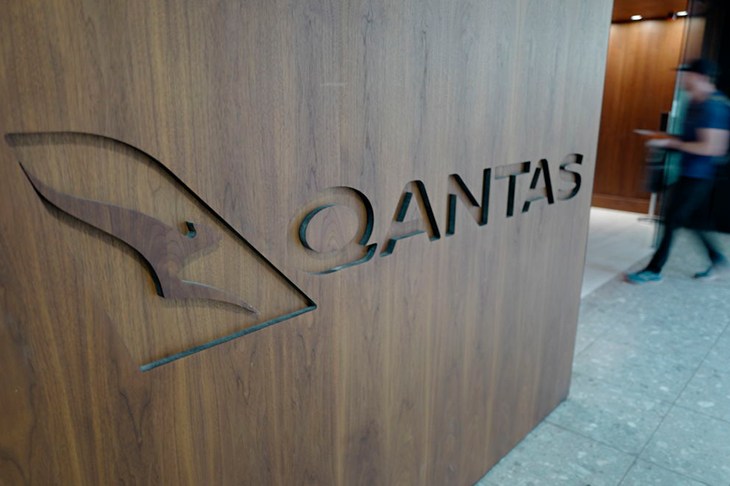
Somewhere behind a door through which few Australians will ever pass, inside the Qantas Chairman’s Lounge, a member of parliament is dining on a free and elaborate meal all while a young staffer assures him that the morning’s speech was perfect and the social media response was exceptional.
The MP sits in the top few per cent of earners. His expense claim, no matter how ridiculous, is ‘within the rules’. His taxpayer financed superannuation contribution is a tidy 15.4 per cent. His next career, as a lobbyist, is one Parliament House orange lanyard away. All the while, the country he is supposed to help govern has become less productive, less united and, for much of the past four years, poorer per person.
That is not a coincidence, though the MP in the Chairman’s Lounge is not entirely responsible. He is doing precisely what the system pays him to do, which is to generate noise and activity while achieving little for his community or country.
Milton Friedman explained it a long time ago: ‘I do not believe that the solution to our problem is simply to elect the right people. The important thing is to establish a political climate of opinion which will make it politically profitable for the wrong people to do the right thing. Unless it is politically profitable for the wrong people to do the right thing, the right people will not do the right thing either, or if they try, they will shortly be out of office.’
Note what Friedman did not say. He did not say that political leaders are mercenary, though many are. He did not say they are stupid, though the evidence occasionally suggests that some are. What he did say was that you cannot preselect for virtue. You can only arrange the pay-offs so that a self-interested mediocrat, pursuing his own interest, accidentally does something useful for the nation.
The current issue in Australia is that the mediocrats, acting in their own interest, are actually damaging Australia because that is what voters reward.
Consider what the electorate demands. It wants housing to be affordable for the young and property prices to keep rising. It wants more houses built, but not in its own suburbs. It wants taxes cut and spending on health, aged care, the NDIS, and defence increased. It wants the budget repaired without a single program touched or a single tax raised.
As a governing program, this is incoherent, and the results bear it out.
Commonwealth gross debt has passed $1 trillion. Budget deficits run as far as the eye can see and do so while the terms of trade remain historically strong. Real output per person is roughly back where it stood four years ago, having fallen for seven consecutive quarters to September 2024. Labour productivity went backwards by 0.7 per cent in 2024-25. This is what the good years look like now.
The social ledger is no better. The Scanlon Institute found last year that only 46 per cent of Australians reported a great sense of belonging in their own country, down from 63 per cent in 2020. Only a third said they trust the federal government to do the right thing most of the time.
So, to what are the incentives pointing?
The answer is to win office and hold it for as long as possible. And that requires only that a member avoid controversy, flatter the median voter, obey the leader, quietly undermine everyone around him, and never attempt anything whose benefits arrive after the next election. Reform, by definition, is a bad trade.
The rewards for playing it safe are considerable. The study tours that somehow convene in Europe in July. The loadings for committee work that amount to little more than attendance.
For a sizeable majority of MPs, too many in fact, no alternative career would come within cooee of it.
The calculus and incentives have to change, and changing them is easier than most people realise, because there is no law to unpick. Federal parliamentary salaries are not indexed to anything. They are set each year by the discretionary determination of the Remuneration Tribunal, guided by little more than what everyone else got. Parliament need only tell the Tribunal what to measure.
Tell it to measure outcomes. A basket, not a single number: labour productivity, real wage growth, and per capita GDP growth, on a rolling multi-year window so nobody banks a bonus off one lucky quarter of iron ore pricing. Extend it to departmental secretaries and deputy secretaries, because the permanent government is at least as insulated as the temporary one. Hang part of superannuation on long lead indicators, vesting slowly and clawed back, for example, against Year 9 literacy and numeracy results.
Every listed company in the country ties executive pay to a scorecard and nobody finds that a problem. Why should the people writing the rules for those companies be exempt from the discipline they impose?
There is another version of the same idea. Famous investor Warren Buffett had a simple plan to address America’s budget deficits which was to legislate that any time the deficit exceeds three per cent of GDP, every sitting member of Congress becomes ineligible for re-election. Brutal but elegant.
An Australian version might be that any Cabinet minister who was party to a significant budget deficit or declining productivity would be barred from standing for re-election. Collective accountability should accompany collective responsibility.
The essential point is not that Australia deserves better people in Parliament, although it does. It is that better people are not coming, and waiting for political messiahs is not a plan but a wish.
Australia can get better policy by making it profitable for the wrong people to do the right thing. And once the incentives point in the right direction, watch how quickly principle is discovered.
Got something to add? Join the discussion and comment below.
You might disagree with half of it, but you’ll enjoy reading all of it. Try your first month for free, then just $2 a week for the remainder of your first year.