Politicians, or perhaps their shallow-minded media managers, have been going crazy with the ‘block’ button.
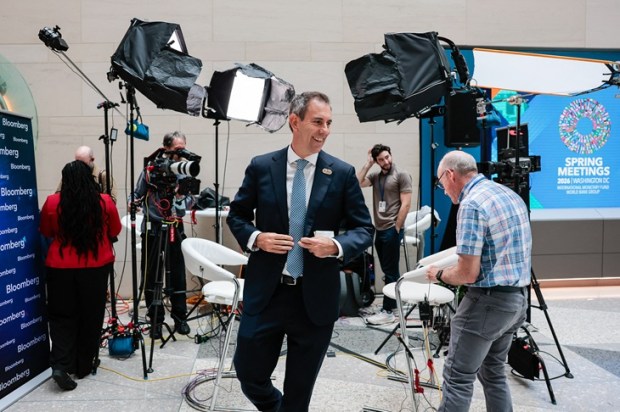
If you call the Treasurer out for his cynical tax grabs, you’ll probably end up ‘blocked’ like me. I’m not sure how many left-wing political ‘bugger off’ lists I appear on, but the little greyed-out stats that indicate a silent slight appear often.
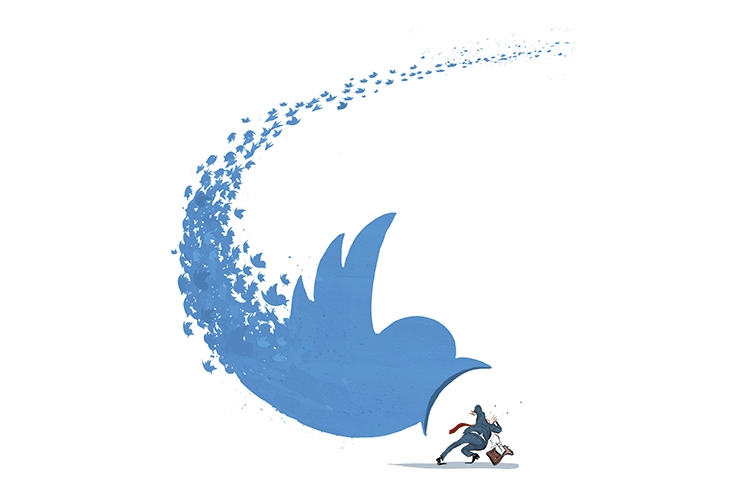
As a legacy social media user, one of those ancient creatures that have been stewing in the swamp since the primordial blue-bird era, I have no issue with private citizens or even famous people blocking others. There is no need to give a reason. Your social account is your home and you can close the door to whomever you wish.
However, elected politicians are not private citizens and their social media accounts are run by people paid for by the taxpayer (even if they are that person).
These social media accounts are not houses, they are public buildings increasingly used as the first-point of information dissemination regarding public policy.
Politicians and political parties are aggressively using social media for politics.
Blocking members of the public from accessing and responding to what is essentially public content is, in my view, crossing a moral line that has been pencilled in but not yet officially defined.
As MSM withers, social media (if not already) will become the primary point of contact between the people and their elected officials.
Restricting access and comment from citizens seems … wrong.
We know why it happens.
Often the comments left by those who end up blocked are critical of an announcement. If the Treasurer says, ‘Look how awesome my tax cuts are!!!’ and a hundred Australians leave responses along the lines of, ‘Oy mate, wtf is this tax bill, eh?!’ it damages the political message.
While the socialists and anti-capitalists are able to mobilise children to wag school and march in the street to oppose right-wing politicians, conservatives tend to do their protesting from their loungerooms using social media.
When politicians block commentary from citizens, they are, in a way, blocking a form of public protest in the digital square.
These concepts are new, but so is the technology.
Western society doesn’t really have open-air public forums in the way we used to understand them.
Yes, we still have parks and streets where people could theoretically amass to give speeches, however, that is not how the current generation of voters typically chooses to engage with politics. It is no different than the shift from physical newspapers to digital copies. The concept is the same and some believe the free criticism of the public toward their leaders should be protected.
All sides of politics are guilty of blocking people on social media. I have used the example of Chalmers because it was the most recent for me. I was also blocked by Health Ministers and bureaucrats during the pandemic. It was something I made note of at the time, describing that action as deeply worrying considering we were imprisoned in our homes upon their advice and yet could not raise a word in protest either in person or online.
I have been asking this question on our Facebook account to see what Spectator Australia followers think.
So far, the vast majority of responses say ‘no’.
A politician’s official verified public account (which is separate to any personal accounts they may hold), relates to a democratic role where their first responsibility is to the people of their nation. Blocking citizens from commenting on public policy announcements feels as if it is violating the implied freedom of political communication guidelines, even though they were written long before the concept of social media.
There were caveats and a few sensible exceptions.
Those who threaten violence can be blocked (although it is also a violation of the platform’s terms of service, so they’d likely be banned too). There is also some discussion about whether accounts from other countries could be banned to stop the comments of citizens being drowned out by hostile foreign nations trying to interfere with a domestic political conversation.
These two caveats are reasonable.
There are a few politicians who do something even worse – they have replies locked so that no one can comment on their posts. Those who do so on the right while still claiming to champion free speech are severely misguided in their use of social media.
While politicians are currently doing nothing wrong, technically, there is certainly a feeling that they are acting in a manner hostile to democracy.
It is to democracy’s benefit that a terrible policy announcement be shouted down by the digital crowd.
If a tax hike will hurt a certain class of worker, the policy should have thousands of people screaming beneath the message. That is how policy is error-checked before it enters legislation.
Generally speaking, if a politician is removing those critical of their policies or performance, they are doing so to protect themselves, their office, and their government from criticism.
Politicians do not have that right while they hold public office.
What do you think?
Should politicians, from all sides of the conversation, stop blocking the people who pay their wages?
And are we entitled to have our strongly-worded protests remain under policy announcements?
Alexandra Marshall is an independent writer. If you would like to support her work, shout her a coffee over at donor-box.