The release of Christopher Nolan’s The Odyssey has brought back vivid childhood memories.
My childhood was a little unusual: instead of reading me regular bedtime stories, my parents would read me Greek Mythology. The Twelve Labours of Hercules was my favourite, with The Odyssey not far behind.
The Odyssey is the greatest of epics, and the word has become synonymous with a long, arduous journey or task.
Many others have already discussed this topic at length, whether changing the nature of the hero or some of the casting choices. I am not here to discuss these.
Watching the film reminded me of an important lesson from the story that is often forgotten or overlooked. Most readings of the epic concentrate on how clever and cunning Odysseus was, using ingenuity and deception to overcome his enemies. The Trojan Horse is the most prolific among these. Indeed, the first adjective Homer uses to describe Odysseus is ‘polytropos ’, which means a man of many twists and turns.
Yet in book 9 of The Odyssey, we see a lack of foresight on Odysseus’ part – a failure that proves fatal to some of his men.
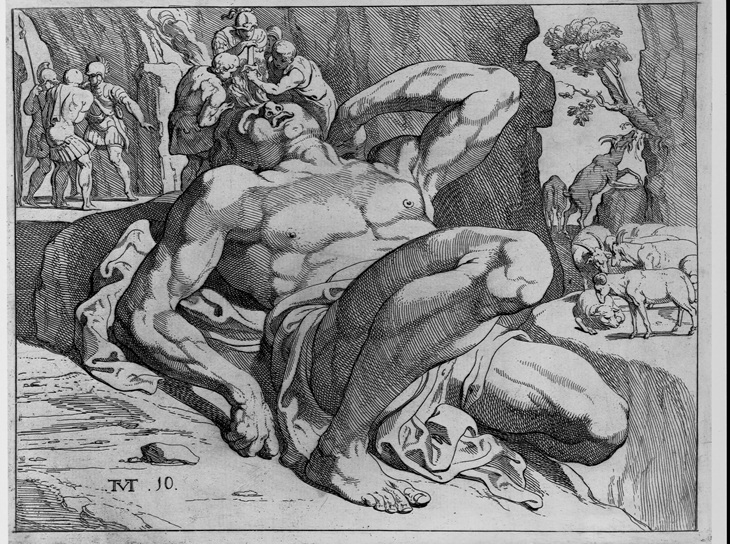
When Odysseus and his men land on the island of the Cyclopes, they enter a cave filled with provisions. His men want to loot the cave. But Odysseus, believing in the obligations of hospitality, insists that they behave as good guests and wait for the cave’s owner, Polyphemus, to return.
Odysseus then invokes Xenia, the sacred law of hospitality associated with Zeus who was not only the head of the Greek pantheon and god of the sky, lightning, and thunder, but also the protector of strangers and travellers. Odysseus warns that those who violate the laws of Zeus will invoke his wrath.
Polyphemus replies that the Cyclopes neither fear nor worship Zeus or the other gods. He does not recognise their laws.
He then traps Odysseus and his men inside the cave and proceeds to devour several of them.
For someone famous in Greek mythology for being exceptionally clever, Odysseus made one fatal mistake.
He assumed that Polyphemus, who lived well beyond the boundaries of Greek civilisation, would obey the same laws and customs that Odysseus himself follows. Instead, Odysseus learns a painful and horrific lesson: Zeus’ laws are only respected within the bounds of the civilisation in which he is revered as a god.
When invoking Xenia, Odysseus fully expected Polyphemus to abide by the law. Polyphemus, not being Greek, decides to do what he pleases, with catastrophic consequences for the men Odysseus leads.
Who suffered for the inability of the leader to see reality as it was, rather than as he believed it ought to be? The ordinary men who made up his crew.
The Odyssey, thousands of years old, paints a stark picture of an issue that is becoming increasingly relevant in the modern West.
Over the past decade, immigration has become an increasingly contentious issue in Western politics. It has certainly evolved from a subject where questioning immigration could automatically lead to accusations of racism into one that is now widely recognised as a legitimate subject of debate across the political aisle.
One of the central questions surrounding immigration is whether people from different cultural backgrounds can co-exist – and indeed thrive – side by side in modern Western societies. This debate has been fuelled in part by disparities in crime statistics between the native-born population and some immigrant groups.
Denmark is one country that tracks crime by country of origin of the perpetrator. Its data have shown that migrants from parts of Africa, the Middle East, the Indian subcontinent, and former Yugoslavia are disproportionately represented in certain categories of violent crime compared with the native population, on a per-capita basis.
Sweden, a country historically known for having low crime rates, has seen an uptick in crime since the 1950s. This is in line with other Western countries in the post-second world war era. This increase is often explained by factors such as changes in the way that statistics are collected, legislative changes, and a greater willingness among the public to report crime.
What is harder to explain, however, is the rise of bombings in Sweden.
Sweden has gone from being a country in which explosions were exceptionally rare to becoming the bombing capital of the world. A decidedly un-Swedish crime. Linda H Straaf, then head of intelligence at Sweden’s police National Operations Department, herself acknowledged that of those involved ‘many are perhaps second- or third-generation immigrants’ – i.e. the children or grandchildren of migrants.
The issue is not confined to Sweden. Multiple inquiries and reports in the UK have documented cases involving networks of predominantly ‘Asian’ men, who systematically targeted, groomed, and raped vulnerable working-class white British girls, particularly in towns and cities in northern England. In several cases, authorities and police forces were criticised for failing to act decisively, with concerns about being accused of racism seen as more important than protecting the vulnerable girls.
These cases raise a difficult but unavoidable question: What happens when a society becomes so concerned about appearing intolerant that it becomes reluctant to enforce its own laws equally?
In modern-day Australia, at least in Victoria, we are seeing a surge in machete-related crime. Machetes are not weapons that have historically been commonly associated with violent crime in Australia. Yet, machete-related incidents more than tripled between 2021 and 2024, rising from 610 to 2,061 incidents. This sharp increase has occurred despite efforts by the Victorian government to tackle machete crime. The government has spent roughly $13 million on around 40 machete bins, yet there has been no clear sign of a sustained decline in machete-related offending.
These are just a few examples of problems that have emerged or become more prominent in recent years, during a period of significantly increased migration.
There are large parts of the world where deeply different social and legal norms prevail – where people can be killed for bringing shame upon their families, or where a person can have an arm chopped off for stealing.
Violence is an accepted part of society, outside of the formal court system, in many countries around the globe.
Indeed, there have even been calls to introduce Sharia in Australia as well as the UK.
The lesson here is not that people from other cultures are bad or that they want to commit crimes against the people of the West.
The lesson is that cultures are different, with different understandings and expectations of what is right and wrong, moral and immoral, acceptable and unacceptable. Expecting people from extremely different cultures to naturally fit right into Western society without any meaningful framework for integration is a fool’s errand.
The assumption of the modern liberal state – that bringing people together from not only vastly different, but almost diametrically opposed, cultures into a single society will not cause problems because liberal morals and ethics are self-evident and universal – is a false one.
The implicit moral and ethical frameworks of some civilisations may seem barbaric, almost savage in nature to the Western liberal. Practices such as child marriage, bacha bazi, wife beating, and slavery are accepted in parts of the world not because those societies have yet to discover the truth of Western morality and social norms. In fact, the opposite is often true: they may view modern Western societies as deeply immoral.
This is because they are living in a world that is fundamentally different – metaphysically, theologically, and consequently morally – from that of the modern liberal.
Much like Odysseus, Liberalism views itself as inherently correct. But it fails to take into account that its worldview rests on concrete presuppositions about the world is, and how it ought to be. Presuppositions that not everyone shares or accepts.
The hubris that led Odysseus to assume that Polyphemus would abide by the laws of Zeus is the same hubris that led the West to spend decades attempting to spread democracy throughout the Middle East. It is also the hubris that ultimately cost Malcolm Caldwell his life at the hands of the regime of his former hero, Pol Pot.
Liberalism functions only if everyone living within a society accepts the same underlying ethical and metaphysical presuppositions and worldview.
In The Odyssey, we see the consequences for ordinary people when their leaders and elites make this assumption.
It is a lesson that The Odyssey taught thousands of years ago, one that modern-day Europe has been learning for decades and one that Australia is only now beginning to learn.