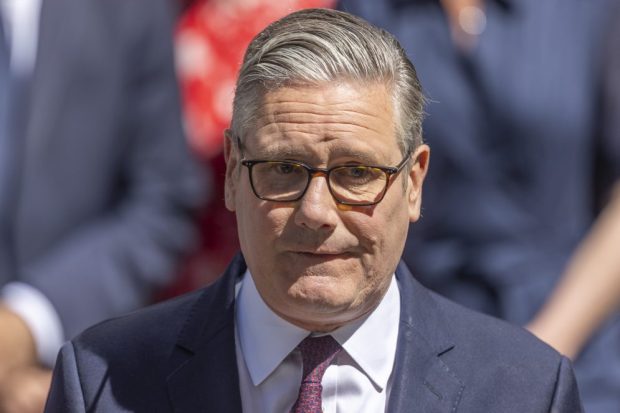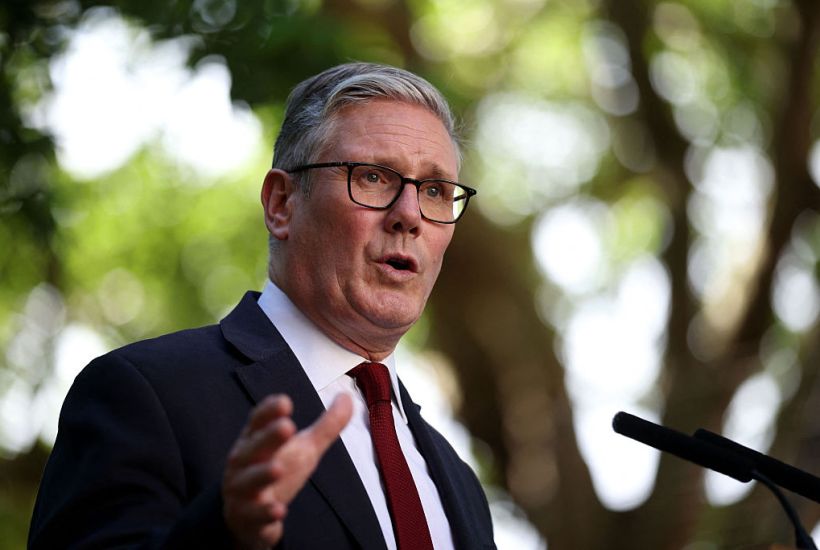
Sir Keir Starmer attended his first Nato summit in Washington, DC four days after becoming Prime Minister in July 2024. Now, almost exactly two years later, he will join alliance leaders in Ankara with probably less than a fortnight until he leaves Downing Street.
There is a certain piquancy, either sad or laced with schadenfreude, according to your point of view, in Starmer’s premiership being bookended by major defence summits. He has spent a great deal of time and effort on foreign affairs and security, including a heavy burden of international travel, and Ankara will be his 47th and final overseas visit in 24 months. (For the statistics-hungry among you, Starmer has been to 33 different countries and one British Overseas Territory, the Sovereign Base Areas of Akrotiri and Dhekelia in Cyprus.)
It is bittersweet or mischievously entertaining because the Prime Minister has come to think of himself as major figure in foreign affairs, overshadowing his two undistinguished foreign secretaries, David Lammy and Yvette Cooper, and waiting five months into his time in office to appoint a National Security Adviser, the continuity Blairite, Jonathan Powell. It has even been suggested that Starmer is interested in becoming Secretary General of Nato.
The Nato summit is likely to give the lie to this well-burnished self-image. Starmer will arrive in Turkey with his new Defence Secretary, Dan Jarvis, late of the Parachute Regiment, and his already tattered and careworn Defence Investment Plan. The latter, a document which manages the extraordinary feat of being both many months late but also obviously rushed, was supposed to be the financial blueprint for implementing last year’s Strategic Defence Review.
The lead reviewer, Lord Robertson of Port Ellen, has already accused the government of ‘corrosive complacency’ on defence expenditure; the Chief of the Defence Staff, Air Chief Marshal Sir Richard Knighton, has warned that ‘day-to-day activities’ like operations and training may have to be ‘dialled back’; and John Healey resigned as defence secretary rather than accept decisions which ‘would reduce the readiness of our Forces and increase the risk to personnel on operations.’
Every other Nato leader in Ankara knows this. They know that, in terms of meeting rearmament commitments, the United Kingdom is 31st out of the 32 member states, ahead only of Iceland (which has no armed forces) and 12th in terms of percentage of gross domestic product spent on defence. They know that the Royal Navy’s carrier strike group has had to rely on escort vessels from the United States, the Netherlands, Canada and Spain because there are not enough British warships available. And they know that Britain’s commitment in the event of a major crisis to provide 1st (UK) Division to the Allied Response Force and 3rd (UK) Division to the Strategic Reserve Corps cannot currently be fulfilled.
The Prime Minister’s allies – admittedly a club with rapidly dwindling membership – are concerned that he may be humiliated at the meeting in Ankara. Experience tells us Starmer’s threshold for embarrassment must be high indeed, but the presence of Donald Trump makes anything possible. It has been reported that the President could make public and embarrassing remarks about Britain’s relatively low level of defence spending, one US official saying diplomatically:
‘The President is a very clear communicator. He has previewed where he feels our allies are underperforming on a defence commitment and he will deliver that message in person… any specific consequences will be communicated at the time by the President.’
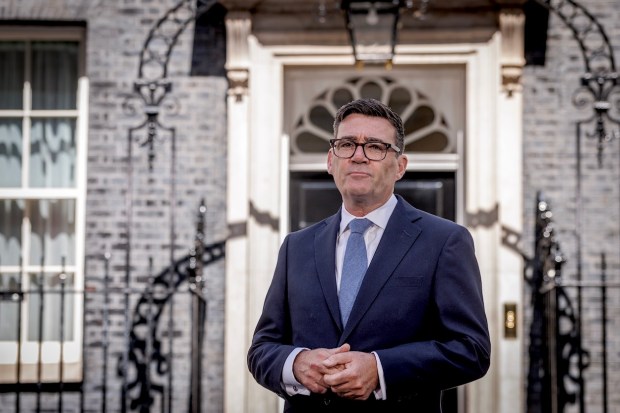
To an extent, the treatment of Starmer personally has little relevance given his impending departure. But Trump has already responded to questions about Andy Burnham by describing the new MP for Makerfield as ‘extremely liberal’, adding dismissively, ‘I think I see that he was, I guess, the mayor of a town’. Unquestionably, the UK’s reputation and credibility is on the line.
At last year’s summit in The Hague, Nato set out very clear spending targets: by 2035, member states are to spend 3.5 per cent of GDP on core defence requirements and an additional 1.5 per cent on resilience and preparedness, critical infrastructure and similar areas. In addition, ‘the trajectory and balance of spending under this plan will be reviewed in 2029.’
Some members have raced ahead: Poland is spending 4.3 per cent, Lithuania 4 per cent, Latvia 3.7 per cent, Denmark 3.4 per cent. Britain is crawling towards 2.5 per cent, and while the government claims it is ‘on track to meet Nato’s defence spending targets by 2035’, this is simply a lie. There is no plan, no schedule of increased spending, just an ‘aspiration’.
All of this will be in plain view in Ankara. President Trump may embarrass the Prime Minister, and Starmer bears considerable blame for the situation in which we find ourselves, but that is now an historic matter. Andy Burnham says he will ‘take my defence responsibilities fully’, but establishing more detail is the same exercise in nailing jelly to the wall as pinpointing his beliefs and intentions on many matters. He will attend his first Nato summit in Tirana next summer and he will need to have far more detail about his administration’s level of commitment.
Four years ago, an anonymous American general told then-defence secretary Ben Wallace, ‘You haven’t got a tier one [army]. It’s barely tier two.’ Labour have made big promises and issued grand statements but the Defence Investment Plan – late, sketchy, less than frank – shows us where we are. Starmer may get a hard time from his fellow leaders in Ankara as he winds up his premiership, but they are not exaggerating matters, and he deserves it.